Hilltop Easter Sunrise Service Invitation

2013 Easter Sunrise Service at BriarCroft  — Sunday, March 31 at 7 AM
(formerly Walnut Hill Farm)

sunrise view from our hill–see more at our website at http://www.briarcroft.com/easter.htm

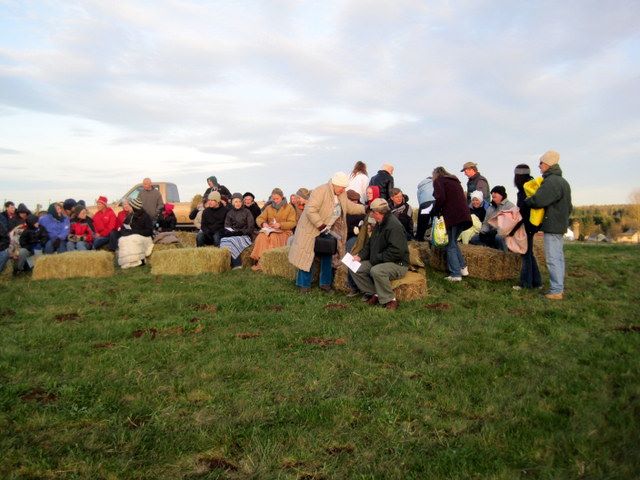
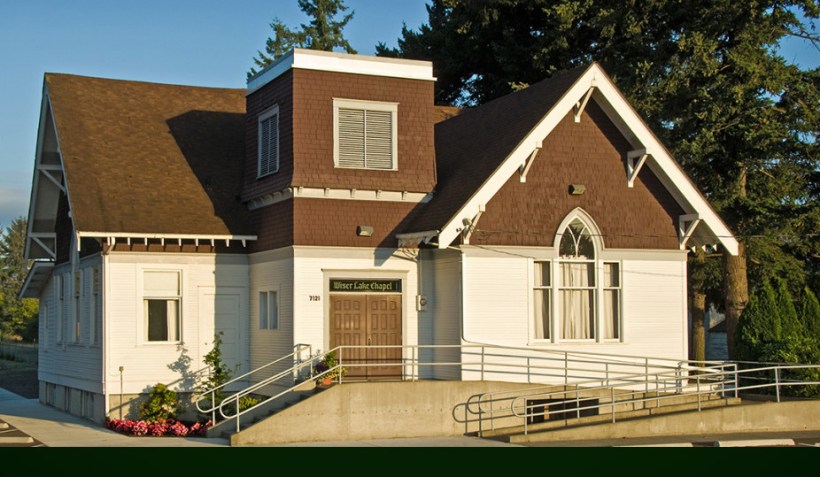
When we purchased Walnut Hill Farm from the Morton Lawrence family in 1990, part of the tradition of this farm was a hilltop non-denominational Easter sunrise service held here for the previous 10+ years.  We have continued that tradition, with an open invitation to families from our surrounding rural neighborhood and communities, as well as our church family from Wiser Lake Chapel, to start Easter morning on our hill with a worship service of celebration of the resurrection of Jesus Christ.

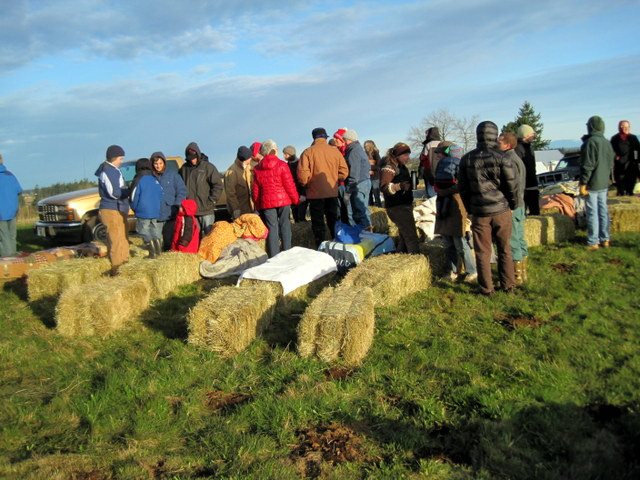
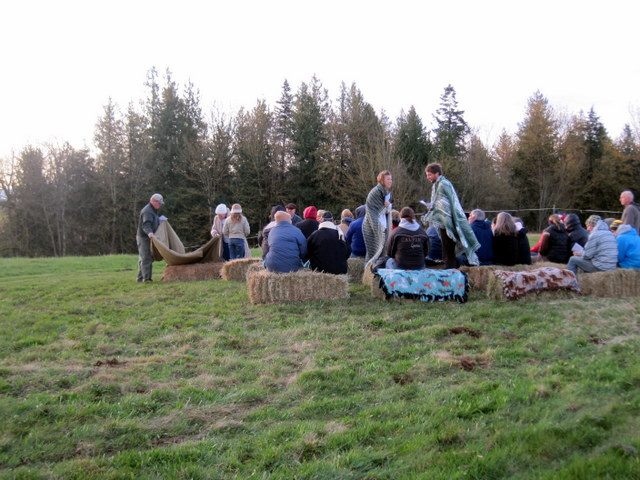
At our annual Easter Sunrise Service in Whatcom County, we develop a different Easter theme each year through use of scripture readings and songs, led by Dan Gibson. We sit on hay bales on the hill for the worship service, followed by breakfast of cinnamon rolls, hot chocolate and coffee in our barn.  As many of the people who attend come from some distance from all over the county, we try to conclude by 8 AM so they may have time to get to morning church services.

535851_2562541123166_1291594096_n546971_2562543003213_1807288052_n

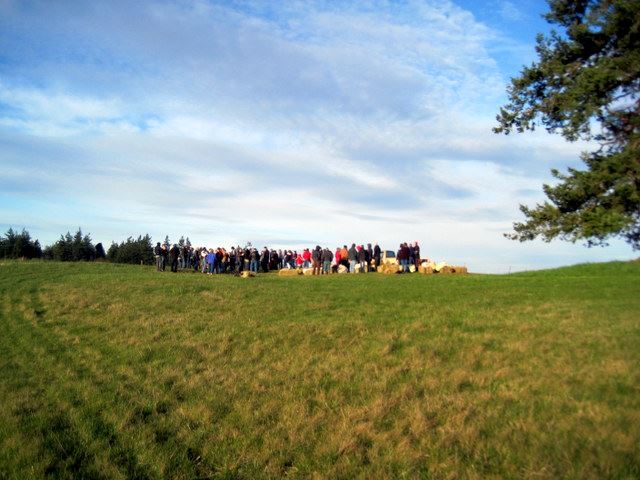
552213_2562544363247_828834728_n562278_10150787215216119_1848824445_nthank you to Chris Lovegren for the four photos above of Sunrise Service 2012

We invite all to come to our farm to participate in this traditional service of celebration.  Please dress warmly with sturdy shoes as you will be walking through wet grass to reach the hilltop.  Bring heavy blankets or sleeping bags to wrap up in if it is a chilly morning.  In case of rain, we meet in the big red hay barn on the farm, so we never cancel this service.

If you would like more information and directions to our farm at 1613 Central Road, between Hannegan and Noon Road, please email us at emily@briarcroft.com

Dan and Emily Gibson

Lenten Grace — A Fitting Silence

photo by Josh Scholten

I owned a slope full of stones.
Like buried pianos they lay in the ground…

What bond have I made with the earth,
having worn myself against it? It is a fatal singing
I have carried with me out of that day.
The stones have given me music
that figures for me their holes in the earth
and their long lying in them dark.
They have taught me the weariness that loves the ground,
and I must prepare a fitting silence.
~Wendell Berry from “The Stones”

What does it take to move a stone?
When it is an effort to till the untillable,
creating a place where simple seed
can drop, be covered and sprout and thrive,
it takes muscle and sweat and blisters and tears.

What does it take to move a stone?
When it is a day when no one will speak
out of fear,
the silent will be moved to cry out
the truth, heard and known and never forgotten.

What does it take to move a stone?
When it is a day when all had given up,
gone behind locked doors in grief,
and two came to tend the dead,
but there was no dead to tend.

Only a gaping hole left
Only an empty tomb
Only a weeping weary silence
broken by Love
calling our name
and we turn to greet Him
as if hearing it for the first time.
.

Lenten Grace — Love Lives Again

photo by Josh Scholten

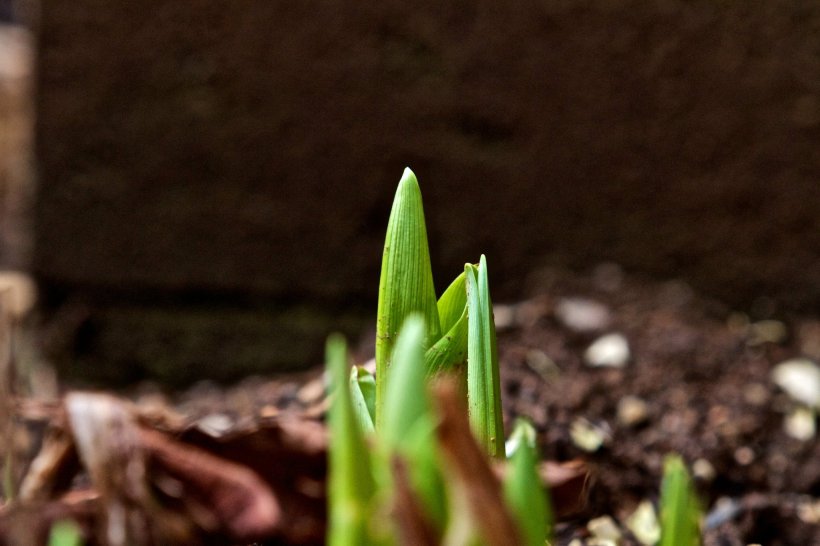
Now the green blade rises from the buried grain,
Wheat that in the dark earth many years has lain;
Love lives again, that with the dead has been:
Love is come again, like wheat that springs up green.

When our hearts are saddened, grieving or in pain,
By Your touch You call us back to life again;
Fields of our hearts that dead and bare have been:
Love is come again, like wheat that springs up green.
~John Crum from The Oxford Book of Carols

Over the last several weeks, roots have become shoots and their green blades are rising chaotically, uneven and awkward like a bad haircut.  And like a bad haircut, another two weeks will make all the difference — sprouts will cover all the bare earth, breaking through crusted mud to create a smooth carpet of green.

There is nothing more hopeful than the barren made fruitful, the ugly made beautiful, the dead made alive.

The fields of our broken hearts recover; love is come again.

photo by Josh Scholten

Eastertide–Dayspring to Dimness


“Let Him easter in us, be a dayspring to the dimness of us, be a crimson-cresseted east.”
― Gerard Manley Hopkins

Too often, the bright light of Easter morning dims over time as I return to my daily routine. In mere days, the humdrum replaces the extraordinary, tragedy overcomes festivity, darkness overwhelms dawn. The world encourages this, and I don’t muster enough resistance. I climb right back into the tomb of my sin, move the huge stone back in place, and lie there waiting for rot to settle in.

I am not alone. I have plenty of company with me behind the stone. There is no excuse for us to be there still.

The stone is pushed aside, the burden shouldered, the debt completely paid.

How can we allow the light to dim?

He is risen. We are eastered.

I need to live that truth, not wait for rot.

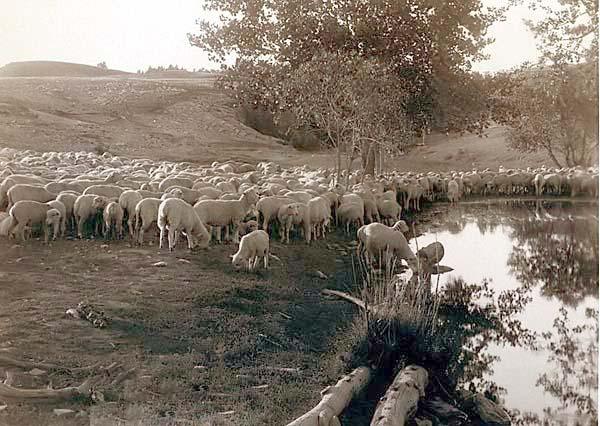
Watering the Sheep

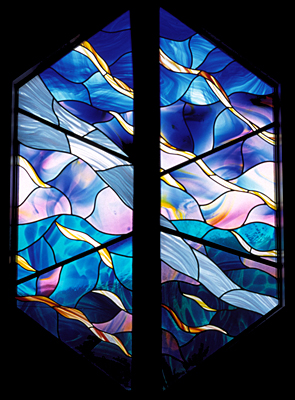
Resurrection Window at Church of the Holy Spirit, New Jersey


2 Very early on the first day of the week, just after sunrise, they (the women) were on their way to the tomb 3and they asked each other, “Who will roll the stone away from the entrance of the tomb?”
4 But when they looked up, they saw that the stone, which was very large, had been rolled away.

Mark 16:2-4

1 Then Jacob continued on his journey and came to the land of the eastern peoples. 2 There he saw a well in the open country, with three flocks of sheep lying near it because the flocks were watered from that well. The stone over the mouth of the well was large. 3When all the flocks were gathered there, the shepherds would roll the stone away from the well’s mouth and water the sheep. Then they would return the stone to its place over the mouth of the well.
7
“Look,” he said, “the sun is still high; it is not time for the flocks to be gathered. Water the sheep and take them back to pasture.”
8 “We can’t,” they replied, “until all the flocks are gathered and the stone has been rolled away from the mouth of the well. Then we will water the sheep.”

Genesis: 29: 1-3, 7-8

15When they had finished eating, Jesus said to Simon Peter, “Simon son of John, do you love me more than these?”
“Yes, Lord,” he said, “you know that I love you.”
Jesus said, “Feed my lambs.”
16 Again Jesus said, “Simon son of John, do you love me?”
He answered, “Yes, Lord, you know that I love you.”
Jesus said, “Take care of my sheep.”
17 The third time he said to him, “Simon son of John, do you love me?”
Peter was hurt because Jesus asked him the third time, “Do you love me?” He said, “Lord, you know all things; you know that I love you.”
Jesus said, “Feed my sheep. 18 Very truly I tell you, when you were younger you dressed yourself and went where you wanted; but when you are old you will stretch out your hands, and someone else will dress you and lead you where you do not want to go.” 19 Jesus said this to indicate the kind of death by which Peter would glorify God. Then he said to him, “Follow me!”

John 21: 15-19

Giant stones were used to seal and protect something valuable and precious, whether it be a well in an area with little water, or the dead body of a troublesome crucified prophet who had predicted He would rise three days after death. In the gospels’ description of Easter morning, the rolled away stone is always front stage, representing the overpowering of the natural by the supernatural, the breaking of the Roman seal rendering it futile, the dawning of a new life penetrating the darkness of death forever.

However, it represents something even more–it is the rolling away of the stone, too heavy for one man to move alone, in the Old Testament story of Jacob that allows all the gathered flocks to be watered at once from the well.   On this one day in history, the ultimate Good Shepherd has rolled the stone away so that we shall never again go thirsty, or hungry, shall never again be lost, or without protection.  The darkness of our former life of sin is cast into the light.

Once the stone has been rolled away, the seal of sin is broken and we have no excuses.  The sheep must be cared for.  All sheep.  All flocks.

He said, “Follow me.”

And we shall.

Lenten Reflection–Just the End of the Beginning

20120329-021126.jpg
“What God began, God will not abandon. He who began a good work in you will carry it on to completion. God loves everyone, sings the psalmist. What God has named will live forever, Alleluia!

The happy ending has never been easy to believe in. After the Crucifixion the defeated little band of disciples had no hope, no expectation of Resurrection. Everything they believed in had died on the cross with Jesus. The world was right, and they had been wrong. Even when the women told the disciples that Jesus had left the stone-sealed tomb, the disciples found it nearly impossible to believe that it was not all over.
The truth was, it was just beginning.”
Madeleine L’Engle

The Saturday between Good Friday and Resurrection Sunday always feels like a “already but not yet” kind of day, as if we are between sleep and waking, in weary vigil.  We aren’t celebrating “happily ever after” quite yet.  Actually every day should feel like this day, as that is where we live: we know the extent of sacrifice made, the overwhelming debt paid, but the full completion of His new covenant, His new kingdom is yet to be realized.   We wait, and will wait some more, unsure what comes next.

But one thing is clear.  Burial in the tomb was not the end.  Not even close.

To borrow from Winston Churchill out of context:

“Now this is not the end, it is not even the beginning of the end. But it is, perhaps, the end of the beginning.”

David Phelps’ The End of the Beginning

Straws as Sharp as Thorns

20120329-052504.jpg
“The whole of Christ’s life was a continual passion; others die martyrs, but Christ was born a martyr. He found a Golgotha, where he was crucified, even in Bethlehem, where he was born; for to his tenderness then the straws were almost as sharp as the thorns after, and the manger as uneasy at first as the cross at last. His birth and his death were but one continual act, and his Christmas Day and his Good Friday are but the evening and the morning of one and the same day. From the creche to the cross is an inseparable line. Christmas only points forward to Good Friday and Easter. It can have no meaning apart from that, where the Son of God displayed his glory by his death.”
opening words by John Donne in his sermon on Christmas Day 1626

Lenten Reflection–No Fear

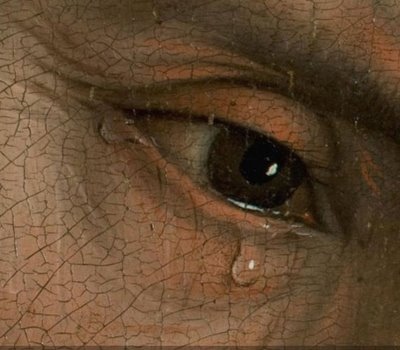
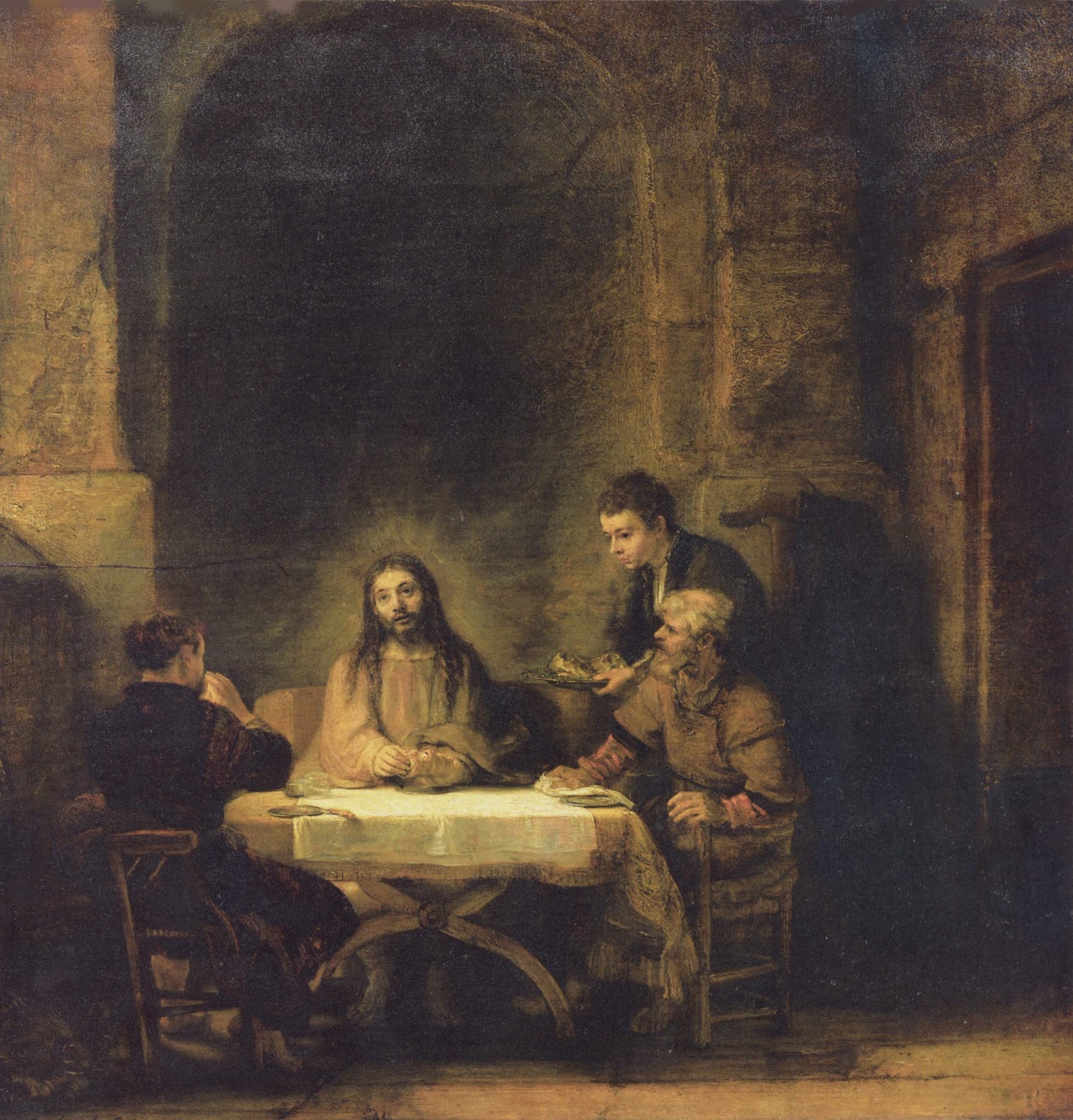
Rembrandt's Christ at Emmaus

There is no fear in love, but perfect love casts out fear
1 John 4:18

The community of faith and community of life in the first love was marked by the risen Christ–the Christ who had said, “I am with you always.” Everything depends on seeing the mystery of the risen Christ as unconditional love. In Christ, God’s love is put into practice.
Eberhard Arnold

Of course there was plenty to fear. There had been a brutal arrest in a garden, facilitated by one of His own. The rest ran or actively denied involvement. There was a hasty hearing, and a trial of sorts, and then beatings and condemnation by acclamation. There was the impossible task of lugging a heavy cross up hill, then being attached by nails, hung, dehydrated, denigrated, left to die.

Plenty, plenty to fear. Those who loved Him were terrified.

When they returned after the Sabbath to care for His body, still concerned for their own safety, they heard again very familiar words: “Do not be afraid.” He was conceived and born under those words, and after His death, those were among the first words they heard the risen Christ say, and He repeated them as often as they needed to hear them, which was often.

Do not be afraid.

Perfect love casts out fear. As we are so flawed, so incapable of perfect-anything, we fear, and fear desperately. But because He is capable of perfect unconditional love, He demonstrates that love tangibly and palpably: breaking bread, breaking Himself, pouring wine, pouring out Himself. He creates an everlasting community of love by promising to be with us always. So we put it into practice with each other, and especially with those who are strangers and enemies.

Why fear any longer? He is walking alongside us illuminating our minds and filling our hearts, He is at the table feeding us, He is holding us as we pass into His arms.

Perfect
mysterious
unending
unprecedented
unconditional
love has no fear
forever.

Lenten Reflection–Letting Go


Forgiveness is letting go of a bell rope. If you have ever seen a country church with a bell in the steeple, you will remember that to get the bell ringing you have to tug awhile. Once it has begun to ring, you merely maintain the momentum. As long as you keep pulling, the bell keeps ringing. Forgiveness is letting go of the rope. It is just that simple. But when you do so, the bell keeps ringing. Momentum is still at work. However, if you keep your hands off the rope, the bell will begin to slow and eventually stop.
Corrie Ten Boom

In just two weeks our Chapel family will begin observing Holy Week. Before the Sunrise Resurrection Sunday worship on our farm hilltop followed by a service inside the church and Easter brunch together, we gather for a soup and bread communion supper on Maundy Thursday and a Tenebrae (Shadows) Service on the evening of Good Friday. At the end of the somber Tenebrae service, our steeple church bell tolls, the bell rope pulled repeatedly as we sit within darkness in the sanctuary. This knelling of Christ’s death resonates in our own bodies. It is unmistakeable, hearing the pealing of our guilt and shame reverberating out for all to hear.

When the bell rope is released, the bell continues to ring a few times but then quiets itself. We sit in ensuing silence, aware the debt we could never pay on our own had been paid in full for us. We have been forgiven, the tolling of the bell now ceased, and the toll of our sin reconciled.

God has let go of our debt, freeing us from the shadows where sin had trapped us. We are able to then stand and walk out, redeemed by a flesh and blood God suffering in our place.

In the morning of the third day, we hear Him say our names from the empty tomb. Forgiven, all guilt and shame let go, we rise from our shadows to answer His resonating call.

Chapel Bell Tower

Easter Meditation–Amen!

The grace of the Lord Jesus be with God’s people.
Amen.
Revelation 22:21

Experiencing grace within the body of Christ is the point of Easter.  This is a day to seek out our brothers and sisters as Jesus did on that Resurrection Day.
He did not remain shrouded and dead in the tomb, but rose, breathing the air of earth once again, to seek us out, call our names, walk alongside and eat with us.
Most importantly, he opened wide the hearts that had been closed in fear, confusion, and ignorance.

He makes our hearts burn within us as we contemplate the gift we were given when we deserved only punishment.

The Amen echoes our certainty.

Yes.  Indeed.

It is so.

And so shall it ever be.