Calling Me Home

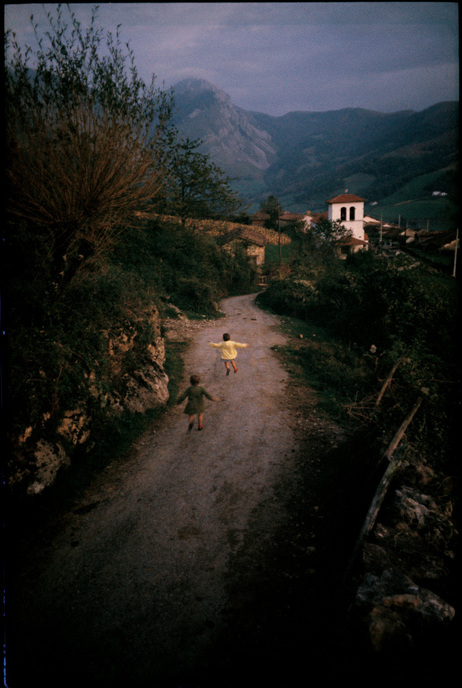
Photo of children running home in Basque, France by William Albert Allard

I had pulled away, testing how far a connection could stretch, not always thinking of how the tug of resistance felt on the other end. What had been a pulsing vital conduit instead felt withering and restricting, so I sought eagerly to move beyond its reach.

It is turbulent out there without ties and tethers as anchors in the storm. There is hunger and thirst when roots have been pulled out and exposed. There is chill without the sustenance of hearthfire. It is lonely without the enveloping bonds of nurture within a sanctuary of love.

When I heard the call, I knew the time had come to return home. And so I ran, skipping, jubilant, eager, ready, almost weightless in my anticipation of a joyful reunion.

Twenty Six Years of Farm and Family

On Halloween day in 1985, I packed up my clothes, a roll up mattress and a few kitchen things, locked our rental house door for the last time, climbed in my car and headed north out of Seattle. I don’t recall looking back after nine years in the city. My husband had moved to Whatcom County two months before to start his new job. I had stayed behind to wrap up my Group Health practice in the Rainier Valley of Seattle. I was leaving the city for a rural setting and an uncertain professional future.

I knew two things for sure: I was finally several months pregnant after a miscarriage and two years of infertility, so a family was on its way, and we were going to live in our own house, not just a rental, complete with five acres and a barn. A real (sort of) farm. Since no farm can be complete without animals, I stopped at the first pet store I drove past and found two little sister tortoise shell calico kittens just waiting for new adventures in farmland. Their box was packed into the one spot left beside me in my little Mazda. With that simple commitment to raise and nurture those kittens, life seemed very complete.

I will never forget the freedom I felt on that drive north. The highway seemed more open, the fall colors more vibrant, the wind more brisk, our baby happily kicking my stomach, the kittens plaintively mewing from their box. There seemed to be so much potential though I had just left behind the greatest job that could be found in a city: the ideal family practice with a delightfully diverse patient population of African Americans, Cambodians, Laotians, Vietnamese, Muslims and Orthodox Jews. I would never know so much variety of background and perspective again and if I could have packed them all with me into the Mazda, I would have.

We started our farm with those kittens dubbed Nutmeg and Oregano, soon adding a dog Tango, then a Haflinger horse Greta, then goats Tamsen and her kids, a few geese, chickens, Fiona the Highland cow, then another Haflinger Hans and another, Tamara. I worked as a fill in locums doctor in four different clinics before our first baby, Nate, was born. Again, new commitments and life felt complete– but not for long, as we soon added another baby, Ben and then another, Lea. Then it really was complete. Or so I thought.

Twenty six years later our children are grown and gone, off to their own adventures beyond the farm, each to a different big city. A few cats, two dogs, and a hand full of ponies remain. We are grayer, enjoy our naps and the quiet of the nights and weekends. Our second larger farm seems more than we can realistically manage by ourselves in our spare time. My work evolved from four small jobs to two decades of two part time jobs to one more than full time job that fits me like a well worn sweater 24 hours a day. My husband is talking retirement in a few years. I’m not so sure for myself. I have never not worked.

The freedom I felt watching Seattle disappear in the rear view mirror meant I no longer sat captive in freeway rush hour bumper to bumper traffic jams for an hour, but now commute through farm fields, watching eagles fly, and new calves licked by their mamas. I am part of a community in a way I never could muster in the city, stopping to visit with friends at the grocery store, playing piano at church and serving on various boards. I love how our home sits in the midst of woods and corn fields, with swans overhead and salmon in nearby streams. The snowy Cascades greet me in the morning and the sunset over Puget Sound bids me good night.

It all started one Halloween day with two orange and black kittens beside me in a little Mazda and a husband waiting for my homecoming 100 miles north. Now, twenty six years and three grown children later, we find ourselves on our own yet again, still pregnant with possibility for our future together.

And the Dying Begins…

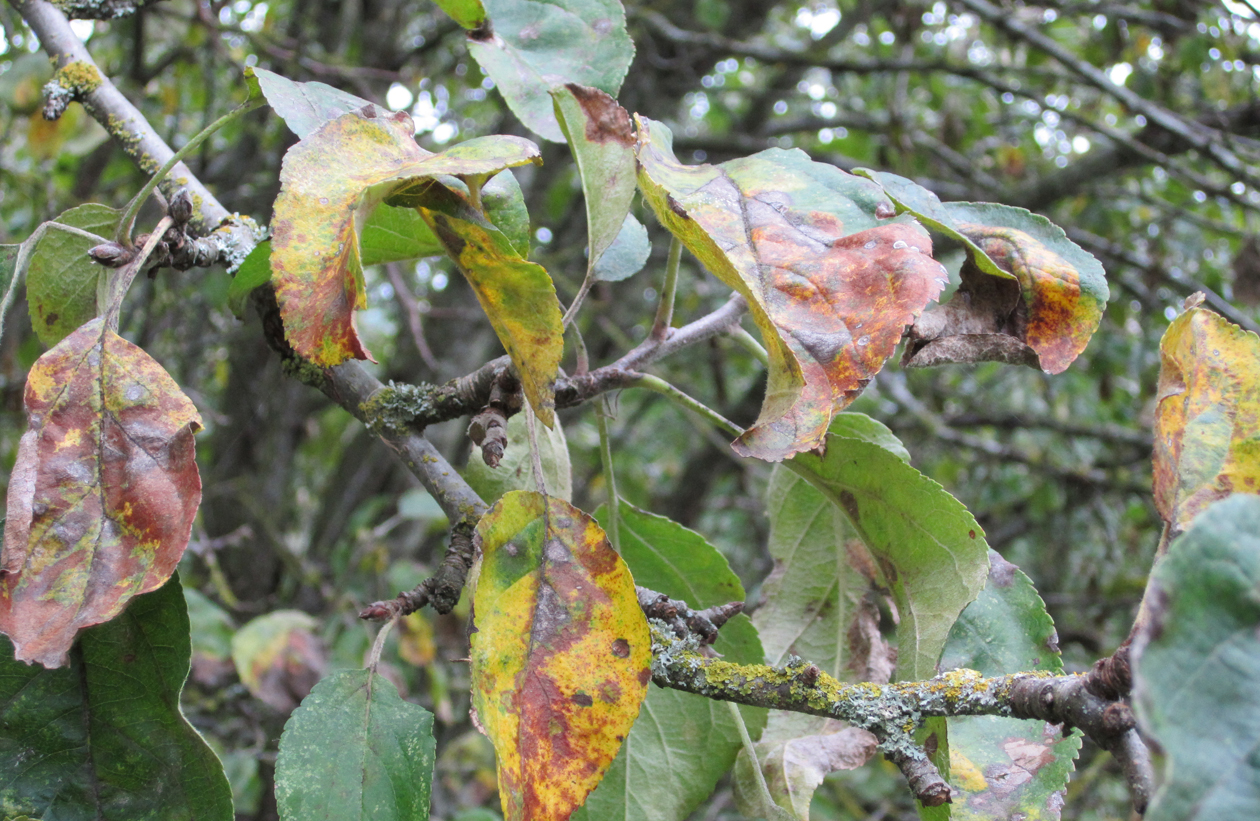
It begins even though I’m unprepared.  No matter which way I turn,  autumn’s kaleidoscope displays new patterns, new colors, new empty spaces as I watch the world die into itself once again.  Some dying is flashy, brilliant, blazing, a calling out for attention.  Then there is the hidden dying that happens without anyone taking notice: a plain, tired, rusting away letting go.

I spent the morning adjusting to this change in season by occupying myself with the familiar task of moving manure.  Cleaning barn is a comforting chore, allowing me to transform tangible benefit from something objectionable and just plain stinky to the nurturing fertilizer of the future. It feels like I’ve actually accomplished something.

As I scooped and pushed the wheelbarrow, I remembered another barn cleaning ten years ago, when I was one of three or four friends left cleaning over ninety stalls after a horse event that I had organized at our local fairgrounds. Some people had brought their horses from over 1000 miles away to participate for several days.  There had been personality clashes and harsh words among some participants along with criticism directed at me that I had taken very personally.  As I struggled with the umpteenth wheelbarrow load of manure, tears stung my eyes and my heart.  I was miserable with regrets.   After going without sleep and making personal sacrifices over many months planning and preparing for the benefit of our group,  my work felt like it had not been acknowledged or appreciated.

A friend had stayed behind with her family to help clean up the large facility and she could see I was struggling to keep my composure.  Jenny put herself right in front of my wheelbarrow and looked me in the eye, insisting I stop for a moment and listen.

“You know,  none of these troubles and conflicts will amount to a hill of beans years from now.  People will remember a fun event in a beautiful part of the country,  a wonderful time with their horses, their friends and family, and they’ll be all nostalgic about it, not giving a thought to the infighting or the sour attitudes or who said what to whom.   So don’t make this about you and whether you did or didn’t make everyone happy.  You loved us all enough to make it possible to meet here and the rest was up to us.  So quit being upset about what you can’t change.  There’s too much you can still do for us.”

During tough times,  Jenny’s advice replays, reminding me to stop seeking appreciation from others, or feeling hurt when harsh words come my way.   She was right about the balm found in the tincture of time and she was right about giving up the upset in order to die to self and self absorption, and keep focusing outward. I have remembered.

Jenny herself spent the last six years dying, while living her life every day, fighting a relentless cancer that has been helpless in the face of her faith and intense drive to live.    She became a rusting leaf, fading imperceptibly over time, crumbling at the edges until two days ago when she finally let go.   Her dying did not flash brilliance, nor draw attention at the end.  Her intense focus during the years of her illness had always been outward to others, to her family and friends, to the healers she spent so much time with in medical offices, to her belief in the plan God had written for her and others.

So now she has let go her hold on life here.   And we must let her go.   Brilliance will cloak her as her focus is now on things eternal.

You were so right, Jenny.  Nothing from ten years ago amounts to a hill of beans. Except the words you spoke to me.

And I won’t be upset that I can’t change the fact that you have left us.

We’ll catch up later.

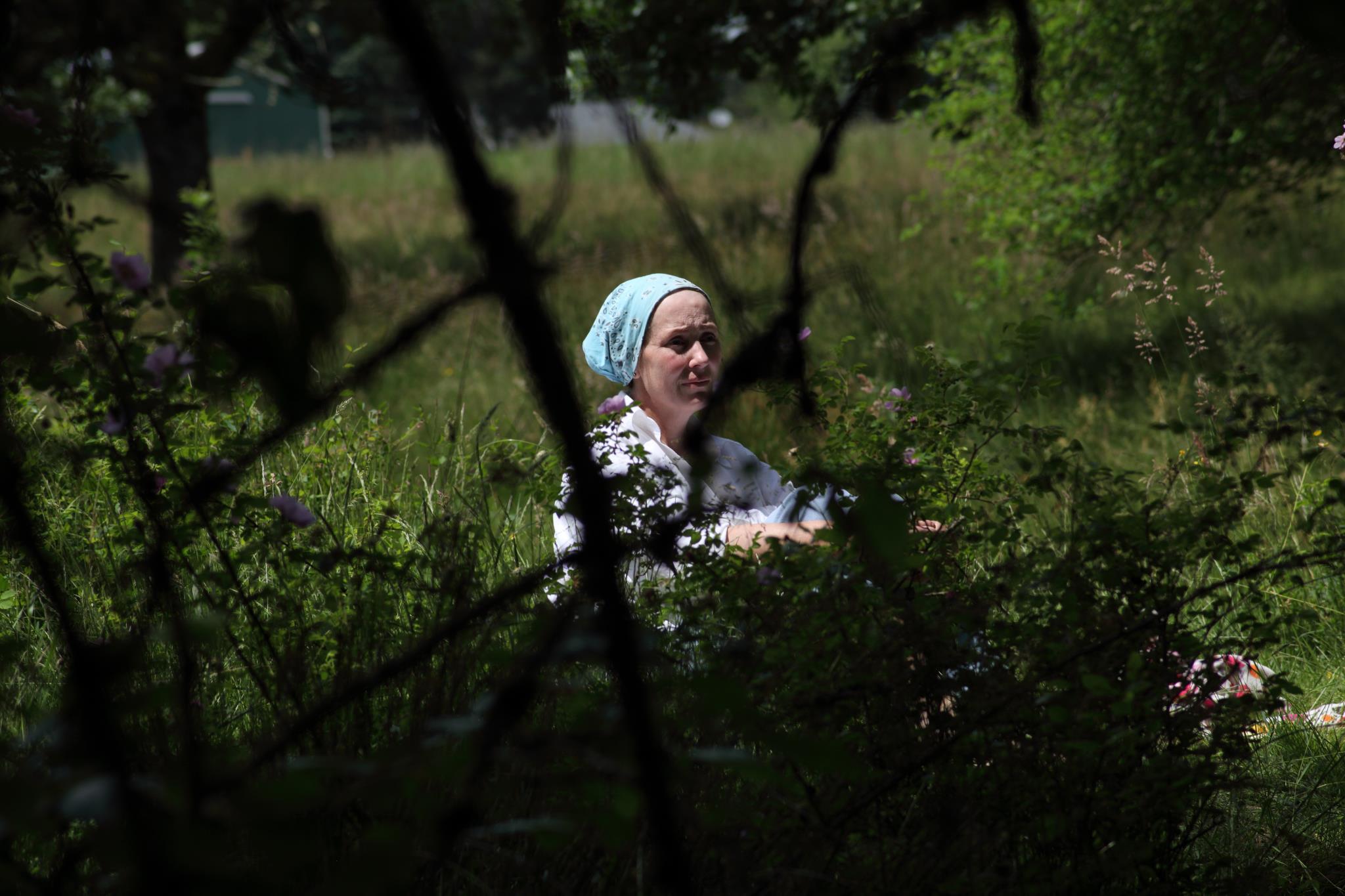
Jenny R --photo by Ginger Kathleen Coombs


Physicians As Environmental Activists

Railway in Whatcom County photo by Josh Scholten

My response to a letter sent by 80+ Whatcom County physicians opposed to a proposed new deep water port in our county to ship, among other things, coal to China, with coal trains to run frequently through our local communities.

Dear Colleagues,

as a twenty six year Whatcom County resident, I have mulled whether to add to this discussion.   I must admit that I’m no expert in predicting the potential health hazards of this particular proposal in this particular community at this particular time in its history. What is most needed here is a collective deep breath.   We need to exercise the experience, wisdom and caution demanded of our profession.   I don’t make a decision about a treatment’s effectiveness (or lack thereof) until it is fully investigated and studied.   Similarly, I will not speculate about environmental health hazards without solid data and evidence to back up that opinion.  As the only physician member of the Whatcom County Public Health Advisory Board, I can assure you a formal evaluation of the potential health effects of more frequent coal-bearing trains delivering diesel particulate matter into the environment will be tasked to Whatcom County Health Department Environmental Health staff once (and if) the application for permits ever takes place some time in the future.

I can share my perspective as a 21 year employee of the largest employer in Whatcom County (WWU) and a former 20 year employee of the second largest employer in Whatcom County (PeaceHealth St. Joseph Medical Center).  Both institutions have been forced to make significant budget and staffing cuts due to the lack of tax base from diminishing private industry in our county and state.   Without the presence of thriving businesses supported by citizens like you and me, our public funded institutions will continue to falter, with fewer employees working more hours,  inevitably resulting in diminishing quality of service.

I am a fourth generation northwest Washingtonian, born of fisherman, loggers, and farmers who stewarded land and shorelines in this area since the mid-1800s.  Some would say they adversely impacted the environment by the work they did in order to support their families — catching fish, cutting down trees, and spreading manure for fertilizer.  Some would say any environmental impact by humans is too much.  Coming from my perspective, and living on a farm myself,  I see things differently.  Whatcom County’s bounty is not just its beauty and recreational opportunities.  Its bounty is in the  harvest yielded from the hard work of our hands in its soil and its waterways.

Surely as physicians who care deeply about our patients, our fellow citizens, our environment and our families’ futures, we can work together as discerning community leaders.  Our goal should be to find a balance to attract and support businesses that someday will provide employment opportunities for our children and grandchildren yet still respect and preserve the natural beauty of our county for generations to come.  Whether this is one of those opportunities has yet to be seen.

Gone


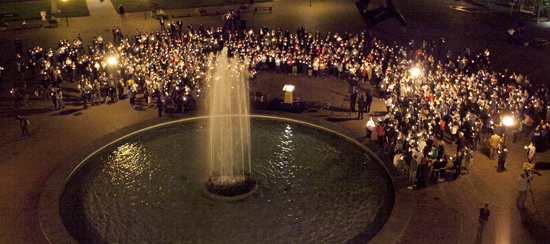
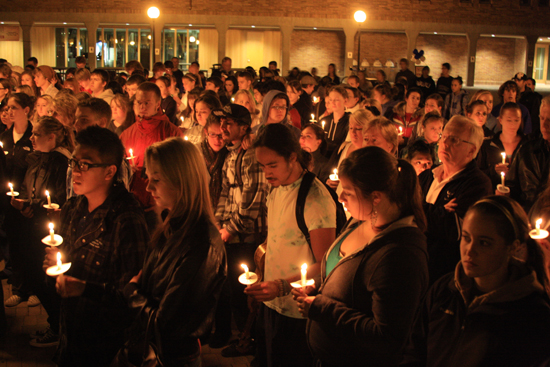
Candlelight vigil for Dwight Clark, photo by Western Front


Missing a night’s sleep after the party,
and sleeping in Sunday morning
Missing a morning shower,
and breakfast then lunch

Missing a walk across campus,
and an hour of skateboarding
Missing time to study,
and then dinner

Missing his mother’s two calls,
and his new roommate’s concern when the bed stays unslept in
Missing his friends’ many unanswered texts,
and one class, and then another

Missing his mom searching his undisturbed car, his desk, his room for clues,
and her tears and pleas for help
Missing the email alert to campus,
and the prayers of people he never knew

Missing the canine search and rescue team,
and the reward offered for leads
Missing the fliers posted across the city,
an dthe thousands showing support online

Missing the candlelight vigil,
and the media coverage
Missing it all
and being missed

Just plain gone

Missing

Until he’s found
and terribly missed

with heartfelt prayers for the family and friends of new freshman student Dwight Clark who disappeared without a trace early 9/26/10 in Bellingham, Washington


It’s “Fair Thee Well” Time Again…

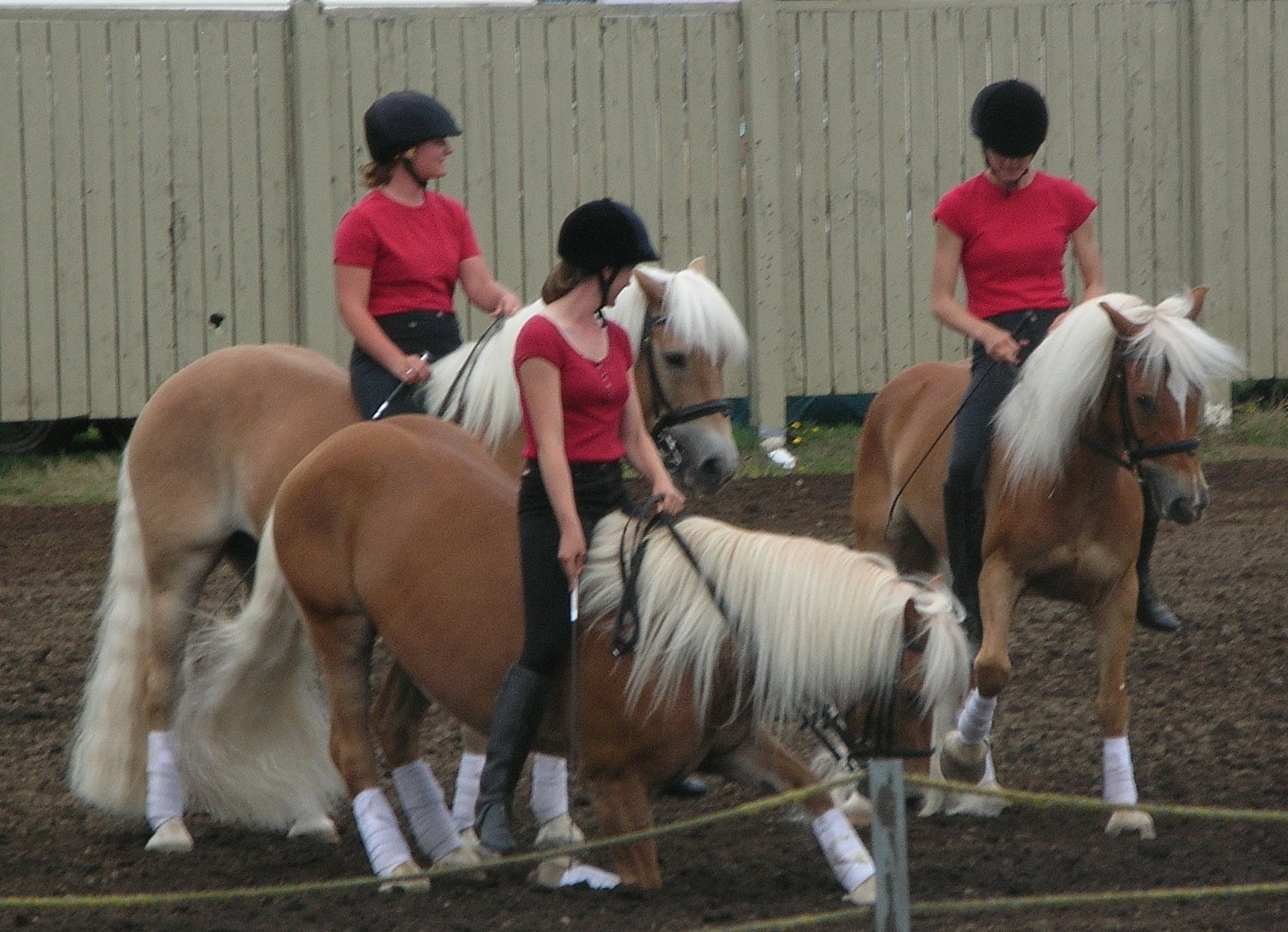
Jessie, Kelsey and Chesna bowing during their grandstand performance

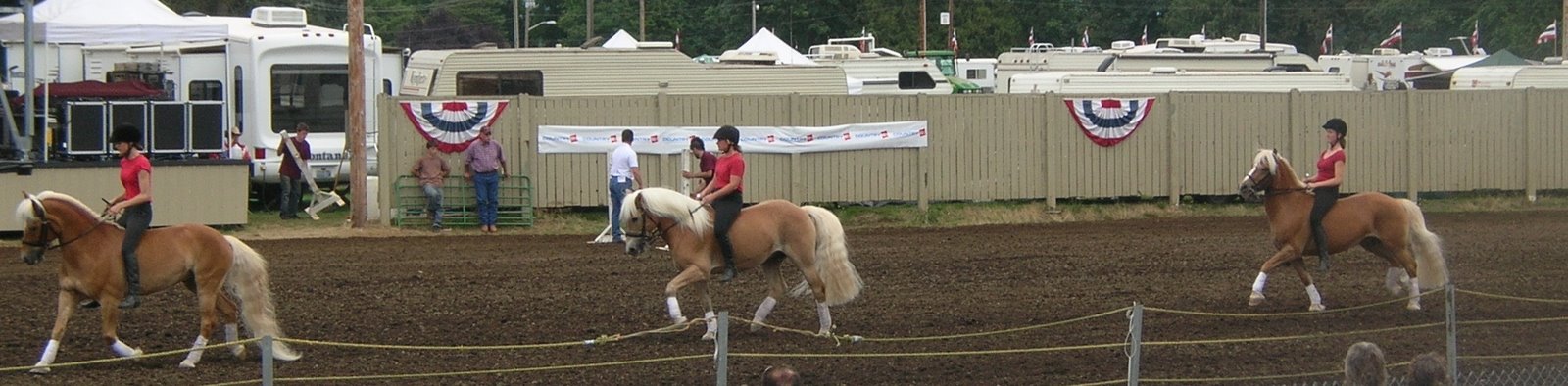
It is Fair time again, a traditional August activity I’ve cherished most of my life, and we celebrate the Centennial of the Northwest Washington Fair this week.  As I worked today preparing our horses’ stalls at the Lynden fairgrounds for moving in our Haflingers tomorrow, I could remember being at this Fair not quite fifty years ago, tagging along with my father as he did his job supervising FFA teachers in the region.   Although he had taken a state job in Olympia with the Department of Agriculture, he was responsible for the Future Farmers of America programs and teaching in Whatcom, Skagit, Island and Snohomish Counties, so made regular visits to all the high schools.   He never missed any of the county fairs as that was the place the FFA students competed, learned, judged and developed their skills and character.  I came along because I loved going anywhere with my dad that had to do with animals, and I absolutely loved the fairs.  The Lynden Fair, in particular, was my favorite because it was one fair that my dad felt safe about my taking off and exploring on my own.     Hanging out in the cow barns was okay, but the fair was a contained microcosm of the wider world, in my view, and I wanted to absorb every bit of it.   There were kitchens with competitive food preparation, table settings and an array of preserves and desserts.   There was the sewing building with girls busy at handwork and modeling their designs.  There were Grange displays artfully designed into intricate maps with positive messages about farming and community.  There were rows and rows of flowers, each bloom more fantastic than the last.  There were huge pumpkins, and perfect ears of corn and collections of kewpie and Barbie dolls.  There were intricate quilts and embroidery and tatting.   I watched children show their poultry and rabbits, learned about all the different breeds of sheep and pigs, and observed what it took to be a gracious winner and loser.

By the time I was eleven, I had the good fortune to win a weanling colt in a radio essay contest and part of the commitment the winner had to make was to join 4H and participate in the Thurston County Fair.  This was a dream come true for a kid who considered sawdust a favored brand of perfume.   I accepted the responsibility of not only training and preparing my horse, but learned how to be a part of a club with shared duties, including getting up at 5 AM to get to the fairgrounds in time for the morning cleaning.

My husband-to-be had no idea what life-long commitment he was making when he agreed to tag along as one of a group of friends I invited to go to the fair together, and after that day spent riding the ferris wheel, talking about our shared farming backgrounds and simply getting to know each other, we were together forever.  I don’t think we’ve missed a fair in thirty years, and for eighteen of those, we have become the exhibitors, watching fair-goers pass by as we dwell long hours in the noisy, smelly, bright and bold community that forms for one week of the year.

It begins again this week,  as we move in, settle our horses, and get back into the early to rise, late to bed routine.   Over the years, our children and their friends have taken the bulk of the responsibility so we pop in and out as we need to.    I’ll breathe deeply of the smell of sawdust, horse sweat, corndogs and curly fries and remember the freedom it represented for an eight year old girl allowed to explore a safe and fascinating world all on her own.  I’m still exploring, seeing with the eyes of an eight year old now housed in a fifty six year old body.

And that’s what brings me back, year after year.

A Place that Reflects the People Inside

( a writing class assignment on a building that is particularly meaningful to me)

Back in the early days of Whatcom County,  the little church on Wiser Lake had been constructed through “contributions of the people” in a rural neighborhood only a few miles from where we now live.  $600 in lumber was provided by a local farmer whose trees were cut and milled and brought by horse drawn wagon to a building site adjacent to a one room school house along a corrugated plank road. The total property was “valued at $1800, but of even more value to the community.” The dedication ceremony was held on Sunday, August 27, 1916 followed by “a basket dinner—come with well filled baskets for a common table, under the direction of the Ladies Aid”. This was to be followed by a “Fellowship Meeting, special music and fraternal addresses” and the day ended at 8 PM with a Young People’s Meeting.  So began the long history of the “Wiser Lake Church”.

For reasons unrecorded in the history of the church, the original denomination closed the doors thirty years later, and for awhile the building was empty and in need of a congregation. By the fifties, it became a mission church of the local Christian Reformed Churches and launched a Sunday School program for migrant farm and Native American children in the surrounding rural neighborhood.  No formal church services started until the sixties. By the time the building was sixty years old, so many children were arriving for Sunday School, there was not enough room so the building was hoisted up on jacks to allow a hole to be dug underneath for a basement full of classrooms. Over the course of a summer, the floor space doubled, and the church settled back into place, allowed to rest again on its foundation.

Over seventy years after its dedication ceremony, our family drove past the boxy building countless times hurrying on our way to other places, barely giving it a second glance. It had a classic design, but showed its age with peeling paint,  a few missing shingles, an old fashioned square flat roofed belfry, and arched windows. The hand lettered sign spelling out “Wiser Lake Chapel” by the road constituted a humble invitation of sorts, simply by listing the times of the services.

On a blustery December Sunday evening, we had no place else to be for a change.  Instead of driving past, we stopped, welcomed by the yellow glow pouring from the windows and an almost full parking lot. Our young family climbed the steps to the big double doors, and inside were immediately greeted by a large balding man with a huge grin and encompassing handshake. He asked our names and pointed us to one of the few open spots still available in the old wooden pews.

The sanctuary was a warm and open space with a high lofted ceiling, dark wood trim accents matching the ancient pews, and a plain wooden cross above the pulpit in front. There was a pungent smell from fir bough garlands strung along high wainscoting, and a circle of candles standing lit on a small altar table. Apple pie was baking in the kitchen oven, blending with the aroma of good coffee and hot cocoa.

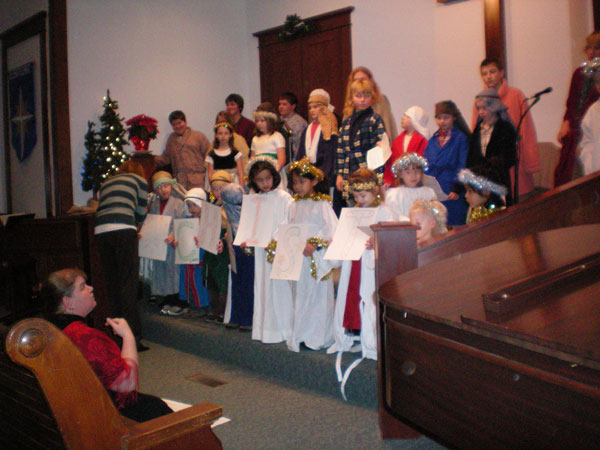
The service was a Sunday School Christmas program, with thirty some children of all ages and skin colors standing up front in bathrobes and white sheet angel gowns, wearing gold foil halos, tinfoil crowns and dish towels wrapped with string around their heads. They were prompted by their teachers through carols and readings of the Christmas story. The final song was Silent Night, sung by candle light, with each child and member of the congregation holding a lit candle. There was a moment of excitement when one girl’s long hair briefly caught fire, but after that was quickly extinguished, the evening ended in darkness, with the soft glow of candlelight illuminating faces of the young and old, some in tears streaming over their smiles.

It felt like home. We had found our church. We’ve never left. Over two decades it has had peeling paint and missing shingles, a basement that floods when the rain comes down hard, toilets that don’t always flush, and though it smells heavenly on potluck days, there are times when it can be just a bit out of sorts and musty. It also has a warmth and character and uniqueness that is unforgettable.

It’s really not so different from the folks who gather there.  We know we belong.

The Sunday School Express

photo by Gary Herbert

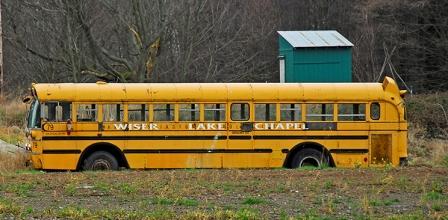
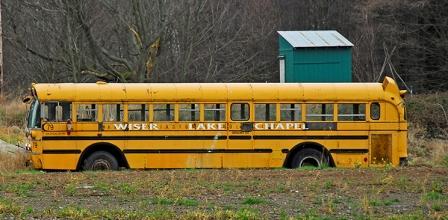
The rusty, scratched and dented shell of a school bus sounded as if it would barely make it around the corner. Yet it always ran if Pete was at the wheel as he drove the “Sunday School Express” in our rural neighborhood, picking up all willing (and some not so willing) children within a 6 mile radius.

This was the only way these children would get to attend Sunday School at Wiser Lake Chapel. The bus was the cast off donation that made the pick up routine possible. Pete provided the fuel for the bus and, along with his wife and a few other steadfast volunteers, was one of the teachers of the classes. This was a mission effort to reach the local kids, most of whom were growing up poor. Their immigrant and Native American parents were too weary from a week of working the fields, logging or fishing to get to church themselves, so were grateful for the two hour respite from their noisy children offered by the Sunday School Express.

The chapel was a humble destination. It was a boxy building with flaking paint and loose shingles, with a squared off steeple and a large bell to ring in the belfry. The children would take turns tugging on the rope inside the front door each Sunday, announcing the clarion call to all within a ½ mile that once again the Word of God was being proclaimed in this little building.

Pete made sure these hungry children were fed from the Word along with a lunch that would carry them through the day. He taught them the old hymns and made sure each one received their own Bible by age eight. For years, he and his family spent their Sunday mornings at this little chapel, not attending a church service with a preacher or a sermon, except when it came time to do the rounds of local congregations to ask for continued financial support for the mission outreach he was doing.

He came to know the children well as he picked them up in the bus and then delivered them back to their homes and would occasionally stop briefly to chat with their parents, to ask about any needs they may have and encouraging them to consider coming to one of the larger churches in town for worship. As he traveled about his Sunday morning bus route week after week, he’d sometimes discover the children’s homes abandoned, suddenly dark and empty, with no way to know or find out where the family had gone. He would pray they would find another home and another church would find them.

His unique ministry continued for almost a generation. As Pete’s own children grew up and moved away, he and his wife Esther helped recruit a pastor for the little chapel, and it grew to become the vibrant worshiping community it is today, to include some of the adults he had taught when they were young. They had been fed to the point of being able to feed others and a number of them became Sunday school teachers themselves.

Pete passed away several years ago, a beloved and respected father to his own children and teacher to many hundreds of others’. His funeral service was a simple service befitting a devout and faithful servant. What made it most remarkable was the overflowing chapel sanctuary, filled with people who he had picked up and delivered over the years in his rickety Sunday school bus, picking them up from their humble surroundings and delivering them into the grace and glory of God. He had fed them the Word and he had fed them lunch. And they returned in the fullness of their gratitude.

http://www.wiserlakechapel.org


In Search of Something Dapper to Doff

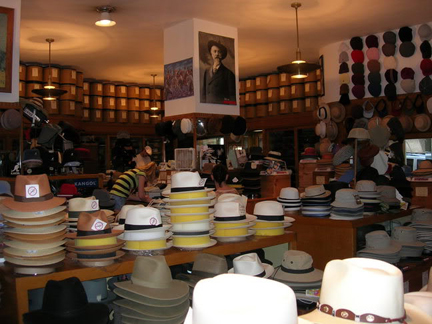
Stepping off the sidewalk into this store
Is to transport in time to a debonair era
Where the covering on the head defined the individual
Far beyond a pragmatic trucker’s baseball cap or skier’s stocking hat.

This is the place to come to leave behind the ordinary,
Separate from the rabble of the street
And find something extraordinary for the common man,
Designed from wool, straw or felt, sometimes trimmed in fur or feathers.

On this day the shoppers search high and low,
Hushed and reverent in this haberdasher sanctuary
Of stacked hats and wooden boxes, to peer in antique mirrors
Turning this way and that, smoothing and adjusting dapper brims.

The array of choices is overwhelming,
As is the diversity of heads to cover
From young to old, bald to shaggy,
A melting pot of noggins searching for a particular crown.

Fedora, trilby, cowboy, bowler, beret, newsboy, balmoral-
All are colorblind,  equalizers of generations, races, genders
By fitting any worthy head, making a statement
Without a word needing to be spoken.

Moments from Messiah

An announcement goes out in September:
help perform Handel’s Messiah for Christmas

From pre-teens to late-seventies,
seven dozen motley singers gather weekly

All we like sheep that have gone astray,
are brought together by patient Choral Society leadership

A talented director, a pianist mastering complex accompaniment,
soloists with voices transcending all earthly bounds

Beginner singers learning to count rests and measures without
speaking, tapping, nodding or moving any body part

Keeping mouths round and voices resonant,
instructed to smile broadly if notes go too high or too low

Remembering to look up,
never buried in the score

Immersing in the music in between rehearsals,
even scripture readings float into arias

Practicing impossible runs of notes
in the shower and the car

Waking in the night to strains of the Hallelujah Chorus
yet the house is completely silent

Performance night is delight,
pure privilege to share this majestic masterwork

With an appreciative community who come,
young and old,  to listen rapt

With glistening eyes, grateful smiles and glad hearts,
ready now to take on Advent in all its glorious expectancy

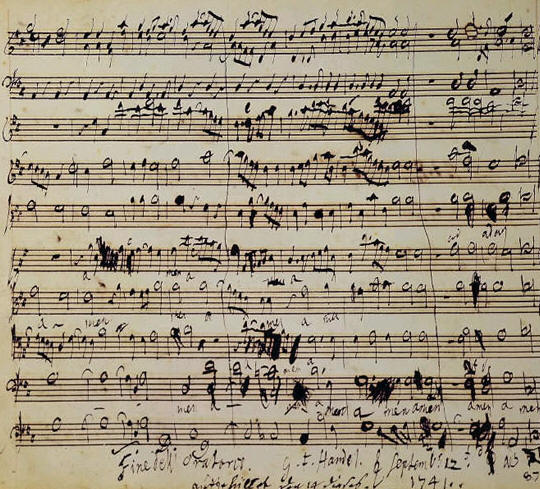
But thanks be to God, who gave us Handel, now departed 250 years,
who continues to move us, always, every time,  through his music.

************************************************************************************

(Reprint of my 2008 poem in honor of the Lynden Choral Society)

One small town
Containing more churches than banks,

A ninety year old choral society
With a Christmas tradition of singing Handel’s Messiah,

Sixty-some enthusiastic singers recruited without auditions
Through church bulletin announcements

Farmers, store clerks, machinists, students
Middle schoolers to senior citizens

Gather in an unheated church for six weeks of rehearsal
To perform one man’s great gift to sacred music.

Handel, given a libretto, commissioned to compose,
Isolated himself for 24 days, barely ate or slept

Believed himself confronted by all heaven itself
To see the face of God,

And so created overture, symphony, arias, oratorios
Soaring, interwoven themes repeating, resounding

With despair, mourning, anticipation
Renewal, redemption, restoration, triumph.

Delicate appoggiaturas and melismata
Of astounding complexity and intricacy.

A tapestry of sound and sensation unparalleled
To be shouted from the soul, wrung from the heart.

This group of rural people gathers to join voices
Honoring faith foretold, realized, proclaimed.

Ably led by a forgiving director with a sense of humor
And a nimble organist with flying feet and fingers.

The lilting sopranos with angel song,
The altos provide steadfast support,

The tenors echo plaintive prophecy
The base voices full and resonant.

A violinist paints heaven-sent refrain
In parallel duet of counterpoint melody.

The audience sits, eyes closed
As if in oft repeated familiar prayer.

The sanctuary overflows
With thankfulness:

Glory to God! For unto us a Child is born
And all the people, whether singers or listeners, will be comforted.