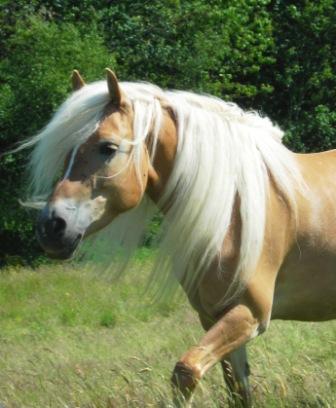
Putting On a New Coat

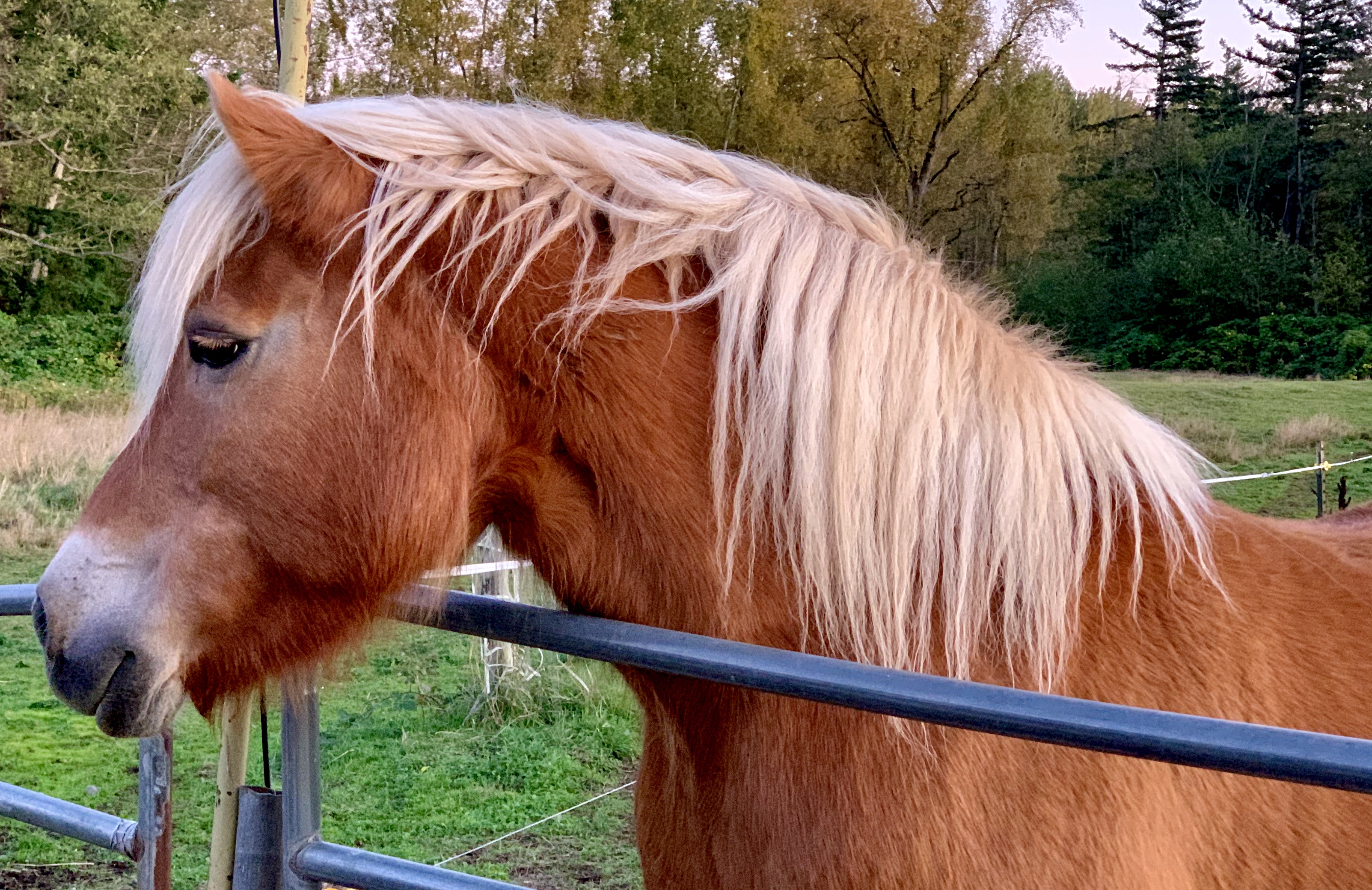
photo of Noblesse by Krisula Steiger

This story, written in 2003, is now published in the Oct/Nov 2009 issue of Country Magazine. Photos by Lynden Christian student Krisula Steiger.

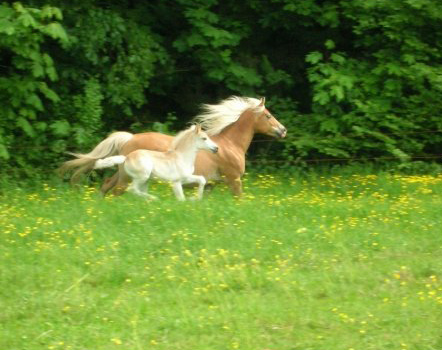
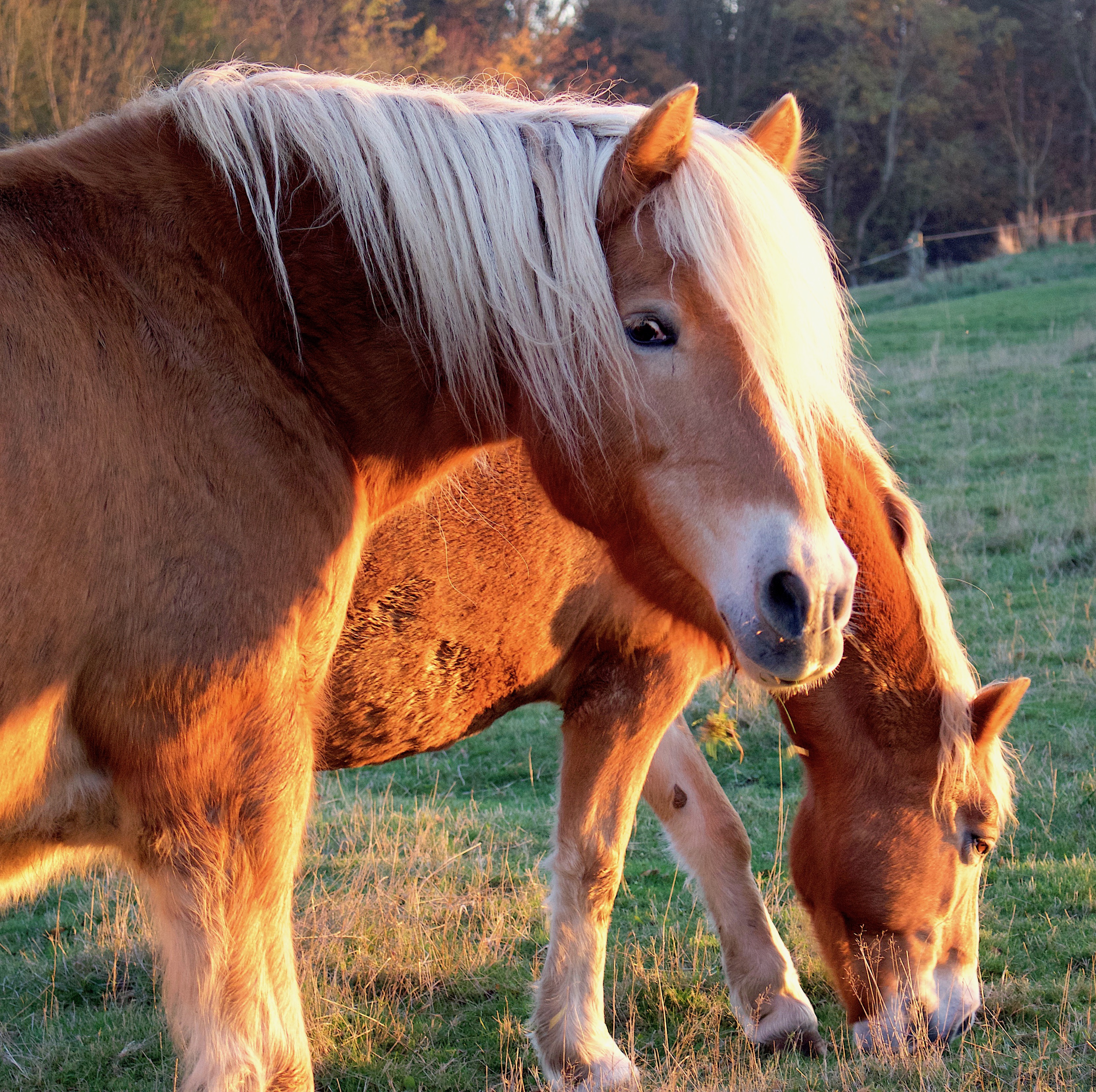
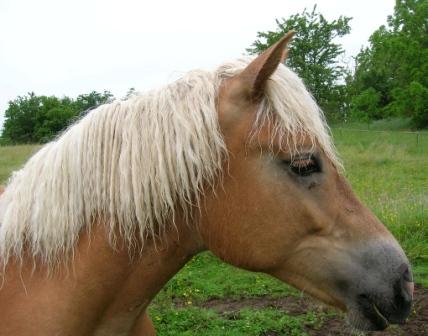
Generally late September is when we start to see our Haflinger horses growing in their longer coat for winter. Their color starts to deepen with the new hair as the sun bleached summer coat loosens and flies with the late summer breezes. The nights here, when the skies are cloudless, can get perilously close to freezing this time of year, though our first frost is generally not until well into October. The Haflingers, outside during the day, and inside their snug stalls at night, don’t worry too much about needing their extra hair quite yet, especially when the day time temperatures are still comfortably in the 70s. So they are not in a hurry to be furrier. Neither am I. But I enjoy watching this daily change in their coats, as if they were ripening at harvest time. Their copper colors are so rich against the green fields and trees, especially at sunset when the orange hue of their coat is enhanced by the sunlit color palette of fall leaves undergoing their own transformation in their dying.

In another six months, it will be a reverse process once again. This heavy hair will have served its purpose, dulled by the harsh weather it has been exposed to, and coming out in clumps and tufts, revealing that iridescent short hair summer coat that shines and shimmers metallic in comparison, although several shades lighter, sometimes with nuances of dapples peeking through. Metamorphosis from fur ball to copper penny.

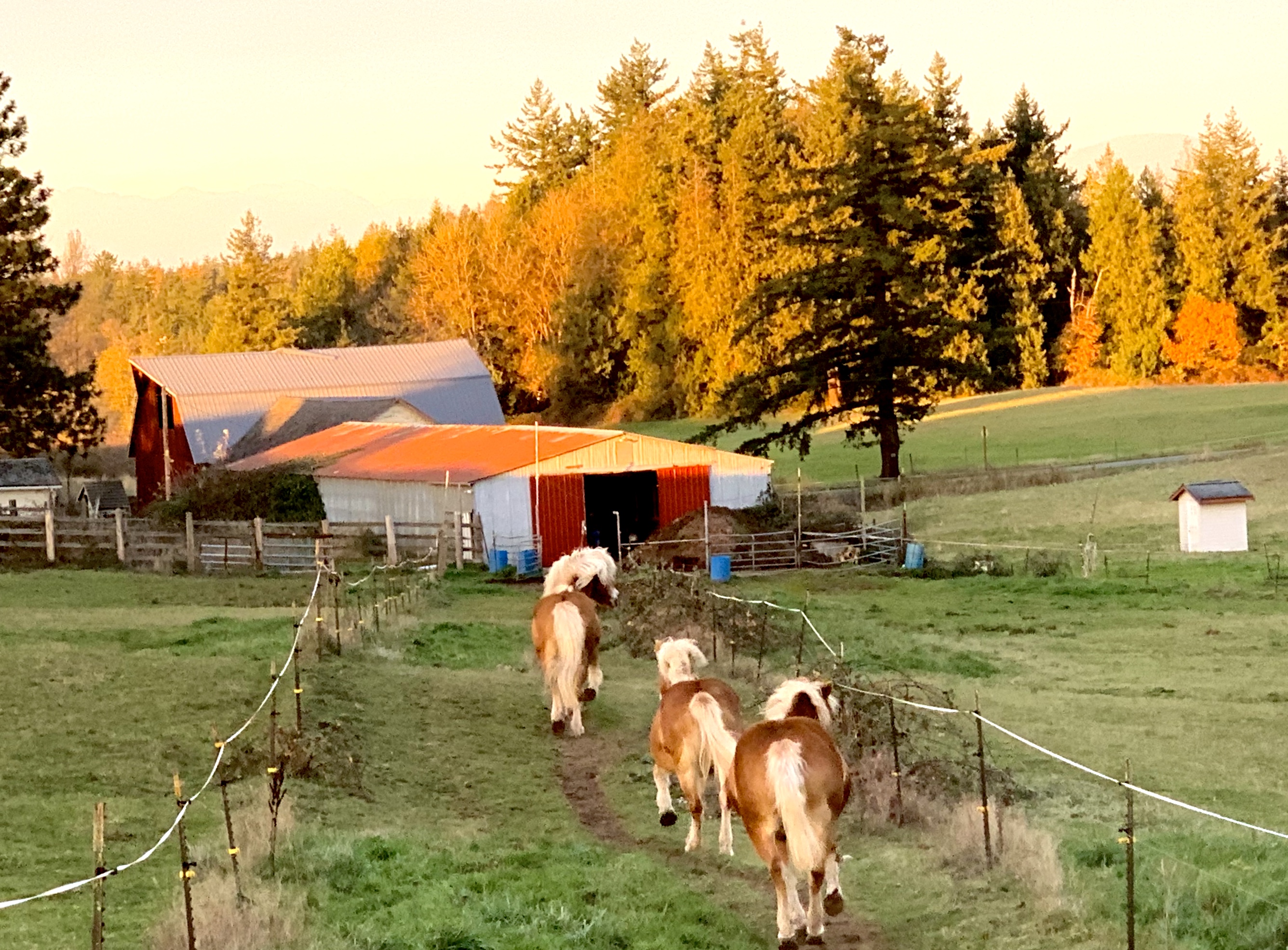
It occurs to me our old barn buildings on our farm have also undergone a similar transformation, having received a new coat of paint this summer. As a dairy farm for its previous owners starting in the early 1900s until a few years before we purchased it in the late 80s, it has accumulated more than its share of sheds and buildings constructed over the years to serve one purpose or another: the big hay barn with mighty old growth beams and timbers in its framework (still hay storage), the attached milking parlor (converted by us to individual box stalls for our weanlings and yearlings) and milk house where the bulk tank once stood, the older separate milk house where the milk used to be stored in cans waiting for pick up by the milk truck (now garden shed and harness storage), the old smoke house for smoking meats (was our chicken coop, but now the dogs claim it), the old bunk house and root cellar (more storage), the old large chicken coop (now parking for our carts and carriage), and the garage (a Methodist church in its former life and moved 1/4 mile up the road to our farm some 70 years ago when the little community of Forest Grove that had formed around a saw mill, store, school and church disbanded after 30 years of prosperity when there were no more trees to cut down in the area). When we bought this farm, these buildings had not seen a coat of paint in many many years. They were weathering badly–we set to work right away in an effort to save them if we could, and got them repainted–“barn red” for the barn and cream white for the other buildings with red trim around the windows and roof lines.

That was over 10 years ago now and we’ve been trying to hold off on another round of painting but it was clear this summer that it needed to happen. Now that they have their fresh paint coats, these old buildings appear to have new life again, though it is only on the surface. We know there are roofs that need patching, wiring that needs to be redone, plumbing that needs repair, foundations that need shoring up, windows that are drafty and need replacing, doors that don’t shut properly anymore–the list goes on. That superficial coat of paint does not solve all those problems–it will help prolong the life of the buildings, to be sure, but in many ways, all we’ve done is cosmetic surgery. What we really need is a full time carpenter –which neither of us is and at this point can’t afford.

In my middle age, there are times when I wish fervently for that “new coat” for myself–i.e. fewer gray hairs, fewer pounds, fewer wrinkles and one less chin, less achy stronger muscles. I buy a new fall jacket and realize that all my deficiencies are simply covered for the time being. I may be warmer but I’m not one bit younger. That jacket will, I hope, protect me from the brisk northeast winds and the incessant drizzle of the region, but it will not stop the inevitable underneath. It will not change who I am and what I will become.

True change can only come from within, from deep inside our very foundations, requiring a transforming influence that comes from outside. For the Haflingers, it is the diminishing light and lower temperatures. For the buildings, it is the hammer and nail, and the capable hands that wield them. For me, it is knowing there is salvage for people too, not just for old barns and sheds. Our foundations are hoisted up and reinforced, and we’re cleaned, patched and saved despite who we have become. And unlike new paint, or a winter coat, it lasts forever.
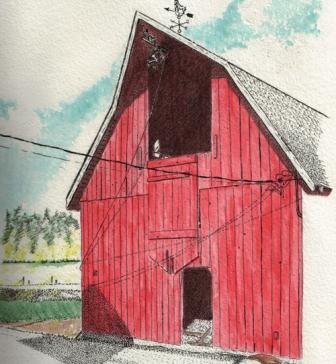
Watercolor of our hay barn by Dick Laninga

Savoring the Sweetness

Apples11(published a year ago in Country Magazine)
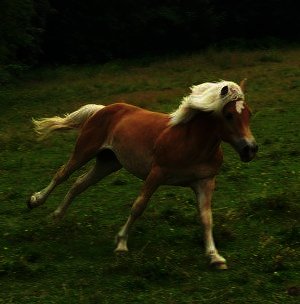
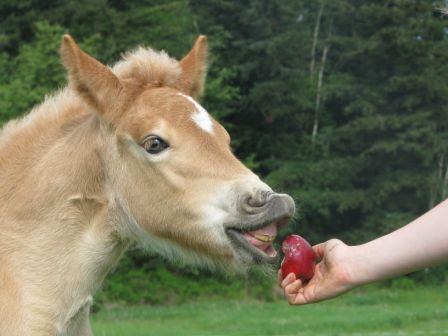
I’ve been picking up windfall apples to haul down to the barn for a special treat each night for the Haflingers. These are apples that we humans wouldn’t take a second glance at in all our satiety and fussiness, but the Haflingers certainly don’t mind a bruise, or a worm hole or slug trails over apple skin.

I’ve found over the years that our horses must be taught to eat apples–if they have no experience with them, they will bypass them lying in the field and not give them a second look. There simply is not enough odor to make them interesting or appealing–until they are cut in slices that is. Then they become irresistible and no apple is left alone from that point forward.

When I offer a whole apple to a young Haflinger who has never tasted one before, they will sniff it, perhaps roll it on my hand a bit with their lips, but I’ve yet to have one simply bite in and try. If I take the time to cut the apple up, they’ll pick up a section very gingerly, kind of hold it on their tongue and nod their head up and down trying to decide as they taste and test it if they should drop it or chew it, and finally, as they really bite in and the sweetness pours over their tongue, they get this look in their eye that is at once surprised and supremely pleased. The only parallel experience I’ve seen in humans is when you offer a five month old baby his first taste of ice cream on a spoon and at first he tightens his lips against its coldness, but once you slip a little into his mouth, his face screws up a bit and then his eyes get big and sparkly and his mouth rolls the taste around his tongue, savoring that sweet cold creaminess. His mouth immediately pops open for more.

It is the same with apples and horses. Once they have that first taste, they are our slaves forever in search of the next apple.

The Haflinger veteran apple eaters can see me coming with my sweat shirt front pocket stuffed with apples, a “pregnant” belly of fruit, as it were. They offer low nickers when I come up to their stalls and each horse has a different approach to their apple offering.

There is the “bite a little bit at a time” approach, which makes the apple last longer, and tends to be less messy in the long run. There is the “bite it in half” technique which leaves half the apple in your hand as they navigate the other half around their teeth, dripping and frothing sweet apple slobber. Lastly there is the greedy “take the whole thing at once” horse, which is the most challenging way to eat an apple, as it has to be moved back to the molars, and crunched, and then moved around the mouth to chew up the large pieces, and usually half the apple ends up falling to the ground, with all the foam that the juice and saliva create. No matter the technique used, the smell of an apple as it is being chewed by a horse is one of the best smells in the world. I can almost taste the sweetness too when I smell that smell.

What do we do when offered such a sublime gift from someone’s hand? If it is something we have never experienced before, we possibly walk right by, not recognizing that it is a gift at all, missing the whole point and joy of experiencing what is being offered. How many wonderful opportunities are right under our noses, but we fail to notice, and bypass them because they are unfamiliar?

Perhaps if the giver really cares enough to “teach” us to accept this gift of sweetness, by preparing it and making it irresistible to us, then we are overwhelmed with the magnitude of the generosity and are transformed by the simple act of receiving.

We must learn to take little bites, savoring each piece one at a time, making it last rather than greedily grab hold of the whole thing, struggling to control it, thereby losing some in the process. Either way, it is a gracious gift, and how we receive it makes all the difference.

Mending Fences

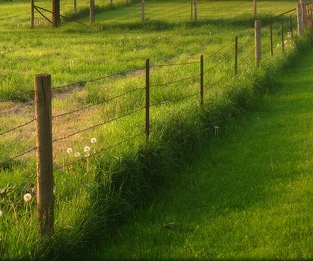
fence

An old voice from the past came to me as I mended fence between our dry field of scant pasture and our apple/pear orchard after the Haflingers decided that no amount of voltage in the wire would deter them from  pushing it down and reaching for the sweet fruit they could see and smell just a few yards away–

“Good fences make good neighbors”

This wasn’t referring to hot tape and wire, but a stone wall in New England. Robert Frost wrote “Mending Walls” in 1913, a poem that I studied when I was 14 and which has stuck with me these 35 years.

Mending Wall (excerpts)
By Robert Frost

Something there is that doesn’t love a wall,
That sends the frozen-ground-swell under it,
And spills the upper boulders in the sun;
And makes gaps even two can pass abreast.

I let my neighbor know beyond the hill;
And on a day we meet to walk the line
And set the wall between us once again.
We keep the wall between us as we go.

He is all pine and I am apple-orchard.
My apple trees will never get across
And eat the cones under his pines, I tell him.
He only says, “Good fences make good neighbors.”
Spring is the mischief in me, and I wonder
If I could put a notion in his head:
“Why do they make good neighbors? Isn’t it
Where there are cows? But here there are no cows.
Before I built a wall I’d ask to know
What I was walling in or walling out,
And to whom I was like to give offence.

He will not go behind his father’s saying,
And he likes having thought of it so well
He says again, “Good fences make good neighbors.”

I maintain wood rail and hot wire fences, in my haphazard and ineffectual way, pondering the necessity for them and marveling at the Haflinger ability to overcome them. Fences to keep the pines and the apple trees separate, as Frost muses, seems ludicrous. Frost didn’t know about Haflingers though. Fences to keep greedy horses from gorging on apples and pears and getting sick makes complete sense. Fences to keep my “happy wanderer” Haflingers from exploring the road and the neighbor’s fields is imperative!

As one travels across the plains and mountains of North America, fences are everywhere to be seen. Fences that are impressive and tall, stretching for miles, built to keep deer and elk off the roads. Fences that are old barbed wire, falling and decrepit, no longer effective, but still testimony to a determined farmer’s desire to section off his barren land from another’s barren land, or perhaps the requirement borne of the homesteading laws of the time. Frost’s poem spans the balance between man’s sometimes irrational desire for barriers, and the acknowledgement of the order that they bring to an uncertain and sometimes unpredictable world that lays beyond our walls.

Fences continue to exist in many parts of the world today, created out of political conflict and fear. New walls are going up between Israel/Palestinian settlements (even Prime Minister Ariel Sharon quoted Robert Frost’s poem in his justification of a new barrier). Much celebration accompanied the fall of the Berlin Wall after its years of imposing testimony to the lack of trust and understanding between people who were once relatives, neighbors and friends. The Great Wall of China still stands, now primarily tourist attraction, no longer serving any other useful purpose other than to illustrate the lengths to which man goes to barricade himself off from others.

So why maintain life’s fences, even if there may be no hungry horses to keep in, or predators to keep out? Even if the neighbors are best of friends and get along famously? Even if the building and maintaining of these fences seems a futile and foolish task when they are pushed down, blown over in the winds, with trees fallen over them, and overgrown with brush and wild blackberries?

Fences, like rules and laws, define order, and structure. They can bite back if they are breached. If crashed and broken, they are hazardous in and of themselves, not withstanding the potential dangers that lay beyond them. Remove them altogether and we risk chaos.

So, in the best of times, we are mending walls out of continuing need for contact with our neighbors. We meet across the barriers to shake hands and visit while we repair the fences together, leaving the barriers standing and strong. In the worst of times, we fortify and hide behind the walls, making them taller, wider, deeper, creating greater and greater gulfs between us and eventually losing touch forever as the walls themselves deteriorate without the necessary mutual “mending”.

So we must not love walls themselves, but must maintain them with our neighbor. We don’t worship the walls themselves but respect the foundation they rest on. We must accept our boundaries with humility, recognizing their necessity is due to our imperfections.

Now I just need to teach my Haflingers to do their part and put the insulators back on the posts and stretch the wire and tape tight. I know their teeth are good for something other than secretly smiling and constantly eating.

Reflecting the Light

tonynight

It was a treasured late summer evening when temperatures hover around 70 degrees, there was a slight cooling breeze, clear starlit skies, and barely a mosquito buzzing.  We had just returned from a lovely evening outdoor wedding for two special young friends,  with a special message from our pastor about the profound mystery of marriage, not just for newlyweds, but also for those of us married for many years. As we approach our 28th anniversary next month, we are blessed in the knowledge we depend on God’s grace every day, trying to reflect it back to our children, our community, to each other.

We decided to hike up to the top of our hill after dark to catch the best view of our neighbor Mars before we brought our Haflingers in for the night.  Mars was there to see all right, orange and bright in the southeast sky. But the Haflingers seemed to be afflicted by strange Martian fever, or perhaps it was simply because we rarely wander out into the field in the dark with flashlights in hand. There was no moon yet when we were out –simply starlight and the far-off lights from Vancouver,  British Columbia to the north and Bellingham to the south.

The Haflingers started running in the dark, kicking and snorting and bucking with the joy of a starlit, Martian-lit summer evening. Only all we could see of the Haflingers were their ghostly white manes and tails moving across the fields, jumping and twisting and cavorting.

I’m sure over the generations, in the alpine meadows of the South Tyrol, there must have been some starlit moonless lights when the Haflinger herds would run together, and all you could see in the dark were floating disembodied white manes and tails.

Perhaps that is what enchanted the mountain peasants the most about their sturdy reliable golden companions—at night they become spirit and light. They shine like the stars, even from the ground, reflecting back the lights from the heavens.  And so, in our companionship with each other, and with God, do we glow with His light.

Blackberry Cobbler

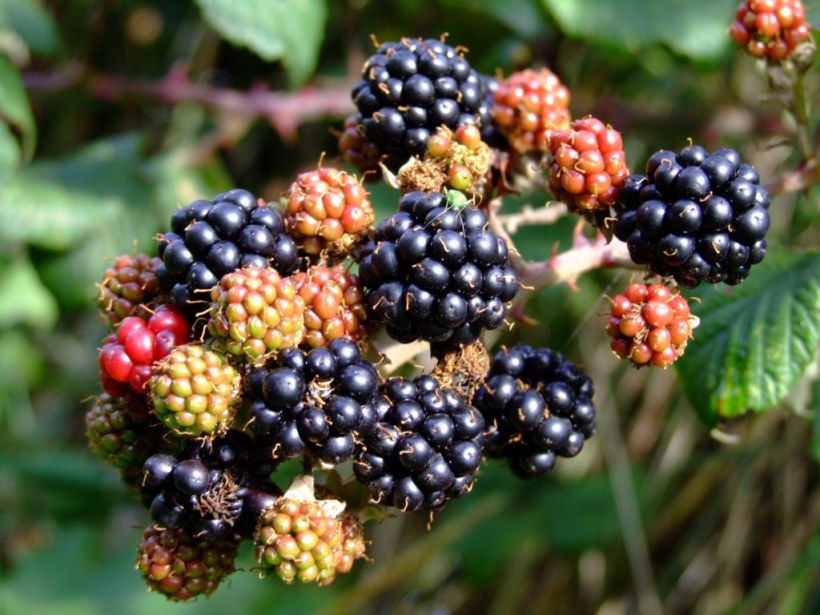
blackberriesWe’ve often been asked about the origin of our farm name, BriarCroft, as it is a bit unusual. I point toward our back field when I explain: banks of blackberry bushes and vines on the periphery of our woods, covering an old barbwire fence, and literally becoming fence itself in their overwhelming growth. So that is the “briar” and the “croft” is our little Scottish “farm on a hill”.
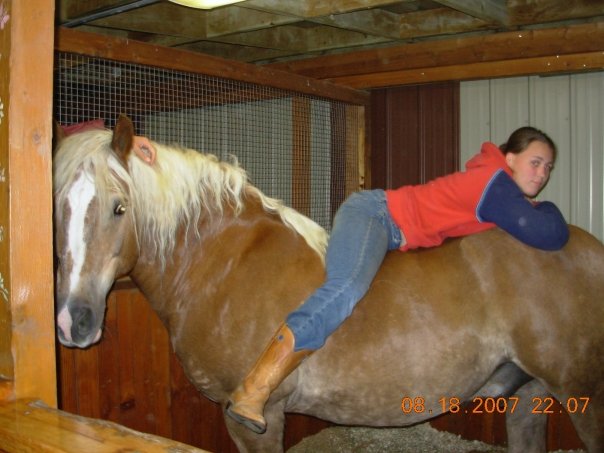
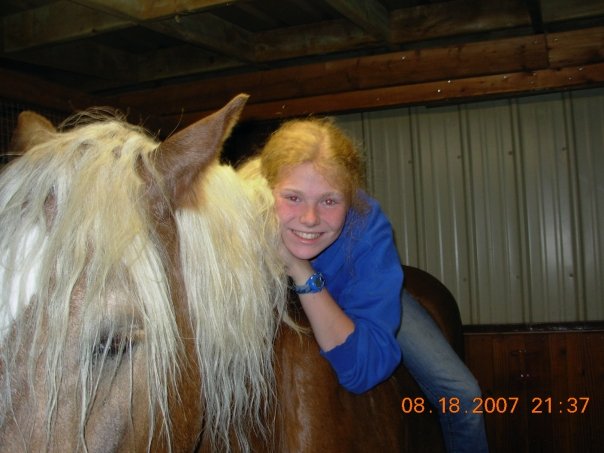
The blackberry vines seem like trouble 90% of the year–growing where they are not welcome and reaching out and grabbing passersby without discriminating between human, dog or horse. But for about 3 weeks in late August and early September, they yield black gold–bursting, swelling, unimaginably sweet fruit that is worth the hassle borne the rest of the weeks of the year.

Today I was on a mission. I wanted to make a blackberry cobbler for a family dinner to serve warm with vanilla ice cream–a true once a year treat to offer up.

It has been an unusually dry summer here in the Pacific Northwest with little rain at all since July, so the fields are brown and even the usually lush blackberry vines are starting to dry. The berries themselves are rich from the sun, but a bit smaller than typical. The Haflingers have been fed hay for the past several weeks as they are turned out in the fields in the mornings as there is not enough pasture for them without the supplement–we are about 6 weeks ahead of schedule in feeding hay.

I had grown a little suspicious the last couple nights as I brought the Haflingers into the barn for the night as several of the mares turned out in the back field were bearing purplish stains on their chests and front legs, and one even had a tell-tale purplish mark on her muzzle with a short blackberry vine still painfully stuck in her lower lip that I extracted for her. Hmmmm. Raiding the berries. Desperate drought forage behavior in an extremely efficient eating machine.

So this evening I headed down the path to the back field, not seeing the mares until I rounded the corner of the woods, and headed toward the berries. They had heard the Haflingers in the other fields talking to me as I passed, and were already headed up to see what was up. When they saw the bowl in my hand, that was it. They mobbed me. I was
irresistible.

So with three mares in tow, I approached the berry bank. It was ravaged. Trampled. Haflinger poop piles everywhere. All that were left were clusters of gleaming black berries up high overhead, barely reachable on my tip toes, and only reachable if I walked directly into the vines. The mares stood in a little line behind me, pondering me as I pondered my dilemma. I looked back at them and told them they were berry thieves and they weren’t getting a single one from me.

I set to work picking what I could reach, snagging, ripping and bloodying my hands and arms, despite my sleeves, determined that I was not going to give up on this vision of steaming blackberry cobbler and vanilla ice cream that I’d entertained all day. Pretty soon I had mares on either side of me, diving into the brambles and reaching up to pick what they could reach as well, unconcerned about the thorns that tore at their sides and muzzles. They were like sharks in water–completely focused on their prey and amazingly skilled at
grabbing just the black berries, and not the pale green or red ones. Three plump Haflingers and one *plumpish* woman willingly accumulating scars in the name of sweetness.

When my bowl was full, I extracted myself from the brambles and contemplated how I was going to safely make it back to the barn without being mugged. Not a problem. I adopted that “look” and that “voice” and they obediently trailed behind me, happy to be put in their stalls for their nightly grain, a gift from me with no thorns or vines attached.

Thorns are indeed part of our everyday life. They stand in front of much that is sweet and good and precious to us. They tear us up, bloody us, make us cry, make us beg for mercy.
Yet thorns did not stop salvation, did not stop goodness, did not stop the promise of sweetness to come. We simply can wait to be fed: a gift dropped from heaven.

Anyone ready for blackberry cobbler?

Fair Weather Farewell

n1207615738_30186331_7994

n1207615738_30186348_4966

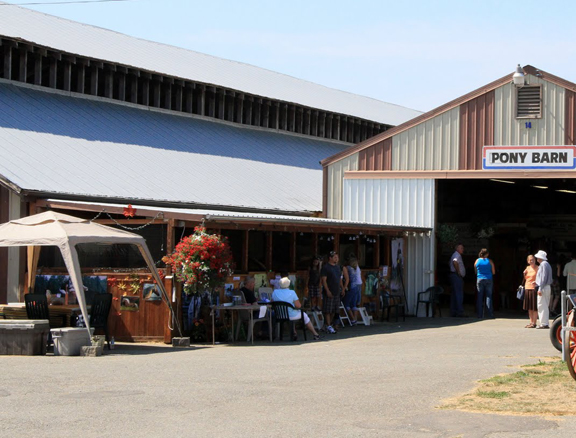
For the first time since 1992, we are not preparing this weekend to spend the week displaying our Haflinger horses at the Northwest Washington Fair in Lynden.  BriarCroft has been a consistent presence at this fair for almost two decades, promoting the Haflinger breed in a well  decorated display, providing 24 hour a day coverage for the horses for the 6 days of the fair. We begged the Fair Board for 5 years to allow us to display at the fair, and they finally said “okay, here’s the space, build it yourself” and we did! We were not there for classes, competition, or ribbons. We were there because people enjoyed our Haflingers and we enjoyed the people.

But this year, it was not to be.  Our faithful trick riders Kelsy and Chesna who performed daring feats on their Haflingers in front of the grandstand crowds are busy with their horse training in Tenino, our adult sons have headed off to work in Tokyo, Japan, and college in Chicago, leaving us short of the crew needed to man the display for the week as Dan and I have to work our day jobs.  It was a painful decision to make, but it was simply not going to be possible to do it this year.  I will miss spending time with our dedicated young helpers–my daughter Lea, and the Vander Haak family–Emily, Christopher and David.  Over the years we’ve had many young helpers spend the week with us, now many of them grown with children of their own.

Every year since 1992, we evaluated whether we had the energy and resources to do it  again–for the initial 6 years when Dan and I were the sole farm doing  the display, it meant a week of vacation from work, and very very long days, juggling our small children as well as several horses. Then, with the help of 3R Farms and Teaglach Farm as well as older children, we were able to rotate shifts, still work at our “real” jobs part days, share duties and expenses together. The older kids watched the younger kids, the inbetween kids did most of the horse stall cleaning duty, and the adults sit and shoot the breeze.

Did this sell horses for us? Not really. But it sure did create good will for the fair visitors who depended on us every year to be there with horses that they and their children could actually pet (and sit on ) without fear, who enjoyed our braiding demonstrations, and our various Haflinger trivia contests with prizes.

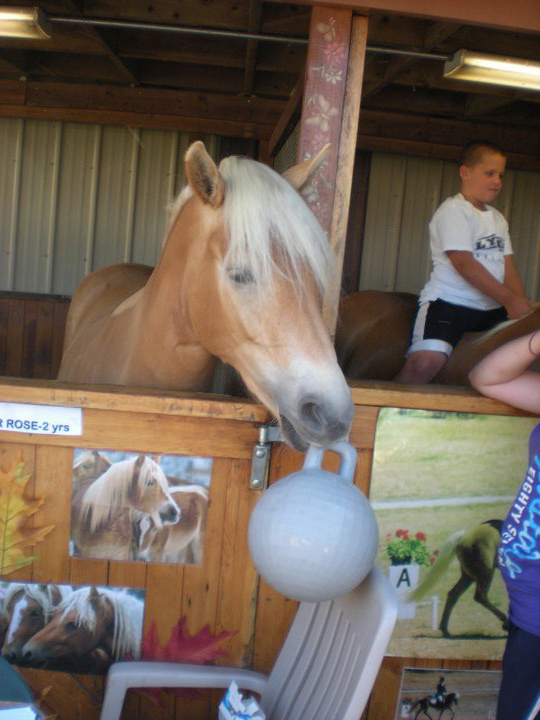
Most of all, why we continued to do this so long, was that we provided what  dreams are made of. I’m not sure how many times a day there would be a bright eyed child who approached our stalls, climbed up on the step stools and reached up to pet a Haflinger nose or neck and looked deep into those big brown Haflinger eyes, and lost their heart forever to the breed. They will not forget that moment when a horse they had never met before loved them back. Haflingers are magic with children and we saw that over and over again.

Our first year, in 1992, a mom and her 6 year old son came up to our stalls, as do some  10,000 people a day, and spent a long time petting the horses and talking to them, and enjoying them. They walked off, with the little boy looking over his shoulder at the Haflingers until they turned a corner and went out of sight. An hour later they were back and spent more time with the Haflingers. I offered the little boy a chance to sit on a Haflinger, and he agreed readily, and sat and sat and sat, playing with the mane and petting the shoulder and neck and was simply in heaven, quietly dreaming his own dreams on the back of a horse. His mom told me that they lived in a suburb near Seattle, but always spent this particular week in August at a local beach cabin, and the fair was one of their favorite activities each year. Her son Gary had never had an opportunity to sit on a horse before.

Next year, they were back, and Gary was a little taller, but still a quiet boy, and he kept dragging his mom back to the Haflingers, and she’d sit and visit as he’d sit on the Haflingers. He watched as we watered the horses, or fed them hay, or cleaned their stalls, and pretty soon he was asking if he could do the scooping, or dump the buckets or brush the horses. So he became, out of his own initiative, a helper.

By the time he was 8, he was spending several hours at a time with us at the stalls, taking his turn at the chores, and his mom, trusting that he was in good hands, and that he certainly wasn’t going to wander away from the Haflingers, would check back with him now and then to see if he wanted to go on rides, or see a performance, and his response was always “no, I can do that anytime, but I don’t get to see Haflingers very often!” He would talk a little about his hope someday to have a farm where he could raise Haflingers, and one year even said that his folks were looking at property to buy with acreage, but apparently a job for his dad didn’t materialize, so he remained a city kid in reality, even if he was a future farm kid in his heart.

He was one of our regular kid helpers every year until he was 12 when he started turning out for junior high football, and the football summer camp coincided with our fair week, so we’d only see him briefly on Saturdays as he got into his teens. He’d stop by to say hi, pet the horses, catch up on the Haflinger news, and because he only had a few hours to spend at the fair, he’d head off to other things. I really missed him and his happy smile around the stalls.

When he was 15, I missed seeing him because I was working when he stopped by. When he stopped by at age 16, he strolled up to me and I found I was looking up at this young man who I had to study to recognize. I’m a tall woman of 5’10”–he was at least 4 inches taller than me! He told me he wanted to come by because some of his best summer memories were of spending time with the Haflingers at the fair and he wanted me to know that. He thanked me for welcoming him and allowing him to “hang out” with the Haflingers. He told me his hope and dream someday was to live somewhere where he could raise Haflingers, and he was working hard in school so he could make that happen. He was a  4.0 student and the first string quarterback on his high school football team. I was as proud as if he was my own son.

This young man received a full scholarship to play football at a major university, and over four years waited his turn to be the starting quarterback.  Once he had his chance, after only a few games, he was tackled hard, sustaining a neck fracture which thankfully resulted in no permanent damage, but his college football career was suddenly over.

I hope someday to see Gary again–it would be great to see this tall accomplished young man who so recently was a shy quiet little city boy of 6, draped across the broad back of a Haflinger, and lost in his dreams of a “someday” Haflinger of his own. This is why we’ve done what we have at the fair all these years. It was for people like Gary who made a connection with a horse and never ever forget it. I’d like to think that a little bit of who Gary is and what he is becoming is because he had a dream of a horse farm that he held onto all these years.

Perhaps we’ll be back again at the Lynden Fair in the future if we can organize enough helpers.  We do hope the fair-goers miss the friendly golden horses with the big brown eyes that help make dreams come true.

Wholly Weaned

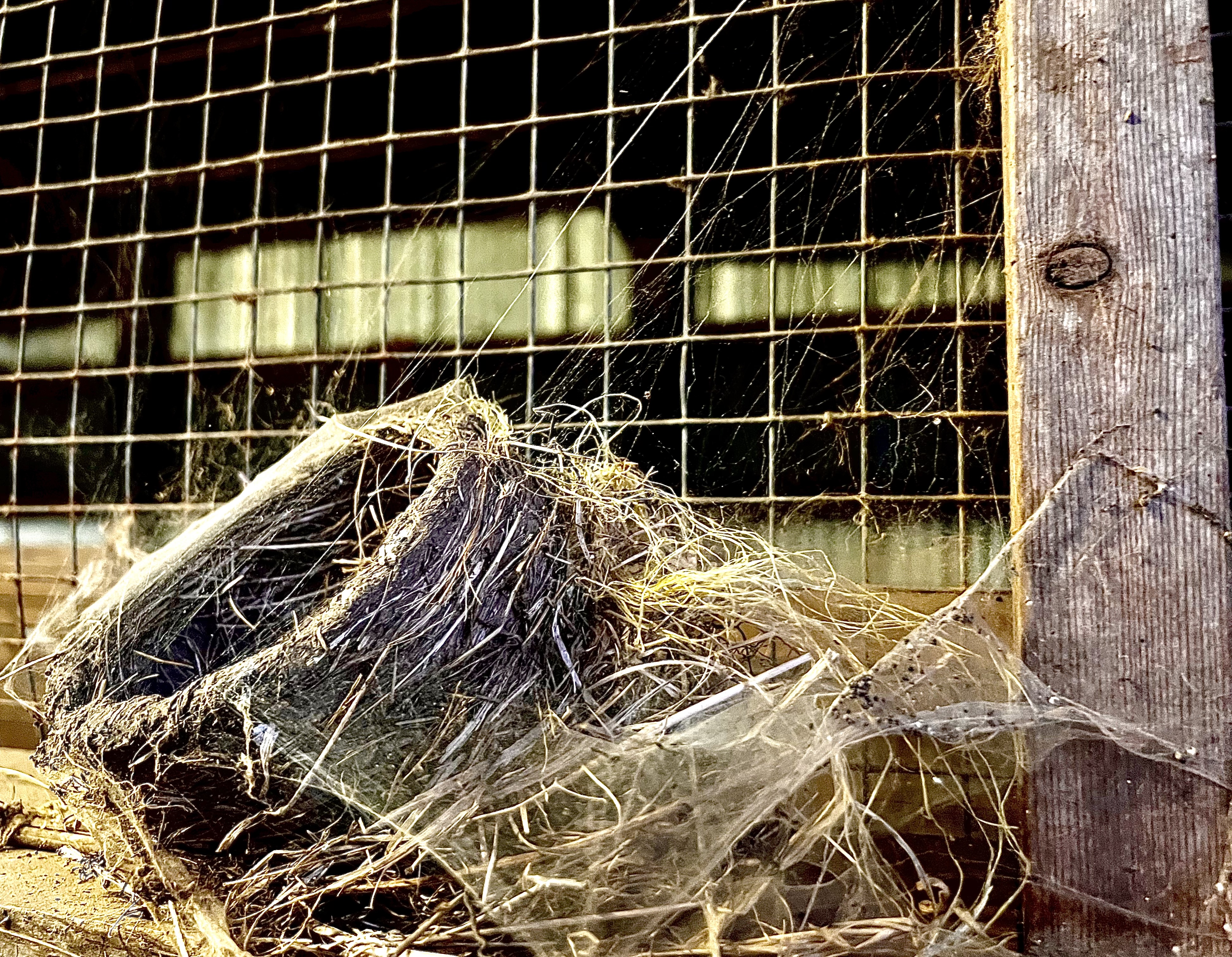
oldnest

The usual peace and quiet on our farm has been anything but the last few days. The time has come to wean foals from their mothers and they are all protesting loudly about the separation, day and night. This is always a difficult time every year, rattling my senses more than usual because I am in the process of being weaned as well. Their cries echo deeply in my unsettled heart. As the mares stand at the field gate calling to their babies stowed safely in the barn, I know they want them back for their own comfort–mostly to relieve swollen painful udders. They also need to know their babies are safe and content. This feeling I know all too well.

We’ve recently delivered our second child back to college, even farther from home than our first child chose to go. It was a difficult leave taking in many ways, primarily because I wasn’t as prepared as I hoped to be. I still want that comfortable feeling of knowing my children were tucked safely under my wings. It just doesn’t seem possible they don’t fit there as easily as they used to. My children certainly understand that better than I as they are the ones feeling crowded and anxious to leave, ready to embark on independent adult lives.

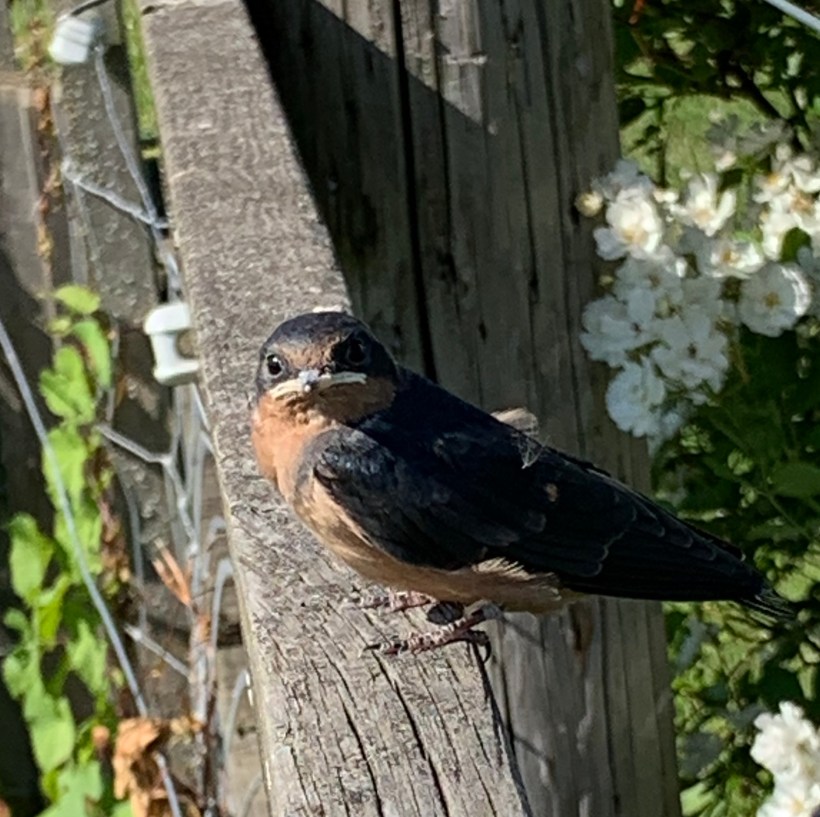
An unexpected preparation took place recently when we took several of our Haflingers to a regional fair for a week’s stay. We moved into covered outdoor stalls that stand empty 51 weeks of the year, but for this one week, the stalls are decorated and built up with fluffy shavings, and the horses shined to a gloss. The night before the fair was to open, I was sweeping the area in front and discovered a barn swallow’s nest had been built in the rafters right above where the public would be standing to pet our horses. The pile of bird droppings had heaped high on the cement and the nest was full of chirping fledglings all prepared to produce more where that had come from. It was an inconvenient and potentially messy spot for a nest’s front porch so I carefully lifted it and its chirpy contents from the front rafter and placed it on a back rafter above one horse’s stall. It was a minor move of about 10 feet, but that proved to be a major obstacle for two dedicated swallow parents who had five noisy hungry mouths to feed. I hoped I had not completely disrupted this little family’s world.

It took about an hour for the swallow parents to decide they couldn’t bear to listen to their displaced babes’ cheeping any more, so they swooped into the stall with insects to feed five gaping mouths, putting aside their indignation at the semi-eviction and the objectionable human and horse smell all over their home. They felt compelled to care for those offspring, no matter what the dangers may be.

It became quite the show stopper during the week as people leaned over the stall gates to pet our horses and a swallow would swoop right past their ear on its way to the nest. We watched those five babies grow fluffier over the course of the week, and several times had to rescue one or another from a horrible fate under a horses’ hoof as the birds bumped and jostled each other out of the crowded nest. By the end of the week, they were not yet flying but they were able to sit independently next to the nest on the rafter beam and a few days later when I went back to check on them, they were already gone, the nest feather-lined and poop filled, looking a bit forlorn and terribly empty, no longer a comfortable fit for a family that had outgrown it.

A barn swallow is more resilient than I am about letting their offspring go. Even my mares are slowly settling into the knowledge their youngsters are now on their own and perfectly capable of taking care of themselves in the big world. I am not nearly so settled with my children’s transition to adulthood. Yet I know it must come. It’s not just about the inevitable resolution of the uncomfortably swollen udder, but in time to feel the calm and quiet fullness in the heart of the wholly weaned.

photo by Harry Rodenberger
video by Harry Rodenberger

Listening to the Vetch

vetch

Hot humid summer days are barely tolerable for a temperate climate sissy pants like me.  I am melting even as I get up in the morning, and right now our house is two degrees warmer (93 degrees) than the out of doors.  So distractions from the heat are more than welcome.

For me today it started as I drove the ten miles of country roads to get to work in town, running a bit late to an important meeting.  I was listening to the news on the car radio when I puzzled over why the radio station would be playing cat meows over the news.  I turned off the radio, and realized the meows didn’t go away.

As soon as I was able, I pulled into a parking lot and surveyed my van from back to front, looking under seats, opened the back, scratched my head.  Then the meowing started again—under the hood.  I struggled with the latch, lifted up the hood and a distressed bundle of kitten fur hurtled out at me, clinging all four little greasy paws to my shirt.  Unscathed except for greasy feet, this little two month old kitten had survived a 50 mile per hour ride for 20 minutes, including several turns and stops.  He immediately crawled up to my shoulder, settled in by my ear, and began to purr.  I contemplated showing up at a meeting with a kitten and grease marks all over me, vs. heading back home with my newly portable neck warmer.  I opted to call in with the excuse “my cat hitchhiked to work with me this morning and is thumbing for a ride back home” and headed back down the road to take him back to the barn where he belongs, now with the new name “Harley” because he clearly desires the open road.

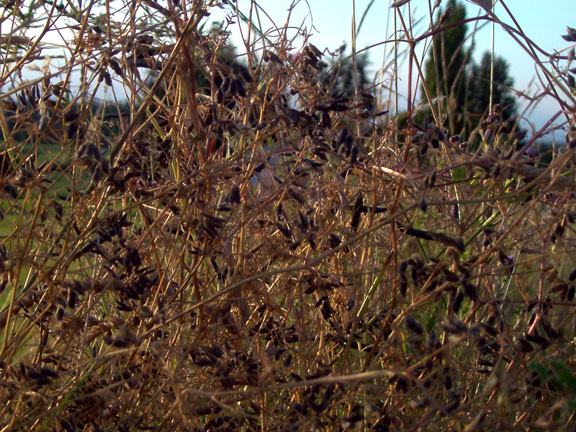
At that point, my meeting in town was already completed without me so I went out to check fence line as the hot wire seemed to be shorting out somewhere in the pasture as the mares had decided that the wire interfered with their hearts’ desire and had broken through, so it clearly was not hot enough to discourage them.  It has been a very hot few days with persistent drying breezes this afternoon so as I approached the fence line, I heard numerous snaps and pops that I interpreted as hot wire shorting out in the dry grass and weeds, creating a fire hazard and certainly potentially dangerous with the winds whipping up.  I walked closer and was really puzzled to hear snaps all up and down the fence, but could not see sparks.  I approached more closely and heard a little “snap” and a tiny seed pod burst open in front of my eyes, dropping its contents very effectively.  It was the dried common vetch seed pods that were snapping and popping, not hot wire shorting out.  They were literally exploding all up and down the fenceline in a reproductive symphony of seed release.  I put the broken wire back to together, plugged it in and all was well, at least until the next Haflinger decides the adjacent pasture looks better.

Returning to the barn,  I saw our stallion pawing furiously at his round black rubber water tub in his paddock, splashing water everywhere and creating quite a spectacle.  I went up to him to refill the tub with the hose and he continued to paw and splash in the tub and actually went down on his knees in the tub and then tried to lower one shoulder into it and his neck and face.  By this time he had created quite a mud puddle of the thick dust around the tub and his splashing and thrashing was causing mud to fly everywhere, including all over me, my hair, covering his mane and tail and belly and legs.  I took the hose and sprayed the cold water over him and he leaned closer to me, begging me to spray him everywhere, turning around so I could do his other side, facing me so I could spray his face.  I drenched him completely, and he was one happy horsie and I was laughing my head off at what he had done to me.  Both drenched, muddy, dirty, but happy and much much cooler.  What a sight we were.  This is the Haflinger that hesitates sometimes at water hazards on the cross country courses because he wants to splash and play in it.

This was a hot day on the farm indeed but with plenty else to occupy my mind.  It is never dull here.

Remember to bang on your car hood before you get in, keep the hotwire hot, and share a mud bath with your Haflinger. But especially, listen to the vetch and don’t let it fool you that catastrophe is about to happen.  The vetch is simply exploding in noisy reproductive ecstasy.  It doesn’t get much better than that.

Answering the Knock on the Door

tony07

From Spring 2004 with an update at the bottom:

It’s been a challenging few weeks at our farm because one of our two year old geldings, Wallenda, had an emotional crisis of sorts that I’ve been trying to understand and deal with.

Wallenda has always been on the “sensitive” side–not the most laid back of our youngsters, and far more apt than others to need to look at new things closely, stop and stare, and give a snort or two. He’s lived a trauma-free, non-demanding existence, asked only to lead and stand quietly, allow shots and worming, and get his feet trimmed. He has not been a classic Haflinger pocket pony, begging for attention, but he’s never turned away from our attention either.

One day, about a month ago, his world turned upside down. During the day while we were at work, he had managed, in an effort to reach green grass, to wiggle his way under a 12 foot pipe gate in his paddock, getting it partially off its hinges, but still barring the opening enough that his brother and sister opted not to follow him. I came home from work to find him grazing peacefully in the orchard, near the paddock, without a halter on of course. When I tried to approach him with his halter to catch him and bring him in, he reacted fearfully, running madly up and down the fence line, looking very much as if he might jump the tape and wire, just to get away from me. I solved his panic (and my concern) by bringing his brother around on a lead and Wallenda followed him back into the barn and into a stall.

But nothing seemed the same for him. This young horse who formerly would always come up to us in the stall when we opened the door to feed him or put on his halter would bolt for a corner if we approached, literally climbing the walls to get away from us. He wouldn’t take food offered from our hands, and wouldn’t even approach his grain until we moved away from the stall. He was petrified, eyes wide and white, muscles trembling and tense.

We were completely baffled. No one else works or handles the horses here except my husband and I, and no one was at home when Wallenda got out. We wondered if he had, in fact, somehow gotten out to the road
and been frightened there by someone trying to shoo him home, but it seemed so unlikely that he would leave lots of grass and his buddies to venture out that far. Clearly there had been a major emotional trauma over the course of the day, as he didn’t have a mark on him anywhere to indicate he’d been harmed or hurt.

If both of us went into his stall together, we could approach him slowly from either side and he would stand for haltering, but if only one of us went in the stall, he’d immediately turn his butt to us, and swing his front end away, very effectively keeping out of reach, and threatening us with his hind legs and once, when Dan was trying to halter him alone, landed a painful kick on Dan’s ribs. It was clear to us that he was reacting out of fear, not aggression, but that realization didn’t make him any safer to interact with.

We tried to keep his routine the same as best we could. He was haltered, with us approaching him in the stall together, and he would lead fine out to his paddock. However, once in the paddock, there was no way he’d allow himself to be caught to come in at night and the paddock was too large for us to be able to position him to be caught. When we tried once, he ran for the 5 foot board fence, jumped, landed on this belly on the top cracking the top rail and landing in the paddock unhurt on the other side. We were incredulous.

He spent several lonely nights alone in the outdoor paddock because he absolutely would not be caught–not with grass, not with grain, nothing. He would snort and toss his head repeatedly, telling us emphatically not to touch him. I even delayed his meals, thinking a hungry stomach would bring him close as I held out hay to him, but it did not help. It was so un-Haflinger-like that I started to wonder if he had some brain injury causing this aberrant behavior–could he have had a concussion? a tumor? or do horses sometimes go psychotic?

We’ve had a breakthrough over the past week. We started to allow the horses some pasture time, building it up gradually, and he has been out with his siblings in a big field, free to run and eat. At night, they come to the gate to be led in one at a time, and though he would hang back, he would follow the others in to the barn. Each day, I could tell he knew the destination was the pasture and that was where he wanted to be. So it took less and less time to position him for safe haltering in the morning in the stall. He accepted grain from my hand. Two mornings ago, I walked into the stall, he turned and faced me, and ate grain from my hand and then allowed me to halter him, without ever turning his butt to me once. This morning, he came right to the stall door, just like old times, and dove his nose right into the halter without hesitation. I feel like my horse has come back from whatever hell he was in for 4 weeks. His eyes are softer again, and he doesn’t toss his head at me when I look him in the eye and talk to him.

Whatever happened? All I know is that he lost all trust for us, through no action of ours that we can define, and we had to slowly patiently gain it back. It was tempting to get angry with him and his behavior, and react with punishment, but clearly that would be exactly the wrong thing to do as it would only affirm his fear. What he needed was consistency, reassurance, predictability and calmness. And it has worked. I certainly won’t assume that his fear is gone forever but I have a relationship to build from again.

Addendum:  Wallenda went on to become a star student for his trainer, learned dressage, jumping and is now a successful eventing sport horse in Wyoming.
Fear is a powerful emotion that we all know well. It is disabling to the point of causing us to harm others and ourselves in our effort to flee.

I thought about Wallenda when a young depressed college student I’ve been working with for several weeks in my clinic suddenly canceled an upcoming follow up appointment and did not reschedule.  It gave me a bad feeling that she was “turning her back” and not wanting to be approached, just as Wallenda had done. I could have just put on my coat and headed home at the end of a long Friday but decided to call my patient and see what was going on with her. She didn’t answer her phone. I looked up her apartment address and headed over there. I could hear her moving around in her apartment, but she didn’t respond to my knocks or my voice. I decided to stay right there, talking to her through the door, letting her know I wasn’t leaving until she opened up the door, and eventually, tears streaming down her face, she did. She had been drinking heavily, with the intent to overdose herself on aspirin and vodka, and I was the last person she expected to see at her door. Her fear of life was such that she wanted to “flee” so badly that it didn’t matter to her if she died in the process.

She agreed to come with me to the hospital and be admitted for stabilization and when I went this morning to visit her, her eyes were brighter and more hopeful and she greeted me with a hug and thanked me for not giving up on her when she had given up on herself. She never expected anyone to care enough to come looking for her, and to stand firm when she was rejecting all approaches. She was astounded and grateful, and frankly, so was I.

Addendum:  Four years later, a small card arrived this week in my clinic mailbox on a most challenging work day, from an unfamiliar address two thousand miles away. The name looked vaguely familiar to me but when I opened and read the contents, this time it was my turn to let tears flow:

“Dear Doctor,
I am not sure if you will remember me considering you see a number of patients daily; however, I am a patient whose life you changed in the most positive way. I never truly THANKED YOU for listening to me and hearing my silent words of grief and hearing my cries for help when all I could feel was anger and hopelessness. If it had not been for you, had you not knocked on my door, I would not be writing this letter to you today. I don’t know exactly what to say to the person who saved me from hurting myself fatally. You were a stranger in my life, but a dear friend in my time of need. THANK YOU, for everything that you did for me. You have a permanent place in my heart, you have given my spirit hope, you have reminded me that a life is worth living. Thank you, thank you, thank you! Sincerely, ______”

I’m grateful 4 years ago I had the sense to go knock on her door, the stubbornness to stay put until she responded, and most of all, I’m appreciative for her gracious gesture in letting me know it made a difference. Instead of being consumed by her anger to the point of harming herself, she was now reaching out in gratitude.

On a most difficult day this week, this student made a difference for ME. She knocked on my door and I opened it, awash in my own tears of relief at the healing that had taken place.

Out of the Routine

feather

There is safety in routine–predictable things happening in predictable ways, day after day, week after week, year after year.  Somehow, dull as it may seem, the “norm” is quite comforting, like each breath taken in and let go, each heart beat following the next. We depend on it, take it for granted, forget it until something doesn’t go as it should.

Mornings are very routine for me.  I wake before the alarm, usually by 5:30 AM, fire up the computer and turn the stove on to get my coffee water boiling.  I head down the driveway to fetch the paper, either feeling my way in the dark if it is winter, or squinting at the glare of early morning sunlight if it is not.  I make my morning coffee, check my emails, eat my share of whole grains while reading the paper, climb into my rubber boots and head out for chores.

The same Haflinger voices greet me in the barn every morning, and I let our stallion in from his night outside in the pasture.  He has his rituals too.  We must do them together or nothing is quite right the rest of the day.   He must inspect every corner of the enclosed area between pasture and barn door, marking each spot with urine or manure that he marked just 12 hours previously, 24 hours previously, 36 hours previously.  Same spots, same marking to declare this “his” territory.  He reinspects all of them one more time to make sure they smell just as they should and then content, he’s ready to come into his daytime stall and paddock while the rest of the horses go out for the day.

If I’m in a hurry and try to disrupt or speed up his morning routine, he is gracious about it but clearly it makes him grumpy and out of sorts.  That evening, he’ll take the extra time to check every thing three times because I didn’t allow him his routine two checks in the morning.  He’s truly obsessive compulsive to the point of an empty bladder and no more manure to be had.  He simply goes through the motions, even though he has exhausted his “marking” supply.  I can’t help but chuckle at the futility, but realize that this comforts him, gives him a sense of control and command.  I’m really no different at all, emptying myself out in all kinds of futile rituals to give me a sense of “control”.

The other morning, as I was leading a mare and her colt out to our large outdoor arena for their daytime turnout, I was whistling to the wandering colt as he had his own ideas about where he wanted to be, and it wasn’t where I was leading.  He was bucking the routine that his daddy so treasures, but in his young rebellion, was straying too far away from his mother who also called for him.  50 yards away, he decided he was beyond his comfort zone so whirled around, sped back to his mom and me, and traveling too fast to get the brakes on ended up body slamming her on her right side, putting her off balance and she side stepped toward me, landing one very sizeable Haflinger hoof directly on my rubber booted foot.  Hard.  Oh my.  I said some words I’ll not repeat here.

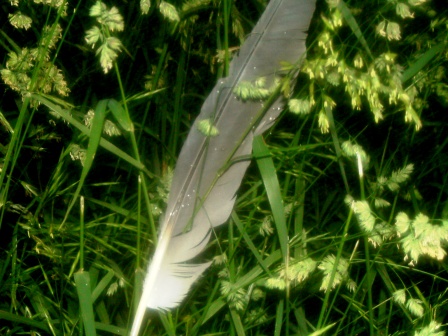
I hobbled my way with them to the arena, let them go, closed the gate and then pulled my boot off to see my very scrunched looking toes, puffing up and throbbing.  I still had more horses to move, so I started to limp back to the barn, biting my lip and thinking “this is no big deal, this is just a little inconvenience, this will feel better in the next few minutes”  but each step suggested otherwise.  I was getting crankier by the second when I passed beneath one of our big evergreen trees near the arena and  noticed something I would not have noticed if I hadn’t been staring down at my poor sore foot.  An eagle feather, dew covered, was lodged in the tall grass beneath the tree, dropped there as a bald eagle had lifted its wings to fly off from the tree top, probably to dive down to grab one of the many wild bunnies that race across the open arena, each vulnerable to the raptors that know this spot as a good place for lunch .  The wing feather lay there glistening, marking the spot, possessing the tree, claiming the land, owning our farm.  It belonged there and I did not–in fact I can’t even legally keep this feather–the law says I’m to leave it where I find it or turn it over to the federal government.

I am simply a visitor on this acreage, too often numbly going through my morning routine, accomplishing my chores for the few years I am here until I’m too old or crippled to continue. The eagles will always be here as long as the trees and potential lunches remain to attract them.

Contemplating my tenure on this earth, my toes don’t hurt much anymore.  I am reminded  that nothing truly is routine about daily life, it is gifted to us as a feather from heaven, floating down to us in ways we could never expect nor deserve.   I’d been body slammed that morning all right, but by the touch of a feather.  Bruised and broken but then built up, carried and sustained.  Even pain brings revelation.  Sometimes it is the only thing that does.