
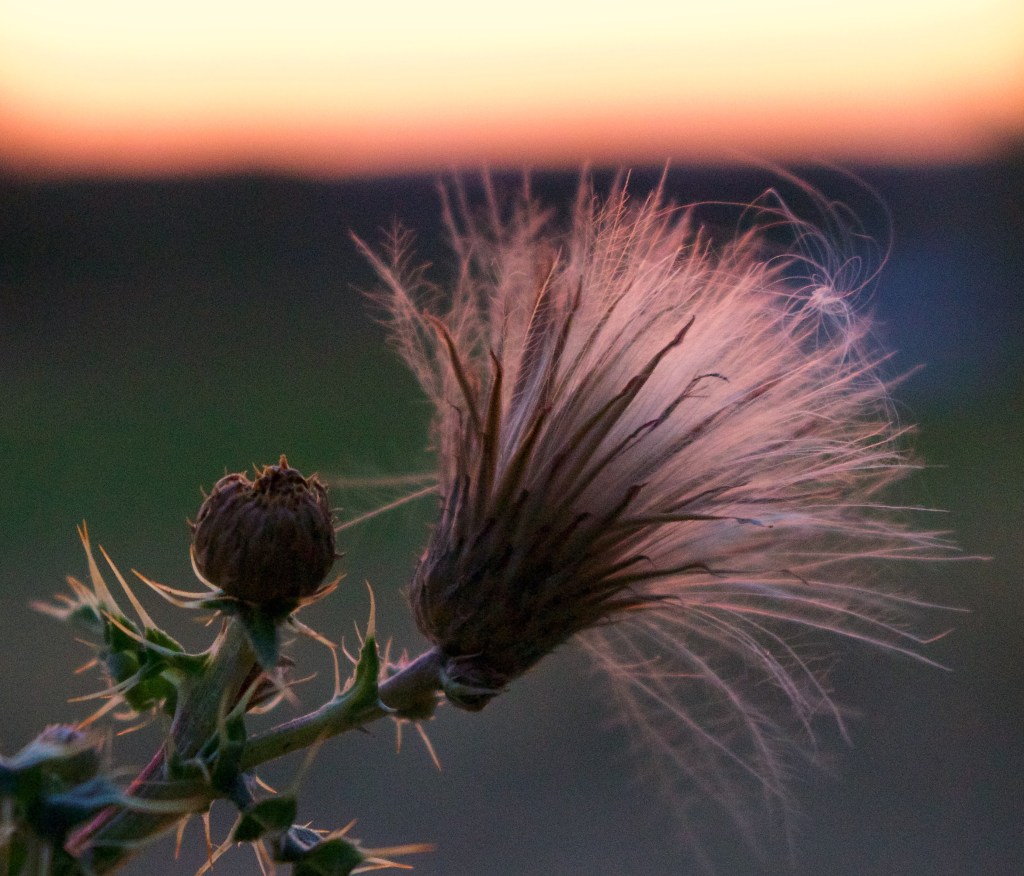
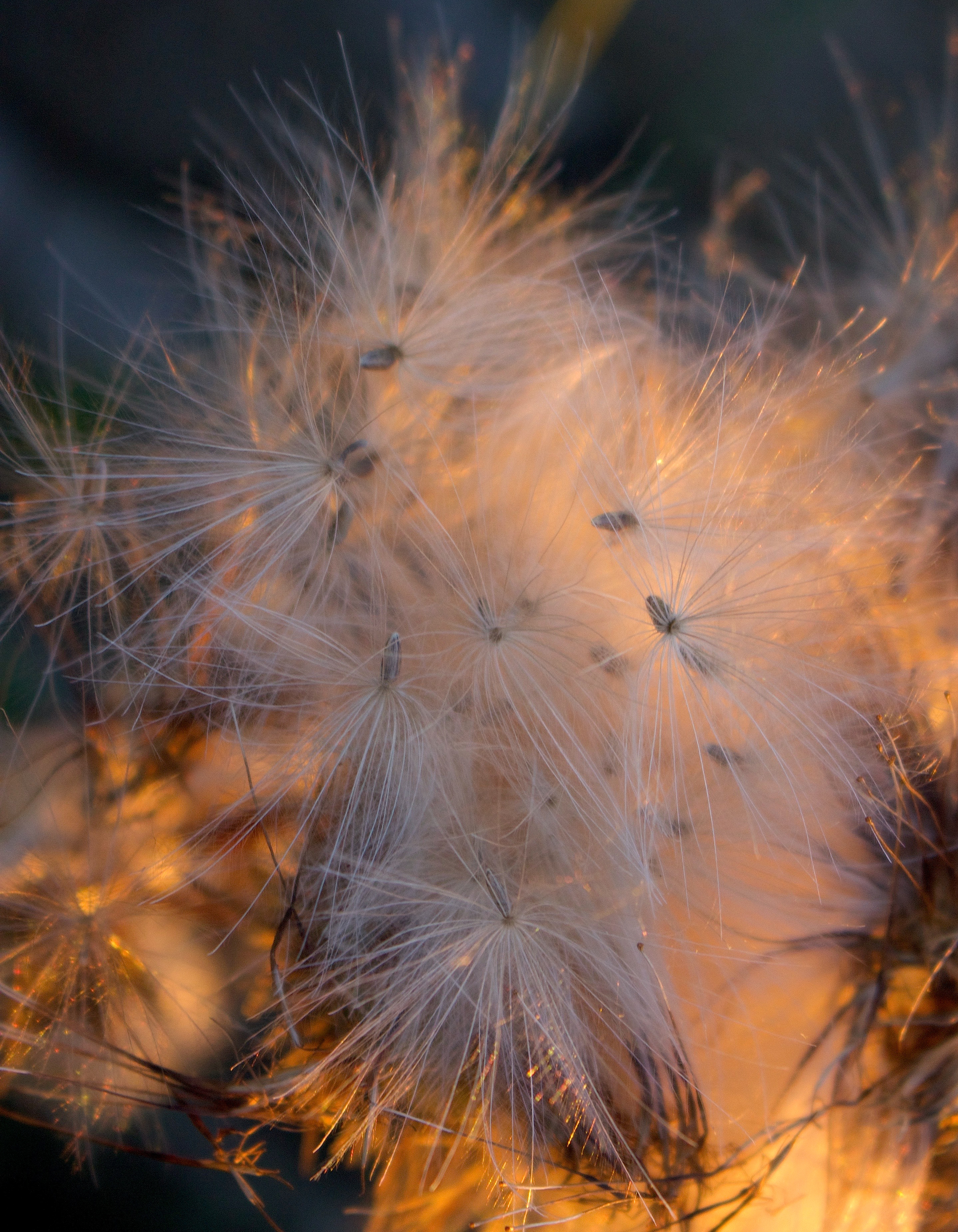
Against the rubber tongues of cows and the hoeing hands of men
Thistles spike the summer air
And crackle open under a blue-black pressure.
Every one a revengeful burst
Of resurrection, a grasped fistful
Of splintered weapons and Icelandic frost thrust up
From the underground stain of a decayed Viking.
They are like pale hair and the gutturals of dialects.
Every one manages a plume of blood.
Then they grow grey, like men.
Mown down, it is a feud. Their sons appear,
Stiff with weapons, fighting back over the same ground.
~Ted Hughes “Thistles”


Sheep will not eat it
nor horses nor cattle
unless they are starving.
Unchecked, it will sprawl over
pasture and meadow
choking the sweet grass
defeating the clover
until you are driven
to take arms against it
but if unthinking
you grasp it barehanded
you will need tweezers
to pick out the stickers.
Outlawed in most Northern
states of the Union
still it jumps borders.
Its taproot runs deeper
than underground rivers
and once it’s been severed
by breadknife or shovel
—two popular methods
employed by the desperate—
the bits that remain will
spring up like dragons’ teeth
a field full of soldiers
their spines at the ready.
Bright little bursts of
chrome yellow explode from
the thistle in autumn
when goldfinches gorge on
the seeds of its flower.
The ones left uneaten
dry up and pop open
and parachutes carry
their procreant power
to disparate venues
in each hemisphere
which is why there will always
be thistle next year.
~Maxine Kumin “Why There Will Always Be Thistle Next Year” from The Long Marriage
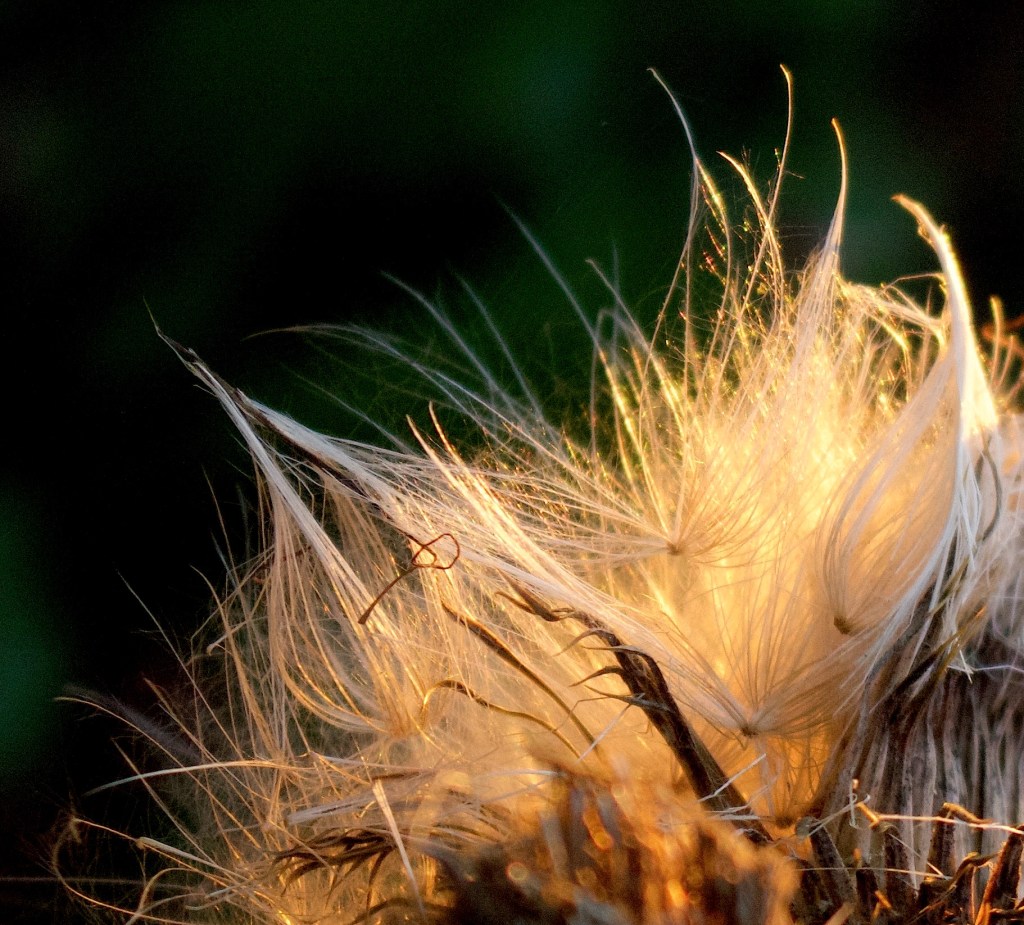


This upstart thistle
Is young and touchy; it is
All barb and bristle,
Threatening to wield
Its green, jagged armament
Against the whole field.
Butterflies will dare
Nonetheless to lay their eggs
In that angle where
The leaf meets the stem,
So that ants or browsing cows
Cannot trouble them.
Summer will grow old
As will the thistle, letting
A clenched bloom unfold
To which the small hum
Of bee wings and the flash of
Goldfinch wings will come,
Till its purple crown
Blanches, and the breezes strew
The whole field with down.
~Richard Wilbur “A Pasture Poem” from Anterooms
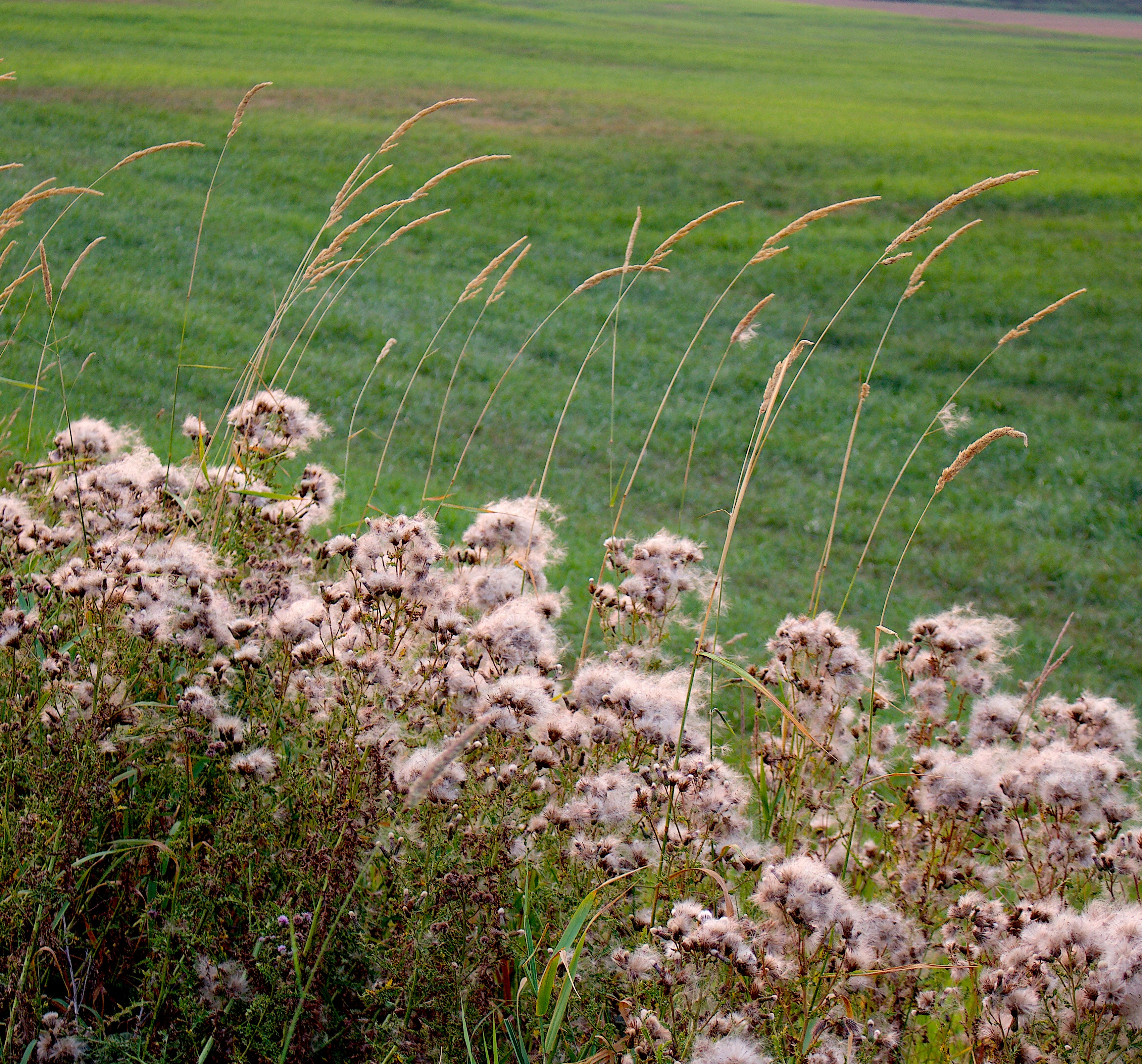


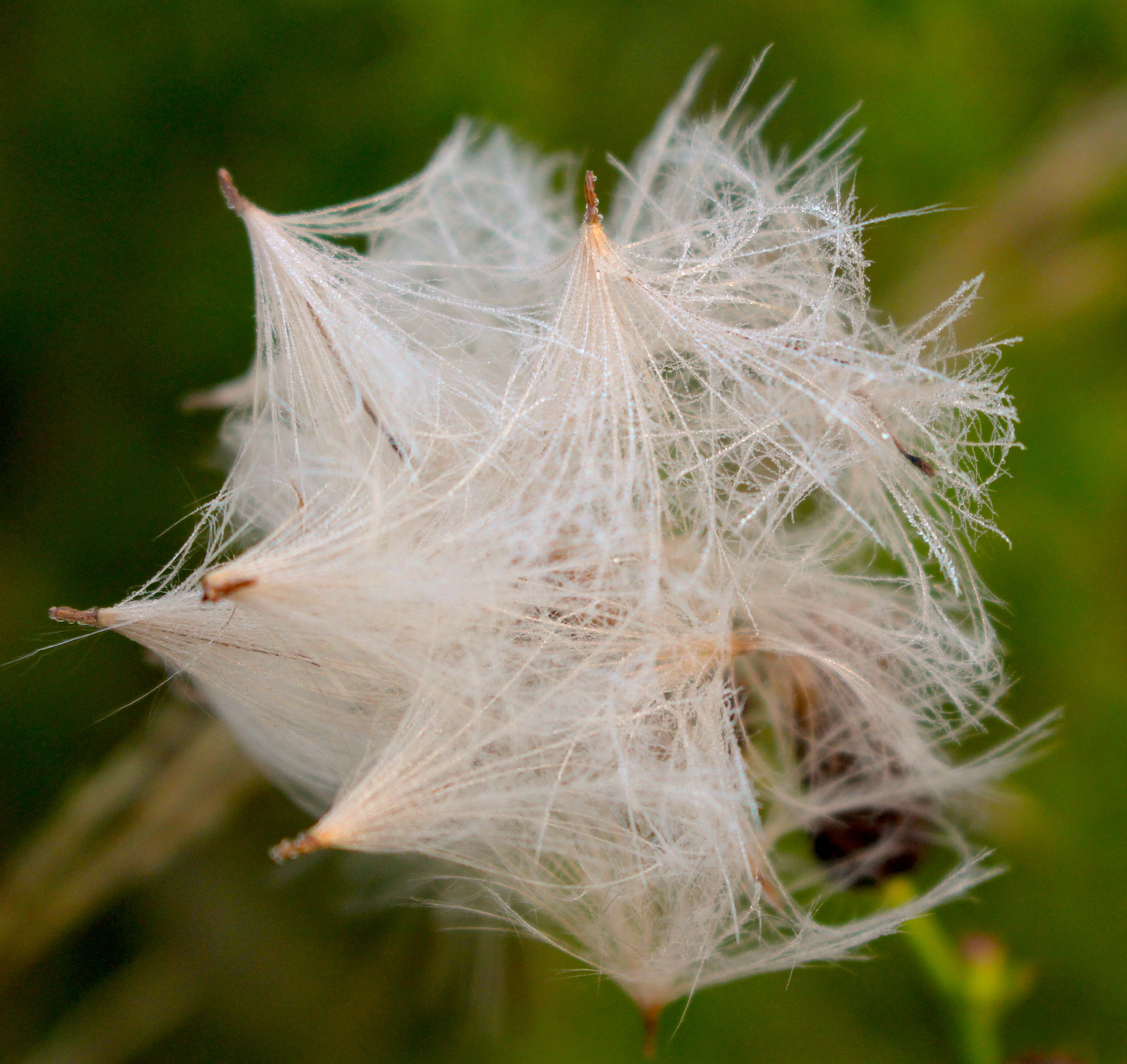
Like the thistle that dots our pastures, I have a tendency at times to be bristly, barbed and sharp. Perhaps it is only my desire for self-protection in a threatening world. Having spiky thorns may keep me from being “eaten”, but they won’t deter the approach of the hungry goldfinch, butterfly or bee.
I’ve softened over time (in more ways than one!) by forces outside of myself. The autumn thistle may bristle but its thistledown envelops the pasture as surely as God’s grace envelops me.
With the breezes, the softest thistle seed spreads afar rather than remaining stock-still in self-defense. I find as I wrap up my seventh decade, I too am adrift, seeking out previously unexplored nooks and crannies in which to land.
“For a time I rest in the grace of the world, and am free.”
~Wendell Berry from The Peace of Wild Things
That is how grace and redemption works, both on thistles and bristly people: our self-protective sharp edges shine with a delicate downiness, spreading beauty instead of bristles.
Everyone is in need of such a transformation. The worldly dilemma with thistle and people is that downy seeds grow up to wield yet more barbs and thorny weapons. The entire pasture becomes a battlefield.
Lord, please make me an instrument of your peace…


Make a one-time or recurring donation to support daily Barnstorming posts
Make a monthly donation
Make a yearly donation
Choose an amount
Or enter a custom amount
Your contribution is deeply appreciated.
Your contribution is appreciated.
Your contribution is appreciated.
DonateDonate monthlyDonate yearly Barnstorming