Don’t Go Where I Can’t Follow

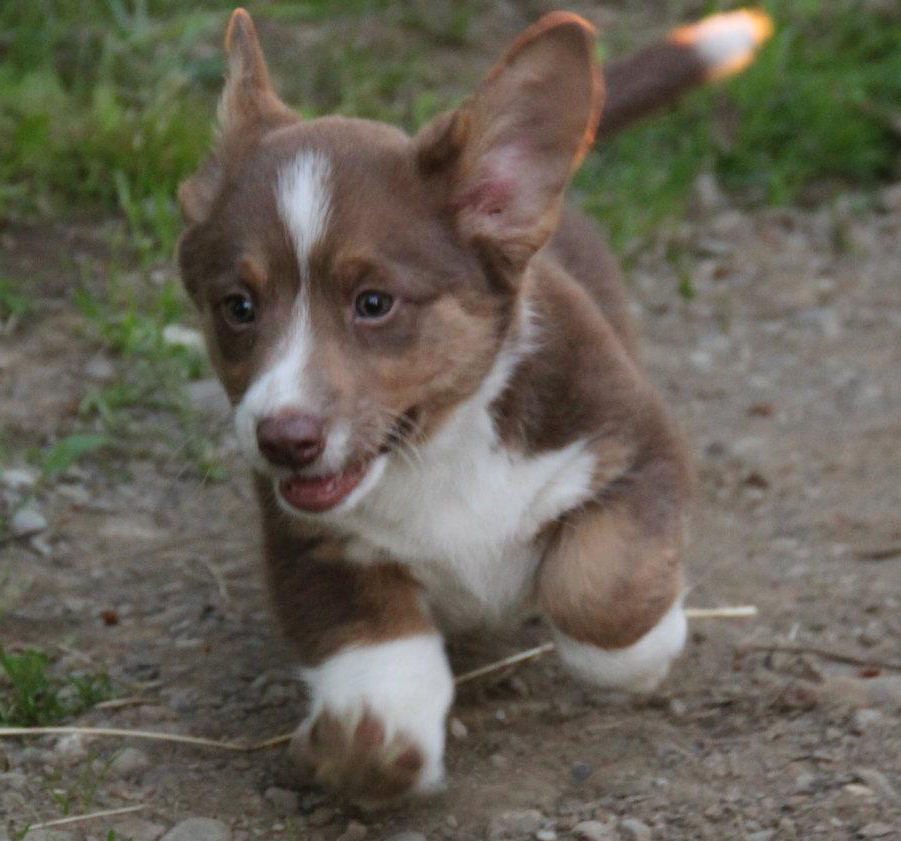
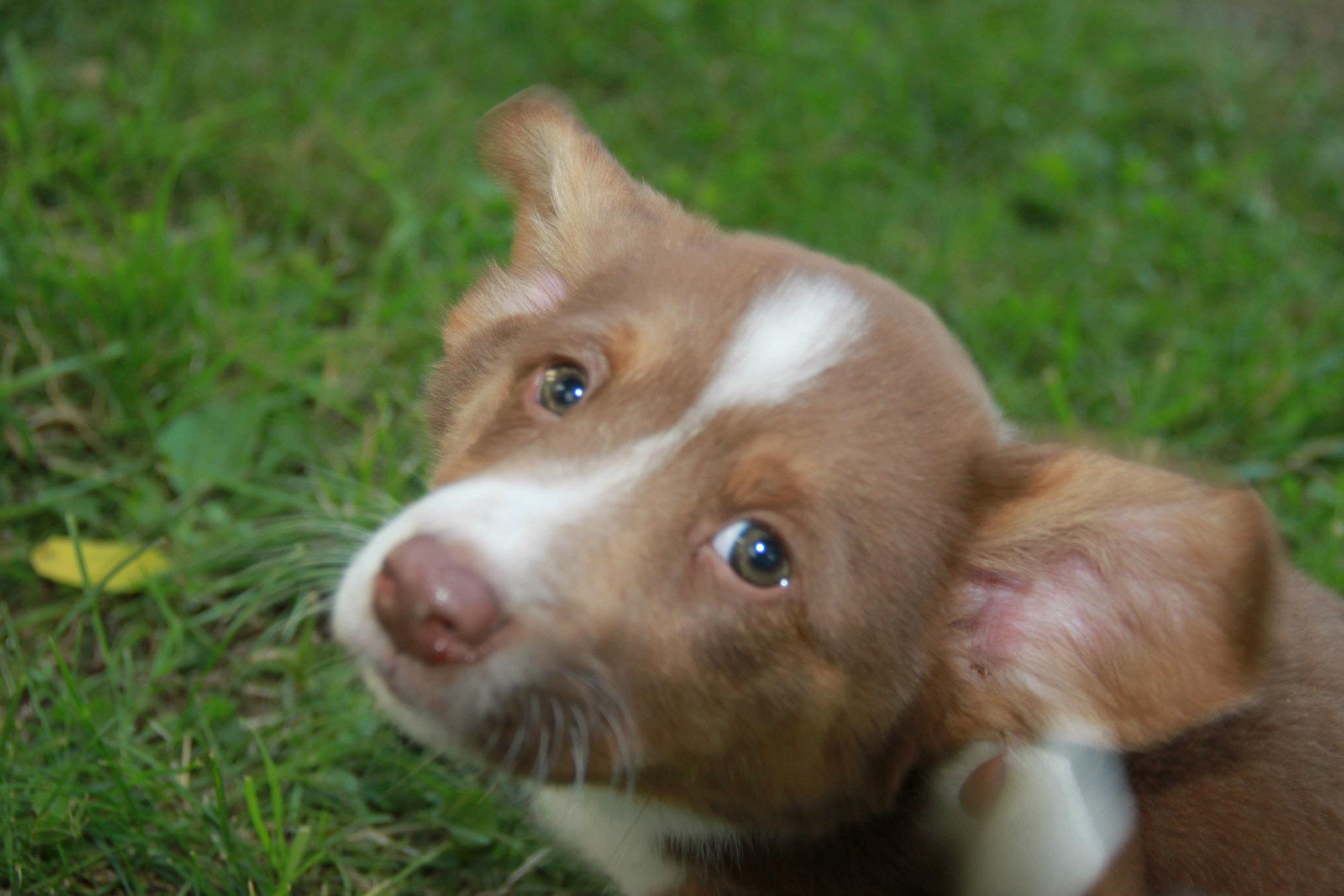
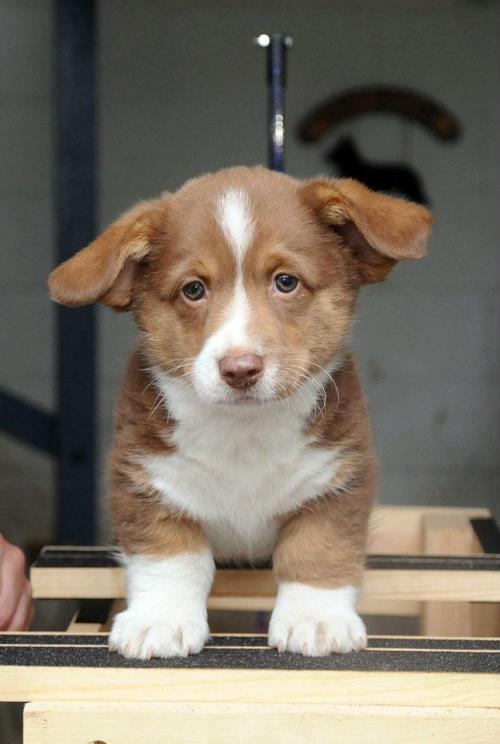
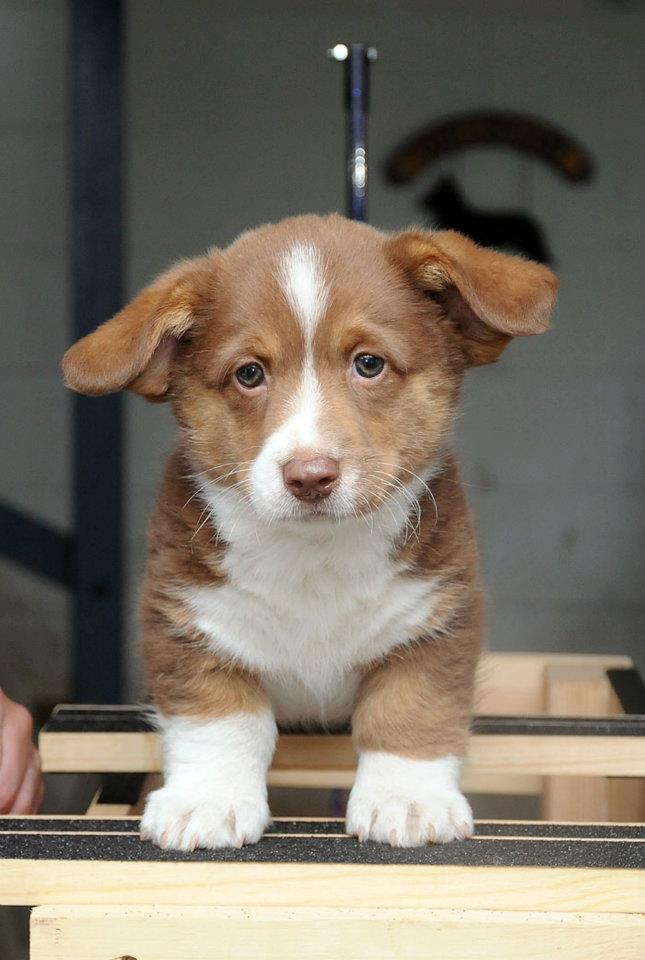
BriarCroft’s new Cardigan Welsh Corgi puppy Samwise Gamgee  or “Sam”

Naming a new puppy is almost as important as naming a child.  The difference is that a puppy needs a “call” name that will be an invisible leash for the rest of their lives, bringing them running whenever they hear it.  Ideally,  children will outgrow their invisible leash,  but never dogs.

A new puppy at the farm means finding that right name that will be the connection between dog and family.   For our 9 week old Cardigan Welsh Corgi, it is “Sam”  –named for Frodo’s steadfast and loyal companion Samwise Gamgee in The Lord of the Rings.  A Corgi is definitely hobbit-like, from their short legs to their hairy toes to their pointy ears.  We lost our older dog Frodo to cancer a few months ago, so this new Sam, as in the classic tale,  will carry on where Frodo could not.  We feel it fits this little fellow quite well and look forward to our journey together.  Thank you to Dune Cardigans for Sam.

Sam saves Frodo numerous times in the Trilogy, staying with him even though he believes Frodo dead:  “Don’t leave me here alone. Don’t go where I can’t follow.”

In other memorable exchanges:

Sam: Do you remember the Shire, Mr. Frodo? It’ll be spring soon. And the orchards will be in blossom. And the birds will be nesting in the hazel thicket. And they’ll be sowing the summer barley in the lower fields… and eating the first of the strawberries with cream. Do you remember the taste of strawberries?

Frodo: No, Sam. I can’t recall the taste of food… nor the sound of water… nor the touch of grass. I’m… naked in the dark, with nothing, no veil… between me… and the wheel of fire! I can see him… with my waking eyes!

Sam: Then let us be rid of it (the ring)… once and for all! Come on, Mr. Frodo. I can’t carry it for you… but I can carry you!

“There’s some good in this world, Mr. Frodo… and it’s worth fighting for.”

quotes from from The Lord of the Rings (movie)

photo courtesy of Stonelight Cardigans

Speaking of  the “wheel of fire”, not everyone on the farm is happy about the new puppy:

Jose is definitely annoyed.
Really really annoyed!


Particularity

photo of barn swallow from Powdermill Avian Research Center

“Somehow the question of identity is always emerging on this farm. I found the body of a barn swallow lying just inside the barn the other day. There was no telling how it died. I noticed the intense particularity of its body, its sharply cut wings, the way its plumage seemed to glow with some residual celestial heat. But it was the particularity of death, not the identity of life, a body in stillness while all around me its kin were twittering and swooping in and out of the hayloft.”
Verlyn Klinkenborg

Stumbling across death on the farm is always startling.  The farm teems with life 24 hours a day: frogs croaking, dawn bird chorus, insects buzzing and crawling, cats stalking, raccoons stealing, dogs wagging, horses galloping, owls and bats swooping.  Amid so much activity, it doesn’t seem possible that some simply cease to be.   An ancient apple tree mysteriously topples over one morning, a beloved riding horse dies of colic, an old cat finds her final resting place in the hay loft, another old cat naps forever under a tree,  a newborn foal fails to break free of its amniotic sac, another foal delivered unexpectedly and prematurely lies still and lifeless in the shavings of the stall, a vibrantly alive dog is put to sleep due to a growing tumor,  a predator raids the dove cage and leaves behind carnage, our woods bears its own tragic history.

Yet, as often as it happens,  there is a unique particularity about death.  The stillness of death permits a full appreciation of who this individual is, the remarkable care that went into creating every molecule of his being. The presence of absence is a stark and necessary reminder of our mortality.

In truth, we will glow with residual celestial heat, still warm even after our hearts cease to beat.   We are distinct individuals in our own particularity–living and dying at a particular time and place as a unique creature, given a chance in the cosmos of infinite possibilities.  The Creator knit us together specially, every feather, hair, bone and sinew a work of His Hands, and what we do with what we are given is all the stuff between our first breath and our last.  Particularity is a good reminder not to squander our brief time as part of the history of the world.

A guarantee of particularity is the presence of His Holy breath, though momentarily stilled, yet still filling us forever.

photo from St. Lucie Audobon Society

Lenten Meditation: Living in the Shadows

The first time I saw him last year was just a flash of gray ringed tail
Disappearing into the autumn night mist as I opened the back door
To pour kibble into the empty cat dish on the porch: another
Stray cat among many who visit the farm. A few stay.

So he did, keeping a distance in the shadows under the trees.
A gray tabby with white nose and bib, serious yet skittish,
Watching me as I moved about feeding dogs, cats, birds, horses,
Creeping to the cat dish only when the others drifted away.

There was something in the way he held his head,
A floppy forward ear betrayed hidden wounds I could not approach to see.
I startled him one day as he ate his fill at the dish. He ran away
His head flashing red, his back scalp missing from forehead to neck.

Not oozing or bleeding, nor something new. A nearly mortal scar
From an encounter with coyote, or eagle or bobcat.
This cat was thriving despite his trauma and pain,
His tissue raw, trying to heal. He had chosen to live.

My first inclination was to trap him, to put him humanely to sleep
To end his suffering, in truth to end my distress at seeing him every day,
Envisioning the florid flesh even as he hunkered invisible in the shadowlands.
Yet disfigurement did not keep him from eating well or licking clean his pristine fur.

As much as I wanted to look away, to avoid confronting his mutilation,
I greeted him from a distance, acknowledging his maimed courage,
Through wintry icy blasts, and four foot snow, through spring rains and summer heat with flies,
His scar never quite healed, a sanguine reminder of approaching mortality.

I never will stroke that silky fur, or feel his burly purr, assuming he still knows how,
But still I feed him his daily fill, as he feeds my need to recall:
Each breath he takes is sacred air, no matter how deep his wounds,
Nor how much, because he lives, he continues to bleed red.

The Peaceable Kingdom

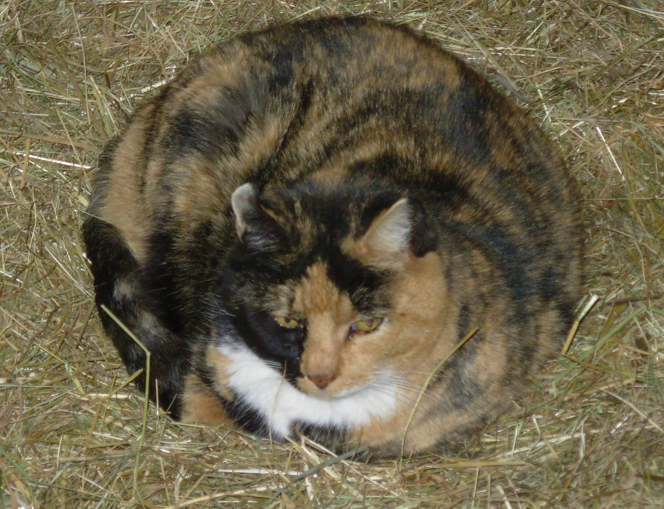
Cally, our adopted calico cat, now quite elderly, is fading fast.  Winter is always a tough time for barn cats, even with snug shelter, plentiful food and water.  We lost our 16+ year old tuxedo kitty just a couple months ago, and now Cally, not much younger,  won’t last much longer.  She still gets up to eat and potty, and still licks her front paws clean, but can’t manage much else.  Her frame is thin and frail, her coat dull and matted in places, she’s been deaf for some time and her eyes are rheumy.  She spends her days and nights in a nest of hay on the floor of our horse barn, watching the comings and goings of horse hooves and people rolling by with wheelbarrows full of manure.  Tonight she allowed me to bring her a little rug to give her a bit more cushion and protection from drafts, and I wouldn’t be surprised to find her permanently curled up there in the morning.  Her time is soon to come.

Cally was one of a litter raised in the mid-90’s by our good friends, the VanderHaaks, on their acreage a few miles from here.  When they had to make a move to a city on the east coast, their Cally and an orange colored kitty were in need of a new home.  On arrival, the orange cat immediately ran into the woods, only rarely to be spotted at a distance for a few months and then completely disappeared, possibly a victim of the local coyote pack.  Cally strolled onto our farm and decreed it satisfactory.  She moved right in, immediately at home with the cows, horses, chickens,  our aging dog Tango (who loved cats) and our other cats.   In no time, she became the undisputed leader, with great nobility and elegance.  There was no one questioning her authority.

We knew Cally was unusual from the start.  Tango initially approached her somewhat warily, given the reaction Tango elicited from our other cats (typically a hair raising hiss, scratch and spit).  Instead, Cally marched right up, rubbed noses with Tango, and they became fast friends, cuddling together on our front porch whenever it was time to take a nap.  They were best pals.  Tango surely loved anyone who would snuggle up to her belly and keep her warm and Cally was the perfect belly warmer (as Garrison Keillor says, “a heater cat”).

Now our free range Araucana rooster seriously questioned this dog/cat relationship.    He was a bit indignant about a front porch communal naptime and would strut up the sidewalk, walk up and down the porch and perch on the railing,  muttering to himself about how improper it was, and at times getting quite loud and insistent about it.  They completely ignored him, which obviously bugged him, proud and haughty bird that he was.

One fall morning, as I opened the front door to go down the driveway to get the newspaper in the pre-dawn mist, I was astonished to see not just a cat and dog snuggled together on the porch mat, but the rooster as well, tucked up next to Tango’s tail.  As usual,  Tango and Cally didn’t move a muscle when I appeared, as was their habit–I always had to step over them to get to where I needed to go.  The rooster, however, was very startled to see me,  almost embarrassed.  He stood up quickly, flapped his wings a few times, and swaggered off crowing, just to prove he hadn’t compromised his cock-sure raison d’etre.

No, I didn’t have my camera with me and I never found them all together ever again.  The reader will have to just take it on faith.

After Tango died, Cally rebounded by taking on the training of our corgi pup and making sure he understood her regal authority in all things, and demanding, in her silent way, his respect and servitude.  He would happily chase other cats, but never Cally.    They would touch noses, she would rub against his fur, and tickle his chin with her tail and all he could think to do was smile and wag at her.

So I figure a dog, a cat and a rooster sleeping together was our little farm’s version of the lion and lamb lying down together.  The peaceable kingdom was right outside our front door,  a harbinger of what is promised someday for the rest of us.  Despite claws, sharp teeth, and talons, it will be possible to snuggle together in harmony and mutual need for warmth and comfort.

Our special Cally made it happen.  I suspect she’s hoping to meet back up with Tango, and possibly one rooster with attitude, for a nice nap on the other side.

Taking Off The Tuxedo

Lost Seita Garland

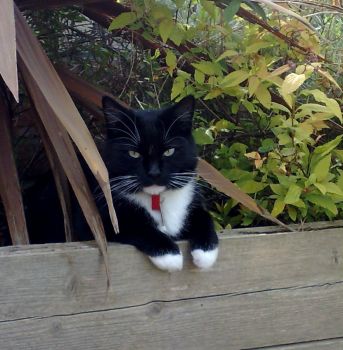
Our “tuxedo” kitty arrived on the farm in 1993 with all the accoutrements of an especially loved cat: a soft bed, scratching post, litter box, collar with bell, self dispensing food and water dishes, expensive diet.  Her owner was moving and could not keep her after two years of luxurious indoor living.  So black and white Bobbie Sox would become a barn cat.  No collar, special diet, entertainment center or scratching post were necessary.  All her stuff was put up in the hay loft to make her feel “at home” where she initially walked out of her cat carrier, and I don’t think she ever looked at it or touched it again.  She gazed about her new surroundings, flexed her muscles and disappeared into the hay.  Freedom was at hand (or four white paws).

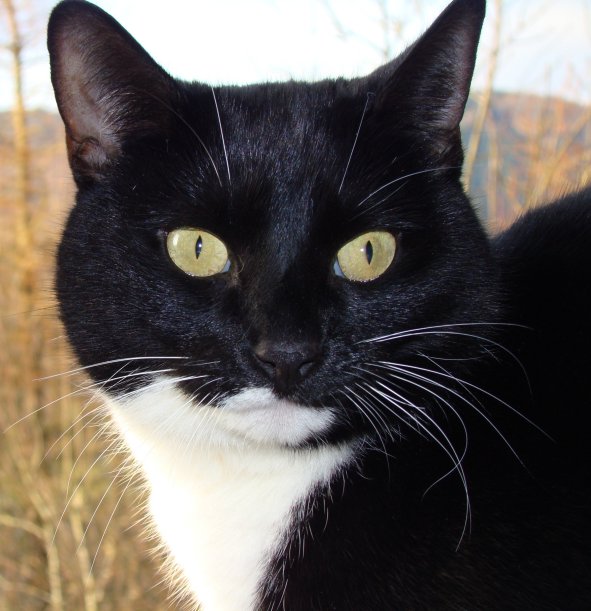
She chose not to be particularly social; she kept away from the other farm cats, and kept her loft kingdom to herself.  Even when called, she would not come quickly like the other cats.  She stayed aloof and formal in her interactions.  I would climb into the loft to fetch hay bales, and give her a daily ration of cat kibble, and I’d glance into the hay stack to find her.  She would be generally on her throne on top of the stack, looking down at me with curiosity, her yellow eyes a reflective flash from her black face, her stark white bib bright in the semi-darkness of the loft.  She would wait until I was gone to come down to eat her fill.  I don’t recall ever touching her soft black fur coat that first year—she always stayed at arm’s length, regal in her demeanor and her dress.

Over the ensuing years, as other cats came and went, Bobbie Sox was a constant.  She ventured more often from her hay loft perch, helping to keep the rodent population under control. Occasionally, I’d see her sharing her food dish with her peasant feline companions in the barn.  She would talk more often to me when I came to the barn, and every once in awhile, she would come up and rub on my legs as I did chores.  Her formality started to soften and her personality blossomed.

Sixteen years have passed since Bobbie’s arrival.  This past year she showed her age for the first time, becoming a bit thinner, and showing signs that she wasn’t able to keep up her self-grooming.  Her tuxedo coat started to mat in places, and her clean white bib began to show stains she could no longer reach to lick clean.  Her bright yellow eyes began to cloud with cataracts.  She didn’t respond as quickly to sounds.   She seemed to forget her reticence to be touched.  Bobbie began to accept and give love.

Yesterday, as I climbed into the loft, I did not see her peeking at me from her usual perch.  Instead, she lay on the floor, a little black shadow tucked up against a hay bale.  Her body lay still and flat, deflated, eyes partially closed, white bib blemished and yellowed.  She had gone for good during the night, leaving her little tuxedo suit behind.

We will bury her today on a little hill overlooking the barn loft throne she occupied for so many years.  We have wrapped her little body carefully in a soft blanket and will lay her gently in earth still warm from the autumn sunshine.

And now, truly, freedom is at hand and at the feet of her four little white socked paws.

stevie

Sacred Scalp

baldy2

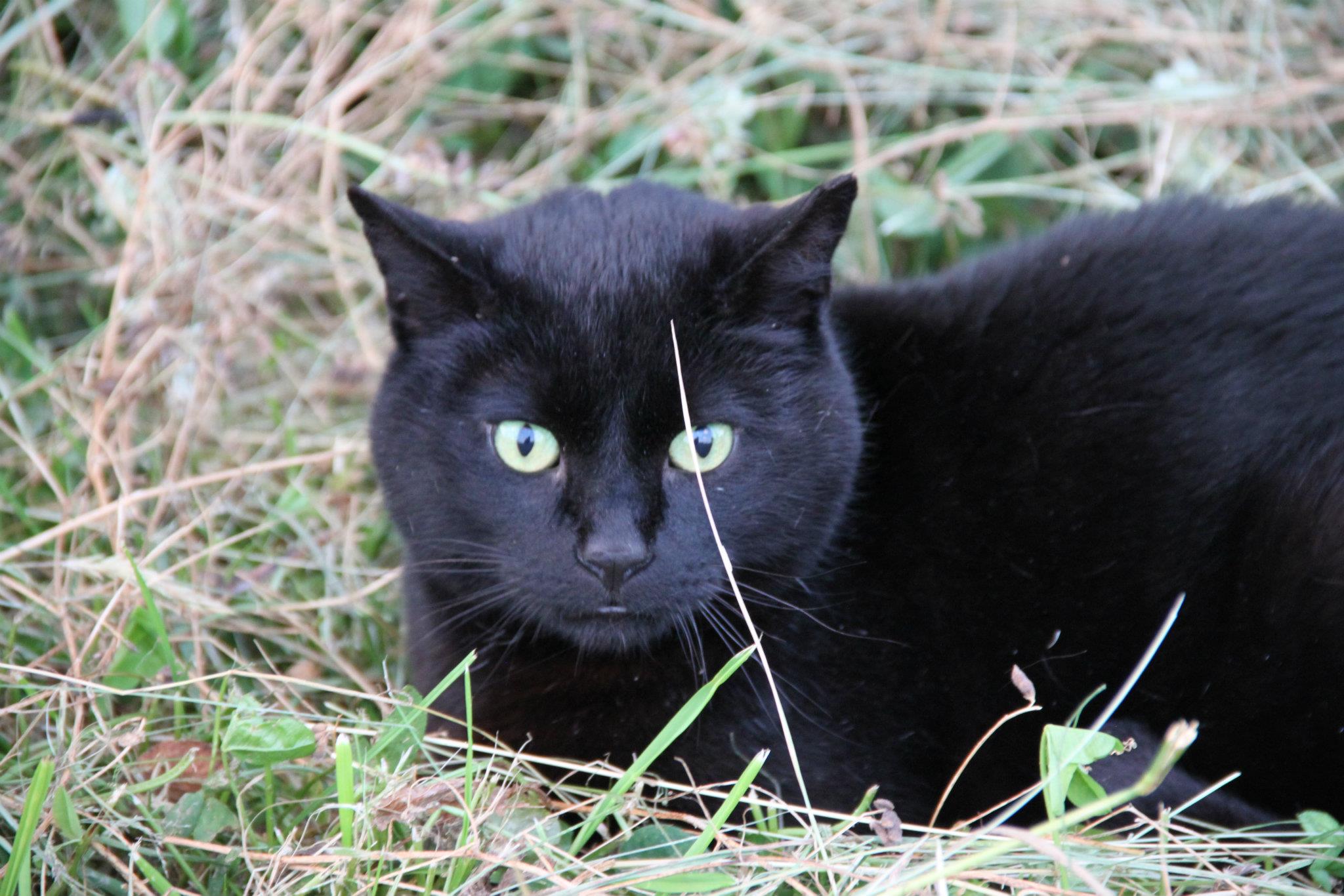
He was stealing from me.  The first time I saw just a flash of gray ringed tail disappearing into the autumn night mist as I opened the back door to pour kibble into the empty cat dish on the porch.  Another stray cat among many who visit the farm.  A few stay to become “our” cats.

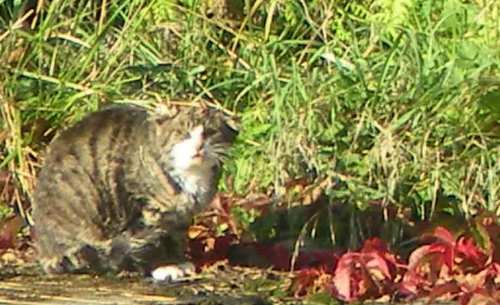
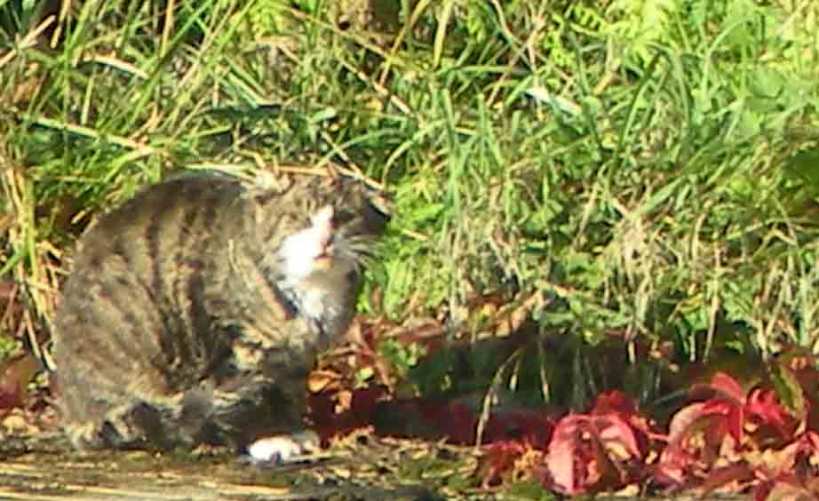
He did stay over the past year, keeping a distance in the shadows under the trees. A gray tabby with white nose and bib, serious yet skittish, would watch me as I moved about feeding dogs, cats, birds, horses. He would creep to the cat dish only when the others drifted away.

There was something in the way he held his head.  A floppy forward ear betrayed hidden wounds I could not approach close enough to see. I startled him one day as he ate his fill at the dish. He ran away, the back of his head looking like he wore a red cap.  His back scalp was completely missing from forehead to neck, not oozing or actively bleeding, so not something new.

This was a nearly mortal injury from a too close encounter with a coyote, or bald eagle or bobcat—his attacker only got away with part of him.

This cat was fighting for survival through his trauma and pain, his tissue raw, still trying to heal.  He had chosen to live.

My first inclination was to trap him, to put him humanely to sleep to end what must be obvious suffering.  In truth, I wanted to end my distress at seeing him every day.  My mind’s eye would envision the florid flesh even as he hunkered invisible in the shadowlands of the blackberry thicket.  Yet his disfigurement did not keep him from eating well or keeping clean his pristine fur.

As much as I wanted to look away, to not confront his mutilation, I began greeting him from a distance, honoring his maimed courage, through the icy blasts of winter, and four foot snow, through cleansing spring rains and humid summer heat with sticky flies.  Still his scar never quite healed, a sanguine reminder of mortality.

I never will stroke that silky fur, or feel his burly purr,  because I think he still knows how.

But I feed him his daily fill, as he feeds my need to recall:

Each breath he takes is sacred air, no matter how obvious or hidden may be his wounds, nor how much, because he lives,  he bleeds deep red.

An Earth Day Lament

barn_owl_pellet3
I’m still groggy every morning when I step out my front door onto the porch to make my way down a  gravel driveway to get the newspaper. More often than not, it is still quite dark out at 5:15 AM.  More often than not, my slippered foot lands on something a little crunchy and a little squishy and a lot icky on the welcome mat in front of my door.

The front porch cat, (as opposed to the back porch cat, the garden shed cat, the hay barn cat, the horse barn cat and the 3 stray cats) predator that she is, leaves behind certain remnants of her prey’s….uh, body parts.  Mousey body parts or birdie body parts.  I assume, from the consistency of the little carnivore compost pile, these are unappealing to the kitty, so become the “leavings”, so to speak,  of the kill. Typically, it is a little mouse head, complete with little beady eyes, or a little bird head, complete with little beak, and something that looks suspiciously green and bulbous, like a gall bladder.  I don’t think heads or gall bladders are on my preferred delicacy list either. And they are certainly not on my list of things I like to wear on the bottom of my slipper.  Yet I do and I have.

I’m perplexed by this habit cats have of leaving behind the stuff they don’t want on the welcome mat, even the occasional whole shrew or field mouse, seemingly untouched by claw or incisor, but yet dead as a doornail on the doormat.  Some cat owners naively think their cats are presenting them with “gifts” –kind of a sacrificial offering to the human god that feeds them.  Nonsense.  This is the universal trash heap for cats and a testimony to their utter disdain for humans.   Leave for the human the unappetizing and truly grotesque…

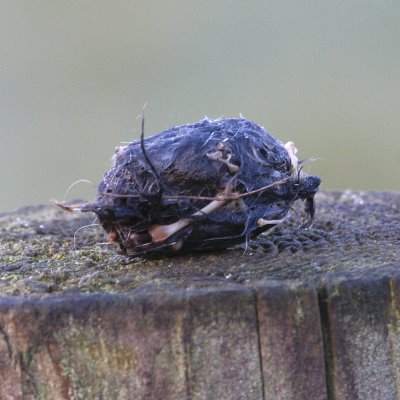
So humanity is not alone of earth’s creatures to create garbage heaps of unwanted stuff.  Not only cats, but barn owls are incredibly efficient at tossing back what they don’t want out of their furry meals.   Our old hay barn is literally peppered with pellets, popular with high school biology classes for dissection instruction.  These dried up brown fuzzy poop shaped objects are regurgitated by the owl after sitting in one of its  two stomachs for a number of hours.  Bird barf.   It’s fairly interesting stuff, which is why these pellets (which we recycle by donating by the  dozens to local schools) are great teaching material.  It is possible to practically reconstruct a mouse or bird skeleton from a pellet, or perhaps even both on a night when the hunting was good.  There is fur and there are feathers.  Whatever isn’t easily digestible doesn’t have much purpose to the owl, so up it comes again and becomes so much detritus on the floor and rafters of my barn.  Owl litter.  There should be a law.

Then there is the rather efficient Haflinger horse eating machine which leaves no calorie unabsorbed, which vacuums up anything remotely edible within reasonable reach, even if reasonable means contortions under a gate or fence with half of the body locked under the bottom rung, and the neck stretched 6 feet sideways to grab that one blade of grass still standing.  The reason why Haflingers don’t eventually explode from their intake is that Haflinger poop rivals elephant poop pound for pound per day, so there must be a considerable amount ingested that is  indigestible and passed on, so to speak–like part of a tail wrap, the branches from the dogwood tree, that halter that went missing… you know, like those black holes in outer space–that’s what a  Haflinger represents on earth.

This is quite different from the recycled “cud” of the typical herbivore cow who regurgitates big green gobs of  grass/hay/silage to chew it  again in a state of utter (udder?) contentment and pleasure.   If humans could figure out how to recycle a good meal for another good chew or two, the obesity rate would surely drop precipitously.   So would attendance at most happy hours. But then, how many skinny cows have I seen?  Probably as many as purple cows.  I never hope to see one, but I’d rather see than be one.

In my daily walk through life, I have my share of things I dump unceremoniously that I don’t want, don’t need,  can’t use, or abandon when I only want the palatable so the rest can rot.  Today is Earth Day, and I feel properly shamed and guilty for my contribution to landfills,despite my avid recycling efforts for the past 30 years.  Nonetheless, I am in good company with my fellow carnivores and omnivores who daily leave behind what they don’t want or need and clearly don’t give a rip about Earth Day.

I now need to figure out that cud thing.  I can go green and just might save on the grocery bill.