Advent Sings: Waiting and Watching

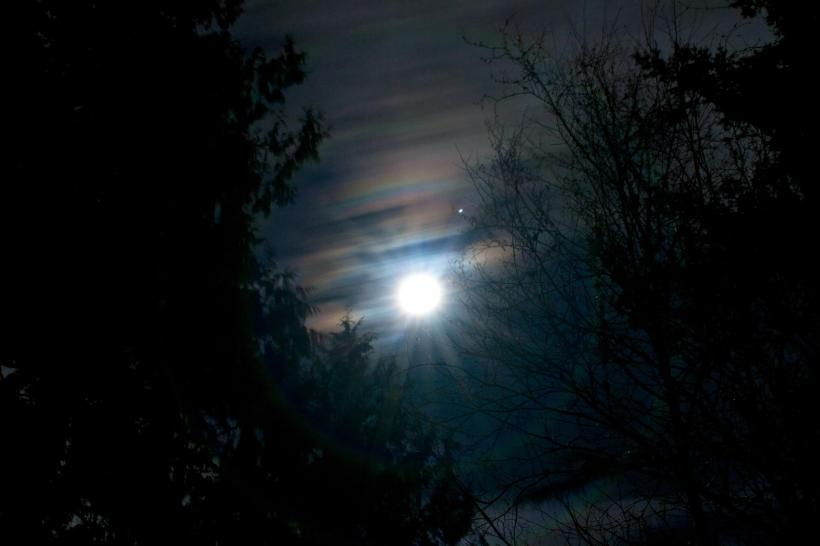
photo by Josh Scholten

I wait for the Lord, my soul waits,
    and in his word I put my hope.
 My soul waits for the Lord
    more than watchmen wait for the morning,
    more than watchmen wait for the morning.
Psalm 130: 5-6 from a Song of Ascents

 To wait is a hard sweet paradox in the Christian life.  It is hard not yet having what we know will be coming.  But it is sweet to have certainty it is coming because of what we have already been given.  Like the labor of childbirth, we groan knowing what it will take to get there, and we are full to brimming already.

The waiting won’t be easy; it will often be painful to be patient, staying alert to possibility and hope when we are exhausted, barely able to function.  Others won’t understand why we wait, nor do they comprehend what we could possibly be waiting for.  We must not wait like Herod waits, with dread and suspicion, willing to destroy what he cannot control.

Yet we persevere together, with patience, watching and hoping, like Mary and Joseph, like Elizabeth and Zechariah, like the shepherds, like the Magi of the east, like Simeon and Anna in the temple.

This is the meaning of Advent: we are a community groaning together in sweet expectation of the morning.

For in this hope we were saved. But hope that is seen is no hope at all. Who hopes for what they already have? But if we hope for what we do not yet have, we wait for it patiently.
Romans 8:24-25

photo by Josh Scholten

Advent Sings: No Other Rock

photo by Josh Scholten

There is no one holy like the Lord;
    there is no one besides you;
    there is no Rock like our God.
1 Samuel 2:2 from The Song of Hannah

In her song of prayer exalting God, Hannah gives over to His care her son for whom she had waited so long.  This is a mother whose unselfishness shames me every time I read her story and her own words. Centuries later, Hannah’s devotion to God inspires a young woman visited by an angel who tells her she will carry the Son of God in her womb.  Mary echoes much of Hannah’s prayer in her own Song, turning over her life, and eventually her own Son, to God’s care.

How could any mother manage to give over her precious child if God were not the Rock upon which she can stand, upon which she will depend for eternal stability, upon which she can fall and He will not break?   There is no other like this Rock.

We are reminded by Hannah’s faith and commitment to God, again by the angel visiting Mary, and in the words of  the host of angels on Christmas–do not be afraid.  The Rock, born that night as a soft and gentle baby, like every man’s beginning, still stands and will stand forevermore.   We can depend on it.  We can depend on Him as there is no other.

Do not tremble, do not be afraid. Did I not proclaim this and foretell it long ago? You are my witnesses. Is there any God besides me? No, there is no other Rock; I know not one.
Isaiah 44:8

Advent Sings: Words Descend Like Dew

photo by Josh Scholten

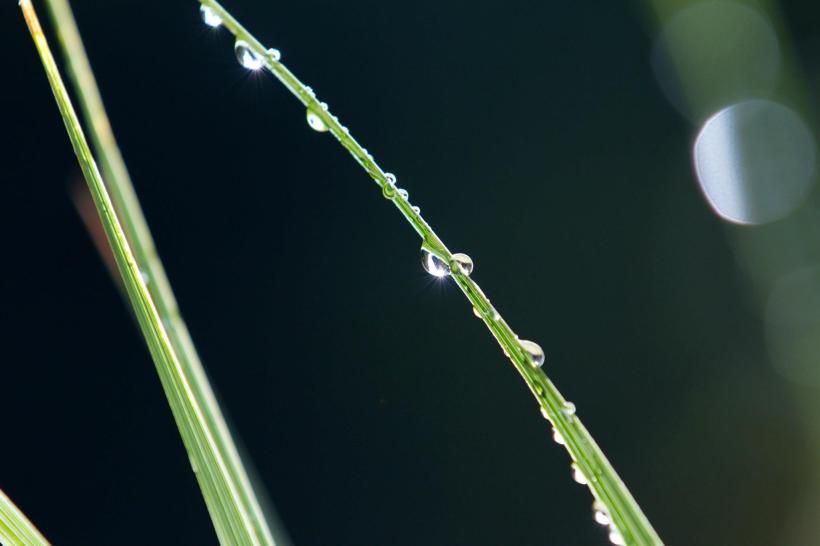
Listen, you heavens, and I will speak;
    hear, you earth, the words of my mouth.
Let my teaching fall like rain
    and my words descend like dew,
like showers on new grass,
    like abundant rain on tender plants.
Deuteronomy 32:1-2 in the Song of Moses

God’s people had been wandering homeless in the desert for years before they were allowed to enter the Promised Land.  To them, there was great hope in the possibility of moisture coming from heaven as the bountiful gift Moses describes in an analogy for his words and teaching.   The dew of heaven becomes the representation of God’s all-encompassing Spirit and gift of grace in this and other Old Testament scripture passages.

Ultimately, God’s Word descends like dew from heaven in the form of a newborn baby in a manger come to dwell among us.   Like dew, He comes at no cost to us,  freely, in the night, into the darkness, as a gentle covering of all things dry and dying, to refresh, to restore, to soften, to make what was withered fruitful once again.  We live again because of the Word quickening within us.

In the beginning was the Word, and the Word was with God, and the Word was God. He was with God in the beginning. Through him all things were made; without him nothing was made that has been made. In him was life, and that life was the light of all mankind. The light shines in the darkness, and the darkness has not overcome it.
John 1


Advent Sings: Spring Up, O Well

photo by Josh Scholten

16 From there they continued on to Beer, the well where the Lord said to Moses, “Gather the people together and I will give them water.”
17 Then Israel sang this song:
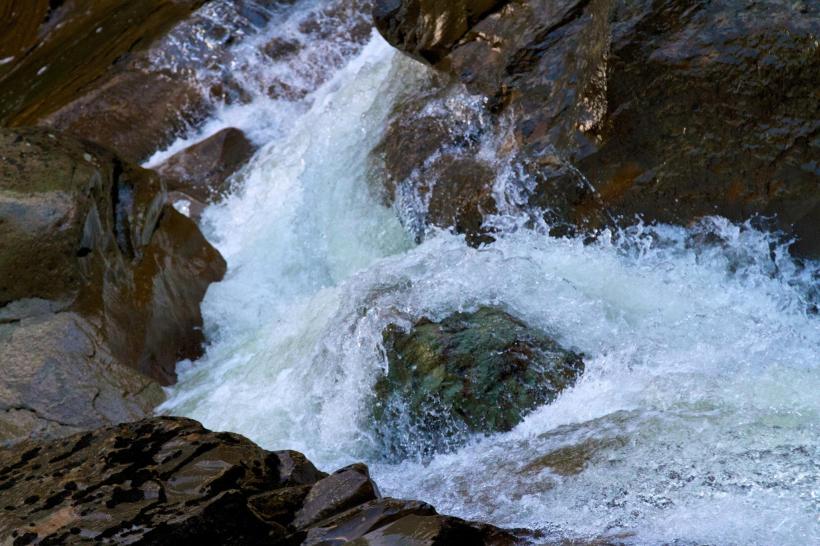
“Spring up, O well!

    Sing about it,
18 about the well that the princes dug,
    that the nobles of the people sank—
    the nobles with scepters and staffs.”
Numbers 21: 16-18

Like the homeless Israelites of the wilderness years, we are prone to grumble as we wander through life.  Despite our many struggles, we are provided with what is needed when it is needed, day to day, to live.  In Numbers, ancient Israel sang of the wellspring of water that seemed to appear in the desert, no matter where they were,  in answer to their desperate pleading.    The wells of the ancients provided for their bodily needs, through God’s provision of water to the parched.

So too we are surrounded in the desert of modern society, desperately thirsty and needy for something, anything that will sustain us.  Our groanings and grumblings are answered, overflowing:

“The poor and needy search for water,
    but there is none;
    their tongues are parched with thirst.
But I the Lord will answer them;
    I, the God of Israel, will not forsake them.
18 I will make rivers flow on barren heights,
    and springs within the valleys.
I will turn the desert into pools of water,
    and the parched ground into springs.
Isaiah 41: 17-18

The deepest well of all was born that night in Bethlehem, producing an endless stream of life flowing through the dry and dying landscape of human suffering and sin.   It was as if he had sprung up from the desert, miraculously appearing when desperately needed by the people.

10 Jesus answered her, “If you knew the gift of God and who it is that asks you for a drink, you would have asked him and he would have given you living water.”

11 “Sir,” the woman said, “you have nothing to draw with and the well is deep. Where can you get this living water? 12 Are you greater than our father Jacob, who gave us the well and drank from it himself, as did also his sons and his livestock?”

13 Jesus answered, “Everyone who drinks this water will be thirsty again, 14 but whoever drinks the water I give them will never thirst. Indeed, the water I give them will become in them a spring of water welling up to eternal life.”

15 The woman said to him, “Sir, give me this water so that I won’t get thirsty and have to keep coming here to draw water.”
John 4: 10-15

Jesus asked the Samaritan woman for a drink at the well although he was the deep wellspring himself.    He dwells with us and like us,  needing the basics of water that can never truly satisfy.  He knows our body’s thirst as he feels just as we do.  Yet in responding to his bodily thirst,  we are engaged as never before, finding in him the quenching of our spiritual thirst.

Though Jesus needed nurturing and provision while on earth–as a helpless and hungry infant dependent on his parents, as a wandering teacher in the desert thirsty from the long hot miles, and hanging from the cross suffering from thirst and asking from relief–he is the deepest well from which we can possibly draw.

Let us sing of it this Advent.

Advent Sings: Be Like the Sun When It Rises

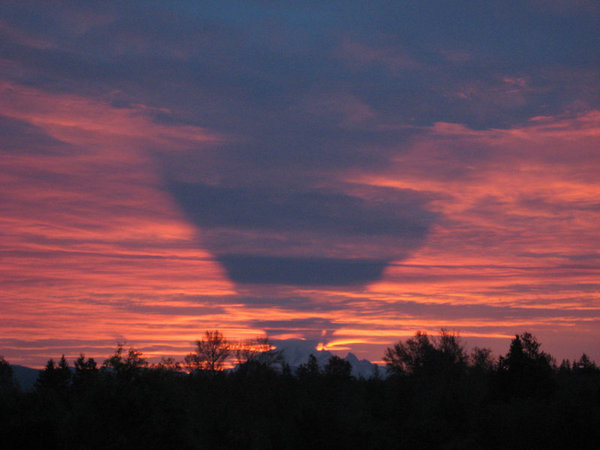
Mt. Baker at Sunrise

So may all your enemies perish, O Lord!
But may they who love you be like the sun
when it rises in its strength.
Judges 5:31 from the Song of Deborah

As Deborah sings in exuberance over her God-led victory, the people of God want to model the strength seen in the rising sun: constancy, resiliency, intensity.  Yet the metaphor of the sun rising is not only about us.  God’s emergence on earth reflects the light of his tender mercies, dispelling the shadows for those living in darkness.  As sung by Zechariah after the birth of his son John who will lead the way for Jesus’ light:

because of the tender mercy of our God,
by which the rising sun will come to us from heaven
to shine on those living in darkness
and in the shadow of death,
to guide our feet into the path of peace.”
Luke 1: 78-79 from the Song of Zechariah

As Deborah’s and Zechariah’s songs point us to the light brought by Jesus into a dark and dismal world, we see the same powerful metaphor emerging as early as Balaam’s prophecy in Numbers and later in Psalms:

I see him, but not now;
I behold him, but not near.
A star will come out of Jacob;
a scepter will rise out of Israel.
Numbers 24:17

For the LORD God is a sun and shield
Psalm 84:11

Most hopeful of all is the following passage from Malachi.   The “tender mercies” of Zechariah and the “healing rays” of Malachi bring us immense comfort and joy in our anticipation of the birth of Jesus and his return for us on the path of peace.  It has been much too long since we felt like frolicking.  Now is the time.

But for you who revere my name, the sun of righteousness will rise with healing in its rays. And you will go out and frolic like well-fed calves.
Malachi 4:2

Buffalo-calf

Advent Sings: Who Is Like You?

miriamssongofpraise

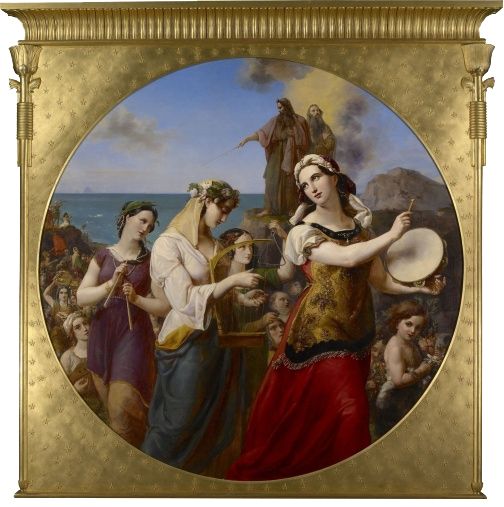
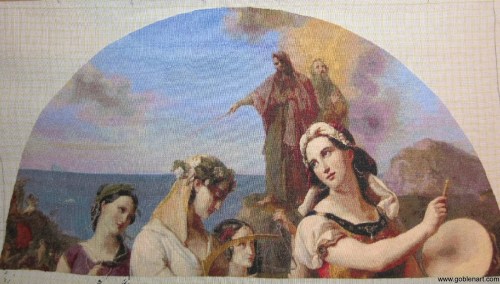
Miriam’s Song by Wilhelm Hensel, gift to Queen Victoria, part of the Royal Collection

Exodus 15:11
Who among the gods
is like you, Lord?
Who is like you—
majestic in holiness,
awesome in glory,
working wonders?

Advent is our opportunity to sing from the heart in expectancy for what is to come.  Songs sung long ago, like Moses’ and Miriam’s Song at the edge of the Red Sea after having been miraculously delivered into freedom from bondage in Egypt, express longing for an intimate relationship with God.  This is centuries before God was born of a woman in an animal shed, raised by humble parents in a small town.  After he walked the roads that still exist today and died at the hands of man, he defeated death to walk among us again.

Then, now and someday to come.

Who can possibly be like you, Lord?
There is no one, not then, not now, not ever.
No God can be more whole and holy, worthy of all glory, wondrous in all ways.

Most wondrous of all is a God who says to man:
I will become like you to rescue you from yourselves by dwelling among you.
A God, who as man, chooses poverty and the humility of servanthood,
who as man faces overwhelming temptation,
who as man is disparaged and despised by his own townspeople and religious authorities.
A God who breathes his last and bleeds, crying and hurting just like we do.
And a God who then returns, making it possible for us to live.

No one is like you, Lord.
Because you chose to be like us.
And we sing to you in our anticipation of your return.

Exodus 15: 17-21 excerpts from Moses’ and Miriam’s Song
17 You will bring them in and plant them
on the mountain of your inheritance—

the place, Lord, you made for your dwelling,
the sanctuary, Lord, your hands established.
18 The Lord reigns
for ever and ever.
21 Sing to the Lord,
for he is highly exalted.

Miriam's Song by Wilhelm Hensel

Ready to Receive Him

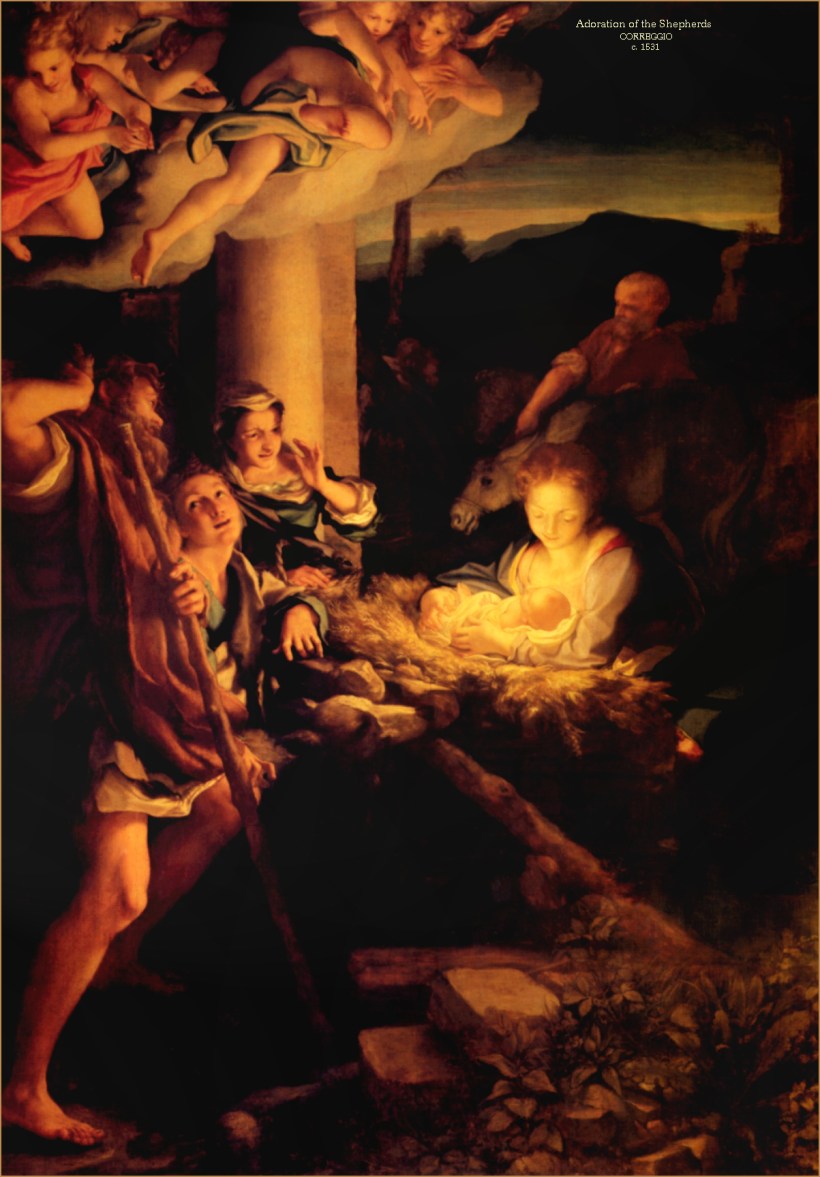
Adoration of the Shepherds by Correggio

“…we should not try to escape a sense of awe, almost a sense of fright, at what God has done. Nothing can alter the fact that we live on a visited planet…
God has been here once historically, but he will come again with the same silence and same devastating humility into any human heart ready to receive him.”
J.B. Phillips

I want to be like the shepherds–awed and aghast at the glory they heard and beheld.  Like the shepherds, I am flattened with so much fear that I am told “do not be afraid.”  Like the shepherds, I am never to be the same again, my stubborn self-sufficiency now shot through and leaking dry.

Then my heart will be ready to receive him.  Only then.