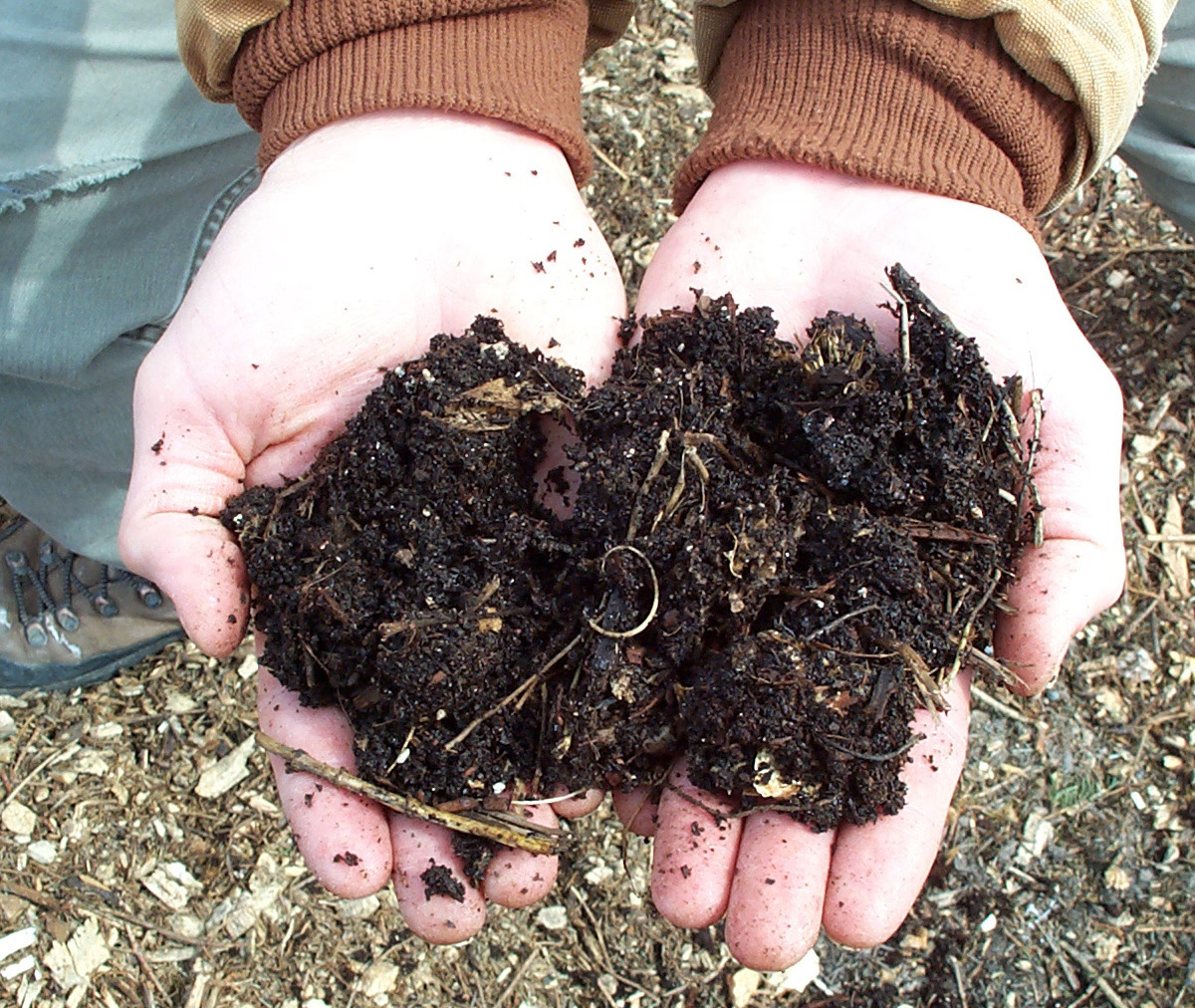
A Speech About Compost

(I gave this speech at the annual medical staff dinner last night when asked to “say a few words” (well, it ended up being more than a *few* words) after being selected as one of two “Physicians of Excellence” for 2010 at St. Joseph Hospital, Bellingham)

It was quite unexpected to get a call from Jim Hopper two months ago asking me if I was planning to attend tonight’s dinner.   The usual answer to that question would be  “uh, no…that’s my barn cleaning time…” , but he told me it would be a good idea for me to show up.   So, I’m quite humbled that the medical staff leadership would acknowledge a doctor who tries hard to fly under the radar by attending as few dinner meetings as possible due to farm and family obligations…

Dan and I arrived in Whatcom County  25 years ago; at that time I was a pregnant family doc having trained at Group Health Cooperative, and left behind one of the most diverse and wonderful practices in the Rainier Valley in Seattle.  We had decided we didn’t want to raise our family in the city, so we moved to a farm north of Bellingham, only a few miles from his parents and back to a part of the state where my grandparents had grown up.  I began practice by filling in as a locums for whoever would have me, and it was no time at all that I had more jobs than I knew what to do with.  I filled in at Intalco doing worker physicals, was a supervisor of the nurse practitioners at Planned Parenthood for several years, was the first doctor at the Interfaith Clinic, and soon was managing detox for Whatcom County at Olympic Treatment Center.  I also started seeing children who needed an evaluation for sexual abuse, ending up seeing over 1000 children over 10 years, and testifying in over 100 trials in a 5 county region.

The chemical dependency work moved to the Recovery Center at St. Joseph Hospital in 1988, and I’ve continued to do medical detox as well as my work at the Student Health Center at WWU for over 20 years.

I am not as skilled a diagnostician as many of you.  I’m not as good at surgical procedures, nor am I a wiz at administration.  What I am good at is making compost, which is really what I’ve done when I’ve taken care of thousands of chemical dependency inpatients over the last twenty years.

As a farmer, I spend over an hour a day cleaning my barn, and wheel heavy loads of organic material to a large pile in our barnyard which composts year round.  Piling up all that messy stuff that is no longer needed is crucial to the process: it heats up quickly to the point of steaming, and within months, it becomes rich fertilizer, ready to help the fields to grow grass, or the garden to produce vegetables, or the fragrant blooms in the flower beds.  It becomes something far greater and more productive than what it was to begin with.  That’s what intensively managed detox and treatment of addictions is like.

As clinicians, we help our patients “clean up” the parts of their lives they really don’t need, that they can’t manage any longer, that are causing problems with their health, their families and jobs, and most of all, their relationship with their Creator.  There isn’t a soul walking this earth who doesn’t struggle in some way with things that take over our lives, whether it is work,  computer use, food, gambling, you name it.  For the chemically dependent, it comes in the form of smoke, a powder, a bottle, a syringe or a pill.  There is nothing that has proven more effective than “piling up together” learning what it takes to walk the road to health and healing, “heating up”, so to speak, in an organic process of transformation that is, for lack of any better description, primarily a spiritual treatment process.  When a support group becomes a crucible for the “refiner’s fire”,  it does its best work melting people down to get rid of the impurities before they can be built back up again, stronger than ever.  They become compost, productive, ready to grow others.

This work with a spectrum of individuals of all races, professional and blue collar, rich and homeless,  coming from all over the state for help,  has been transforming for me.  I have worked with incredibly gifted nursing and counseling staff, some recovering themselves, who have dedicated their careers to this work. Over twenty years, I’ve been on call for detox 24/7 for  90% of those days, nights, holidays and weekends, and I thank Dr. Bob Watson and Dr. Tim Buckley for covering for me every once in awhile so I can turn off my pager.  I thank my husband, Dan Gibson, and our three children for letting me commit to this work.

As Jesus says in Matthew 25: 40–‘I tell you the truth, whatever you did for one of the least of these brothers of mine, you did for me.’

We must not turn away from those who are our most vulnerable, who clearly need our help the most.   I certainly could not over the past twenty years.

Thank you for acknowledging that.
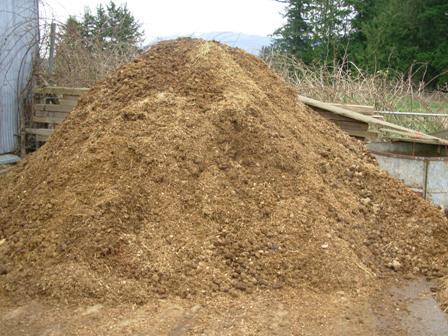
There Must Be a Pony in Here Somewhere…

pile2

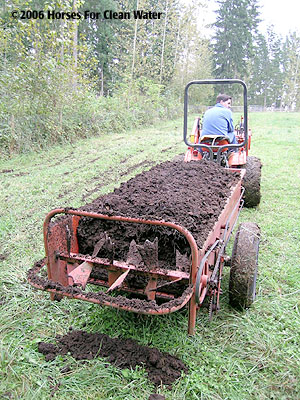
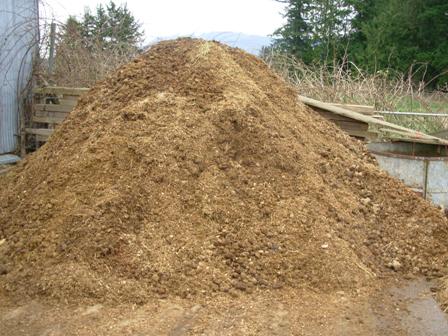
It’s manure spreading time at BriarCroft–time to recycle six months of accumulated Haflinger poop (plus shavings) back to the fields from where it originated. The fields soon will be too wet and mushy to run the manure spreader over without cutting deep ruts, so October is our window of opportunity to reduce the mountains of manure that have accumulated over the spring and summer so we can start “fresh” for the fall and winter. There is nothing quite so satisfying as making good use of what appears to the average citizen to be noxious organic material.

Au, contraire!

This poop is the best fertilizer in the world, because it is produced, with love and not much effort, by our Haflingers.

Scooping poop out of stalls is a therapeutic exercise in more ways than one and usually far more satisfying than pitching the figurative stuff
all day in other settings. There are a few Haflingers that are ‘pilers’—beautifully barn trained creatures that they are, leaving nice neat little collections tidily in one corner of the stall, one deposit on top of the other, so that when you are cleaning, you have only to remove 20 lbs. of manure in one forkful without having to do a thing to the rest of the stall except fluff the shavings. Then some Haflingers are of the ‘the more the merrier’ variety–leaving many small piles around the stall like so many Easter eggs to be found. It is more time consuming to clean, but satisfying as the stall looks so much better when you leave it than when you walked in. Lastly are the Haflinger ‘blenders’ whose stalls remind me somewhat of my children’s bedrooms on a very bad day. If you dare to open the door, you’ll find a whirlwind of everything mixed together, impossible to sort clean stuff from dirty stuff and the temptation is to just walk back out and close the door without even trying.

We pile our manure loads onto cement slab, and as the months go by there is greater challenge to accomplish the dumping of the load as the wheelbarrow must be pushed or pulled up the pile. Eventually one feels like Sisyphus attempting to roll the rock uphill only to have it roll back down again and have to start again. Manure piles do settle though, and shrink with the decomposition taking place, so it is possible to keep loading on top and not see a whole lot of change in the height of the hill over time. When the time comes for spreading, we start digging into the pile, revealing layers as if on an archaeological dig. The steam rises from the opened pile, and sometimes the heat is so great that I barely touch it comfortably with my bare hand. It steams in the manure spreader and as it flies out the back of the spreader onto the fields, it appears to be a great gaseous chemical concoction that we are throwing back to the grass (which of course it is!)

We are rewarded with the growing grass in the spring–indeed this is the ‘pony’ in this pile of poop–in fact many ponies! Brown smelly organic material returns back to the land to provide sweet green organic material for the next winter. It is a remarkably simple formula. We purchase no additional fertilizers, we buy little outside hay. The Haflingers provide for the fields, the fields provide for the Haflingers, then the Haflingers provide for the fields once again. Our mission, as we choose to accept it, is to get it back out to the fields, and when the grass is ready to harvest, bring it back in. Transformation of waste to nourishment all in one year’s time.  In this day and age, this is referred to as “sustainability”.  I call it good stewardship.

Can I say the same of the things I cast off as “worthless waste” in my own life? There are stinky, yucky, messy and ugly parts of myself that I wish I could throw away, flush and never see again.   Is it possible that I should be figuratively gathering it up, to haul off and pile up to decompose all on its own, in the fervent hope it will be somehow transformed into something useful?

Instead I tend to let the piles accumulate around me in my daily life.  Rather than shoveling into a transforming clean-up, I remain messy too much of the time.

So perhaps I better start looking for the “pony” buried deep in my own pile . I know he’s in there just waiting to be found.  I just have to get dirty and start digging…

DSCN3762

The Solace of Slugs

slugs4

After a long dry spell, with the lawn dried to a light brown crisp and the garden crying for water, it rained last night.  It continues to rain today, each droplet slurped up into the ground without hesitation.  The world was very thirsty, which is a rare event here in the Pacific Northwest where waterlogged is the typical chronic malady.

Heading out to the barn for chores was a hazardous journey,  slipping and sliding on hordes of slugs that had surfaced everywhere like pimples on a teenager’s back, seemingly overnight. They crawled out from under every leaf and every stray piece of wood to bask in the rain, replenishing the moisture lost over weeks of hot sun.  Somehow I always suspected there was a secret world of organisms out there, oozing and creeping in the dark of the night, but preferred not to think about them if I didn’t have to.  But they would confront me regularly to remind me of their existence.  At dawn, the cat food bowl sometimes contained clues that parties were being thrown at midnight by the back porch, with glistening slime trails in and out of the bowl and in concentric circles all around.  When I would grab a handful of green beans in the garden, some of them would be slippery with slug slime and neat little chunks would be missing.  The tidiest stealth invasion was a tomato that looked invitingly red and plump from one side, but when picked, was completely cored, hanging in a dangling half shell from the vine with mucus strands still dripping.  There was some serious eating going on right under our noses.

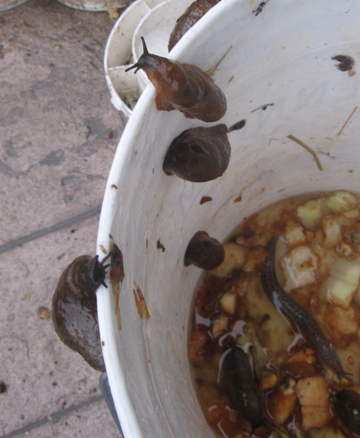
Actually the chewing is under the slug noses, all four noses to be precise.  With that much sensory input, no wonder a slug knows about the transparent apple peelings lying on the bottom of my tall compost bucket outside the back door.  I think they traveled for miles to find this particular stash, climbing up the bucket sides and slithering down into glorious apple orgy.  The party lasted until morning when I discovered them still congregating and clinging, gorged and immobile in their satiety on the sides and bottom of the bucket.  I had unwittingly provided the means of their intoxication, having now become an accessory to minors in possession.

In my middle years, I now appreciate slugs for what they are.  No longer do I run for the salt shaker as I did in my younger, more ruthless days.  Instead I find it strangely reassuring that a land locked amorphous invertebrate can survive days of 100+ degree heat, weeks of no rain and still thrive to replenish its kind.  If something so homely and seemingly inconsequential to the world can make it in spite of conditions that conspire to dry it to dust, then maybe I have a chance as well.   I too may not be presentable at times,  and sometimes leave behind evidence of where I’ve been and the havoc I’ve created.  But then someone puts out a sweet meal for me to feast on, allowing me a celebration of life, and spares me when what I deserve is the salt shaker.

It is solace indeed:  if the slugs are loved, than so am I.

Steaming in the Pile

pile2

(yes, another story about manure–sorry!  Given I spend an hour or more a day dealing with it, it tends to absorb my creative energy!)

A mid-March cold snap swept down from northern Canada last week, freezing daffodils in mid-bloom, withering berry plant and orchard branch buds, and causing general mayhem in the Pacific northwest.  After a few weeks of rain and temperate weather up to the high 50’s, 17 degrees felt cruel indeed.

Our barn is fairly draft proof, but in northeasters like this, the water buckets ice up and the manure sits in cold hard piles, like so many round rocks.  It is a great temptation to put off the stall cleaning when the weather is this bitter cold and push the poop to the walls for later pick up when it is warmer.  After all, it doesn’t smell when it is frozen rock hard, and certainly loses its “squish” factor, so the horses seem to not mind too much.  So when I went out this weekend to start the digging out process, there were several days of accumulation to contend with.

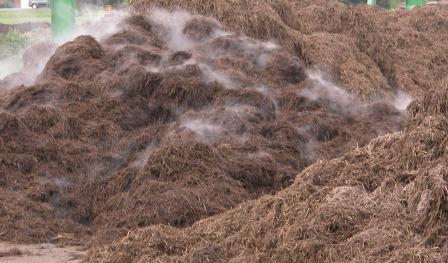
As I wheeled the loads out to the manure pile, and dug into the pile to tidy it up, the steam poured out into the frigid air–there was nothing left frozen there.  It was hot and getting hotter–its destruction assured through the composting of so much organic matter.  No wonder the cats find a nice sunny spot to stretch out next to this smoldering mountain of poop.  It is as comfy as a tropical vacation spot.

How often have I similarly piled my metaphorical “poop” in piles to deal with another time?  Frozen it seems innocuous, inoffensive, not worthy of my attention, not enough to bother with.  It is so tempting to pass on cleaning up my messes, by shoving mistakes and errors to one side or “under the carpet” and trying to ignore the growing mounds in my own nest.  Admitting one’s sins and proceeding to clean up after one’s self  is not fashionable in this day and age of not wanting to be judged or to pass judgment.  All types of behavior, even some of the most self-destructive, are tolerated as freedom of expression, and referring to anything as sin is considered impossibly old fashioned.  Our pastor is doing a study series on Christian “respectable sins”, like ungodliness, discontent, pride, etc.   I have a ton of them that accumulate daily that I want to simply pile up and ignore.

Like frozen poop shoved aside and not dealt with, sin eventually warms up.  It starts to stink, and generally becomes obnoxious and overwhelming.  Once it gets big enough, it becomes its own steaming inferno, burning and destroying everything else within. The only safe place for it is to move it far away from where we dwell everyday.

I remember a young mother of three children who died three years ago as the heat of her drug addiction overcame efforts to clean up her life, though she was a Christian believer.  Many family, friends, church family and health care professionals handed her the tools to help scoop up the mess her addiction had left behind, but she chose to shove it into frozen piles around her, unwilling to admit how it was mounding up higher and higher, to the point of blocking any eventual escape.  It consumed her before she could dig free with her rescuers’ help.  It crushed her and her family is still trying to recover.

Such tragedy convinces me we must face our own messes without turning away in our shame.  We must dig ourselves out everyday from our mistakes, ask forgiveness for the harm we cause, and gratefully accept the tools handed to us that make possible the impossible job of getting clean.   We cannot do it by ourselves.  Our wheelbarrow is too small, our shovels too inadequate, our muscles too weak.

Blessed are the barn cleaners, for working together, they will find hope beyond the steaming pile.

Rearranging the Pile

manureThe sun has actually shown itself for two days, after weeks of rain, then wind, then snow, then sleet, then rain, then flooding, then fog.  The light above finally reappeared and it shone brightly, cheerfully, unblinkingly…. on my manure pile.

During all the bad weather, the chief barn cleaner (that would be me) really didn’t enjoy wheelbarrowing all the manure out to the pile, through the elements, whether it was an arctic blast wind, or a foot of snow, or ice covering the pathway, or huge deep puddles.  I went for a “dump and run” technique which meant I didn’t pile things up in a careful methodical way.  Instead I left piles randomly everywhere.  This is not the way to build a manure pile.  Nothing really heats up and decomposes when it is not piled together.  Instead it just sits there, taking up space and not doing what manure does best–become useful fertilizer for the spring pastures.

So I had no excuses yesterday.  It had to be done.   I had to pitch and move the manure pile into a semblance of orderly compost, flattening it out into a sloping ramp for ease of future dumping.  Yes, it took time and muscle and patience–all things I did not exercise much of in the last few weeks of excuse-laden poor weather.  Today, when I went out to the barnyard to survey my good work,  I only had to lift one shovelful to see the steam rise happily from beneath.  This is now happy manure, if there is such a thing.

My life is too often a dump and run affair too.  I don’t measure out my minutes carefully enough to take care of things in the orderly way they should be managed.  Anyone who has been to my house knows this about me.  I know what are in those piles of books, papers, clothing, etc.   It just doesn’t look like I do when I start searching for something…

I know what is in the piles of stuff I’d sooner forget about, kind of like the manure pile in the barnyard.  There are parts of me that I’d like to dump and run away from: things I say or do or think that I’m certainly not proud of, that I regret the moment it happens. I leave it in a little pile, all by itself, not wanting to ever return to it and do what really needs doing.  Instead it needs to be ceremonially heated up and decomposed so it never happens again, or with all the other stuff I do every day, it needs to someday become fertilizer for a better life lived down the line.

Maybe my children will learn from watching me manage my personal manure piles,  and benefit from my mistakes, rather than being busy creating their own.

The Light is shining on the manure piles of my life.    It is unblinking, stark and at times blinding.   It is time for me to quit the “dump and run” and to face the heat, knowing it will inevitably create something better out of me.  I will become the fertilizer someday.