Eclipsed

lunar-eclipse-closeup

This was the sad day when a son of Whatcom County returned home to be buried: our first soldier killed in the war in Afghanistan, Spc. Aaron Aamot.  I was unable to be among those to line the route his body was carried, with hundreds of others who wanted to honor his sacrifice.  I went back to what I wrote on the day Jonathan Santos returned home, on an autumn day five years ago, our county’s first soldier killed in the war in Iraq in 2004.


October 27, 2004

Tonight the moon simply dropped from the heavens.  Vanished from the firmament with a hollow hole left hanging in its place, slightly glowing but eerily empty and gaping. All else seemed completely usual and ordinary until we looked in the sky to find the familiar light missing, having been eaten up slowly over an hour’s time by encroaching blackness until it was swallowed whole. It shatters our senses and rattles our routine. It takes away our breath to lose such a part of our every day experience. And miraculously, expectantly, it returns, just as slowly, to bathe us in brightness, healing and sealing up the hole rent in the heavens.

Our town buried a soldier this week. A son, a brother, a friend–newly assigned to Iraq only a few short weeks ago, but returned home too soon, too young, and as #1096, too many. Ripped from this earth, leaving a gaping hole in his parents’ hearts, and empty hopes for his younger brothers. He arrived home on a blustery wet windy night, to streets lined with young and old who held candles and wept for this lost man whom most had never met, honoring his family’s sacrifice and grateful for his willingness to serve when the majority are not. Hundreds of people came to light his way home in the bleak darkness of a moonless stormy night, recognizing this young man’s commitment and dedication represents what is best about America. It is the rarity of his raw faith in our country that astonishes. In a letter received by his mother days following the notification of his death, he wrote: “We love our country and are willing to die for it. In the name of freedom we will fight any threat. We’re doing great things for God and country.” It takes my breath away to know what he was preparing himself, and his family for. It is breathtaking to witness such patriotism in one so young.

Any soldier’s death is one too many, any time, any where, now or 200 years ago. The blood soaked soil we tread with such casualness has been rendered sacred by each sacrifice, and we fail to remember, fail to acknowledge, fail to honor what it took to allow us that freedom to walk where we please, be who we please, say what we please. It takes the moon dropping from the sky to rattle us to awareness. The light has gone, the hole is gaping, the blackness bleak. But slowly, candle by candle, word by word, hug by hug, the glow of this young man’s life shines on, bathing us in the brightness of his faith and the awesomeness of his belief in freedom only coming at a price. Our country was born of this, and we have been there with other countries as they face this same sacred bloody struggle to freedom. Bless these soldiers and families who have made it possible. May the heavens heal them, may their light shine on forever, and may our God bathe them in righteousness so richly earned.
Rubber Bucket Belly Bumpers

nuancemontage1

Haflingers do have a variety of creative techniques for attracting attention to themselves when someone walks in the barn, especially around feeding time. Over the years, we’ve had the gamut: the noisy neigher, the mane tosser, the foot stomper, the stall door striker, the play with your lips in the water and splash everything, and most irritating of all, the teeth raked across the woven wire front of the stall. Some Haflingers wait patiently for their turn for attention, without fussing or furor, sometimes nickering a low “huhuhuhuhuh” of greeting. That is truly blissful in comparison.

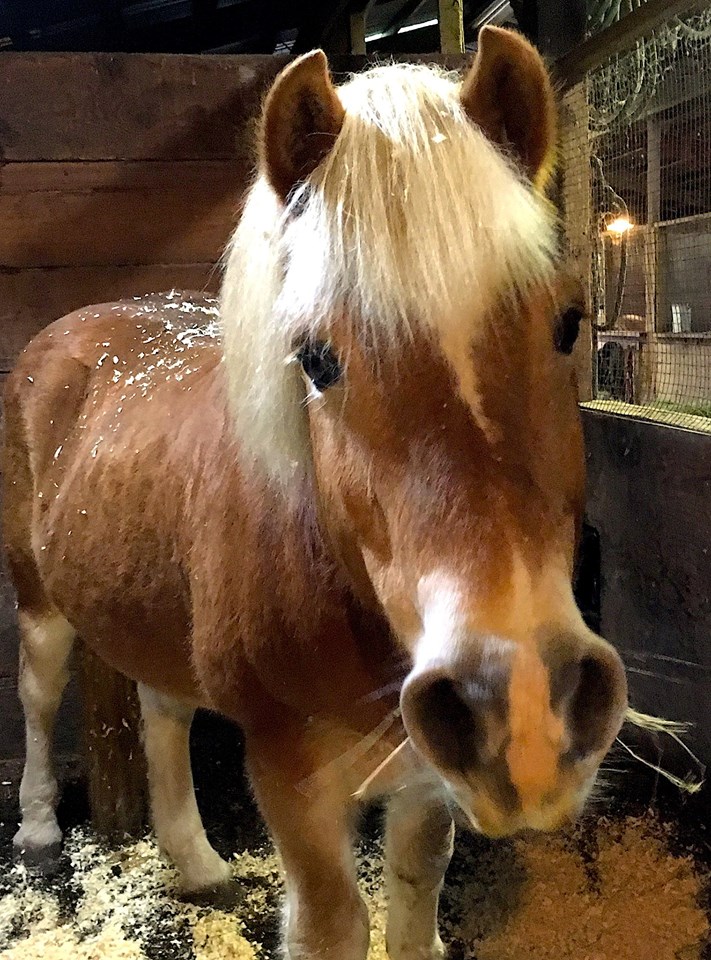
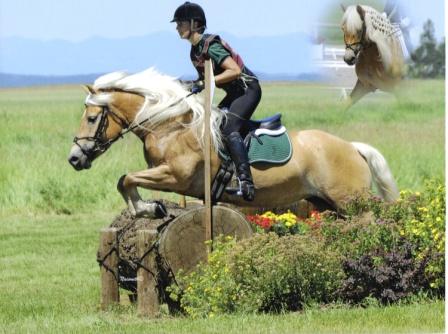
Most creative of all, however, was our mare, Nuance, who did not live up to her name in any way. She was the least “nuanced” Haflinger we’ve owned. Her chosen method of bringing attention to herself was to bump her belly up against her rubber water buckets that hang in the stall, making them bounce wildly about, spraying water everywhere, drenching her, and her stall in the process. She loved it. It was sport for her to see if she could tip the buckets to the point of emptying them and then knock them off their hooks so she could boot them around the stall, destroying a few in the process. Nothing made this mare happier. When she had occasion to share a big stall space with one of her half-siblings, she found that the bucket bouncing technique was very effective at keeping her brothers away, as they had no desire to be drenched and they didn’t find noisy bucket bumping very attractive. So her hay pile was hers alone–very clever thinking.

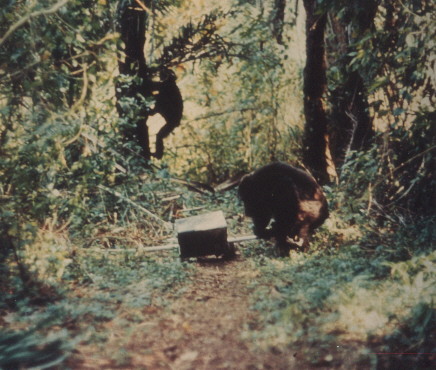
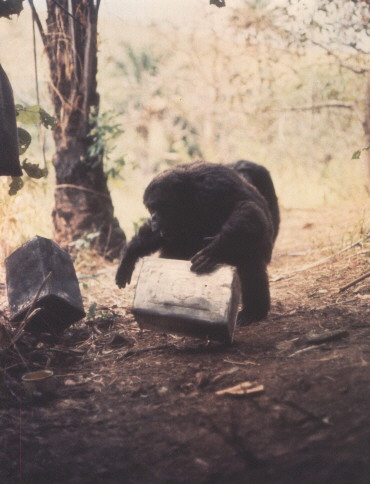
This is not unlike a wild chimpanzee that I knew at Gombe in Tanzania, named “Mike” by Jane Goodall, who found an ingenious way of rising to alpha male status by incorporating empty oil drums in his “displays” of aggression, pounding on them and rolling them down hills to take advantage of their noise and completely intimidating effect on the other male chimpanzees. Mike was on the small side, and a bit old to be alpha male, but assumed the position in spite of his limitations through use of his oil drum displays. So Nuance, my noise and water splashing mare,  became alpha over her peers.

We humans have our various ways of attracting attention too. Some of us talk too much, even if we have nothing much to say, some of us strut our physical beauty and toss our hair, while some of us are pushy to the point of obnoxiousness. And some of us are real bluffers, making a whole lot more noise and fuss than is warranted, but enjoying the chaos that ensues. Meanwhile we may leave a wake of destruction behind us–not unlike my mare with her soaked stall, and mangled buckets–all done to make sure someone notices.

I’ve learned I need to quit stomping and quit knocking the door in my impatience, quit hollering when a quiet greeting is far more welcome. And I need to quit soaking everyone else with my water–after all, it yields me nothing more than empty buckets, and eventually I get very thirsty and wish I hadn’t been so foolish. As my horses are trainable to have better manners, so am I.

And I really am trying.

mikeialpha

Haflinger and Fugue in D Minor

wallychew

The skies have opened up and dumped buckets of rain in the northwest today. It was dark and black this morning with a cloud cover that allowed no sunrise, and the southeast winds started picking up early, gusting up to 50 miles an hour in some places in our county. So when I went out to the barn this morning, I informed my seven resident Haflingers that they were stuck indoors for the day, and none of them objected as long as they had a pile of hay to munch, a comfy clean bed of shavings and fresh water. Contentment reigneth as I closed up the doors and headed to work.

By the time I made it home from work tonight, got dinner started in the house and headed down to the barn through sheets of blowing horizontal rain, I was assaulted by seven excited voices that greeted my opening the barn door. The deep bass from our stallion Waldheer, the tenor from Wheaton, the alto of Noblesse, Belinda, and Weissach, and the high soprano nicker of our yearling BriarRose. But nothing compares with the shrill piccolo squeal that comes from Marlee–heard above all and frankly, ear piercing! I realized as I walked in the barn that their chorus was only the melody line for the constant din of rain drumming on the metal roof and the banging of the sliding doors as the wind buffeted them. It was truly a concert out there, and I’m sure the Haflingers had heard plenty of noise from the storm all day and enough was enough. They wanted some relief, like, ah, food, like– you know–right now, to take their minds off of it.

I moved quickly to fetch grain and vitamins to them in record time, throwing hay flakes in their stalls and freshening up their water. They settled into the rhythmic chewing that I always find as comforting as a lullaby as I cleaned and prepared their beds.

Five more days of rain and wind are predicted. This could be a long confinement for the Haflingers if the weather stays this soppy and nasty the whole time. They may even compose a complete symphony before it is over. Rehearsals scheduled at 6:30 AM and 6:30 PM with performances daily at stall cleaning time, attended by one grateful lady farmer.

I’ll be asking for an encore.

ponybarn2

In Defiance of Winter

3461126069_650bcd5980_b

Whether mid-winter or early autumn
the crocus are unexpected,
surprising even to the observant.

Hidden potential beneath the surface,
an incubation readily triggered
by advancing or retreating light from above.

Waiting with temerity,
to be called forth from earthly grime
and granted reprieve from indefinite interment.

A luminous gift of hope and beauty
borne from a humble bulb;
plain and only dirt adorned.

Summoned, the deep lavender harbinger rises
from sleeping frosted ground in February
or spent topsoil, exhausted in October.

These bold blossoms do not pause
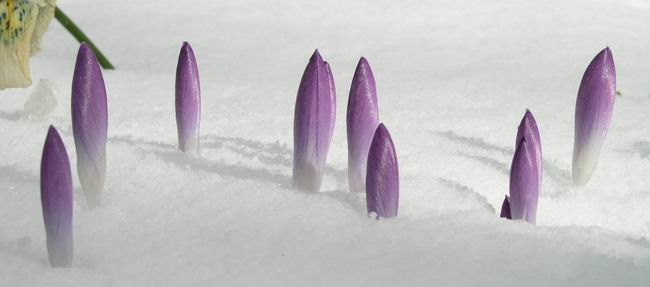
for snow and ice nor hesitate to pierce through
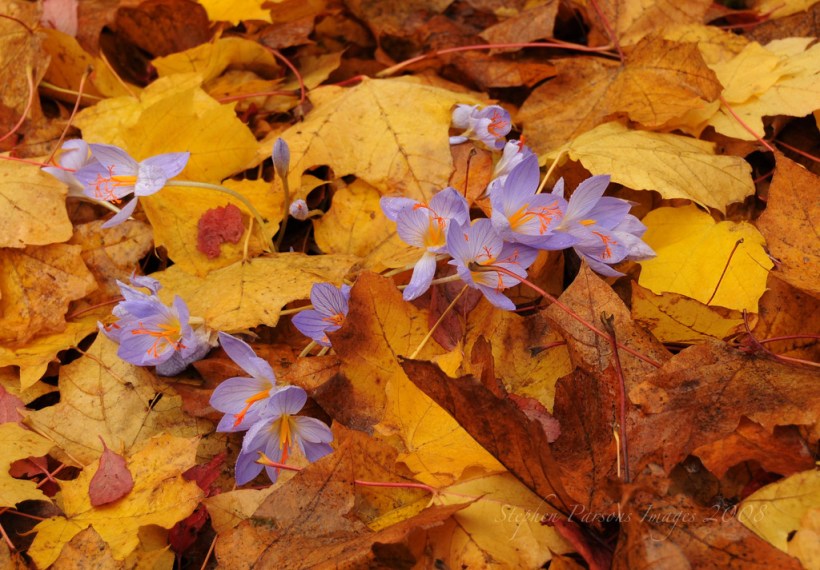
a musty carpet of fallen leaves.

They break free to surge skyward
cloaked in tightly bound brilliance,
spaced strategically to be deployed against the darkness.

Slowly unfurling, the violet petals peel to reveal golden crowns,
royally renouncing the chill of winter’s beginning and end,
staying brazenly alive when little else is.

In the end,  they painfully wilt, deeply bruised and purple
under the Sun’s reflection made manifest;
returning defeated, inglorious, fallen, to dust.

They will rise yet again.


(written on a theme of “Purple”)

Crocus in snow

Witness to Sunrise

rise1rise3rise6rise7

Written in late October 2003 after significant regional flooding

The two constant days of rain (over 3 inches total) stopped during the night and the winds calmed. It was balmy warm and I opened windows during the night because the house felt so stuffy (in mid-October yet!) Though our northern county has been declared in a state of emergency because of extreme flooding of the Nooksack River around the communities of Everson and Lynden, we are high and dry on our hill top farm that overlooks the valley that is waterlogged and trying to recover. Many of our dairy farmer friends are living on farmyards that are now islands, with impassable roads around them, and struggling to get from house to barn to cows in their hip waders.

The first hints of orange sunrise this morning began shortly before 7 AM, and rapidly stretched across the eastern horizon north and south, with the colors deepening and spreading across the cloud cover. Mt. Baker and the Twin Sisters started as dark silhouettes against this palette of rich color, then began to show their crags, glaciers and new snow cover as the sun illuminated the clouds above them. The entire farm was cast in an orange glow for a few brief seconds as the color crept higher and higher up the cloud banks overhead. Then it ended as quickly as it began, lasting at most 6 minutes, giving me barely enough time to run to the top of our hill for the best view and to take these photos. Amazingly, all at once, everything returned to gray and ordinary, with no hint of the spectacular show that had just taken place. It could be dismissed so easily but must not be forgotten in our return to the routine of every breath, every step of our daily lives.

I then went back down to the barn to set the Haflingers free from their two days of barn confinement due to the extreme weather conditions we’ve had. They gratefully leaped and danced across the fields, sending up sprays of water as they splashed through new puddles and “instant ponds” created by the storm. Freedom! Fresh air! Fields of green! Joyous and oblivious to what had happened moments before. Living creatures that know only what their needs are for this moment, not concerned for what comes next or what has just been. Uncomplicated and untroubled. Not much like their human stewards at all.

This rare sunrise is encouragement after the events of the previous two days. It can only happen when the clouds become canvas backdrop on which the color is able to be painted–clouds that created havoc, floods, power outages, and injuries only hours before. Then this. Startling, wondrous magnificence beyond imagination. Grace that brings us to our knees, especially when we are mired in our gray troubled ordinariness and plainness.

Drink deeply of this. Hold it, savor it and know that to witness any sunrise is to see the face of God.

Taking Off The Tuxedo

Lost Seita Garland

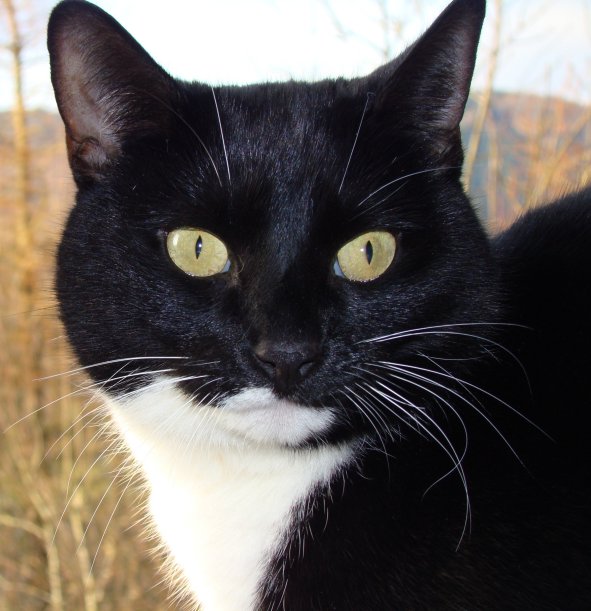
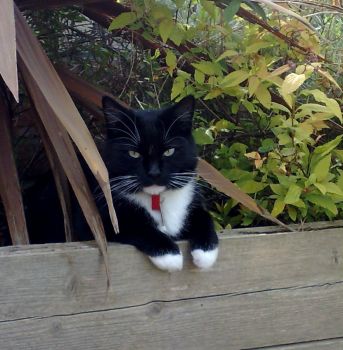
Our “tuxedo” kitty arrived on the farm in 1993 with all the accoutrements of an especially loved cat: a soft bed, scratching post, litter box, collar with bell, self dispensing food and water dishes, expensive diet.  Her owner was moving and could not keep her after two years of luxurious indoor living.  So black and white Bobbie Sox would become a barn cat.  No collar, special diet, entertainment center or scratching post were necessary.  All her stuff was put up in the hay loft to make her feel “at home” where she initially walked out of her cat carrier, and I don’t think she ever looked at it or touched it again.  She gazed about her new surroundings, flexed her muscles and disappeared into the hay.  Freedom was at hand (or four white paws).

She chose not to be particularly social; she kept away from the other farm cats, and kept her loft kingdom to herself.  Even when called, she would not come quickly like the other cats.  She stayed aloof and formal in her interactions.  I would climb into the loft to fetch hay bales, and give her a daily ration of cat kibble, and I’d glance into the hay stack to find her.  She would be generally on her throne on top of the stack, looking down at me with curiosity, her yellow eyes a reflective flash from her black face, her stark white bib bright in the semi-darkness of the loft.  She would wait until I was gone to come down to eat her fill.  I don’t recall ever touching her soft black fur coat that first year—she always stayed at arm’s length, regal in her demeanor and her dress.

Over the ensuing years, as other cats came and went, Bobbie Sox was a constant.  She ventured more often from her hay loft perch, helping to keep the rodent population under control. Occasionally, I’d see her sharing her food dish with her peasant feline companions in the barn.  She would talk more often to me when I came to the barn, and every once in awhile, she would come up and rub on my legs as I did chores.  Her formality started to soften and her personality blossomed.

Sixteen years have passed since Bobbie’s arrival.  This past year she showed her age for the first time, becoming a bit thinner, and showing signs that she wasn’t able to keep up her self-grooming.  Her tuxedo coat started to mat in places, and her clean white bib began to show stains she could no longer reach to lick clean.  Her bright yellow eyes began to cloud with cataracts.  She didn’t respond as quickly to sounds.   She seemed to forget her reticence to be touched.  Bobbie began to accept and give love.

Yesterday, as I climbed into the loft, I did not see her peeking at me from her usual perch.  Instead, she lay on the floor, a little black shadow tucked up against a hay bale.  Her body lay still and flat, deflated, eyes partially closed, white bib blemished and yellowed.  She had gone for good during the night, leaving her little tuxedo suit behind.

We will bury her today on a little hill overlooking the barn loft throne she occupied for so many years.  We have wrapped her little body carefully in a soft blanket and will lay her gently in earth still warm from the autumn sunshine.

And now, truly, freedom is at hand and at the feet of her four little white socked paws.

stevie