Advent Meditation–Tender Shoot

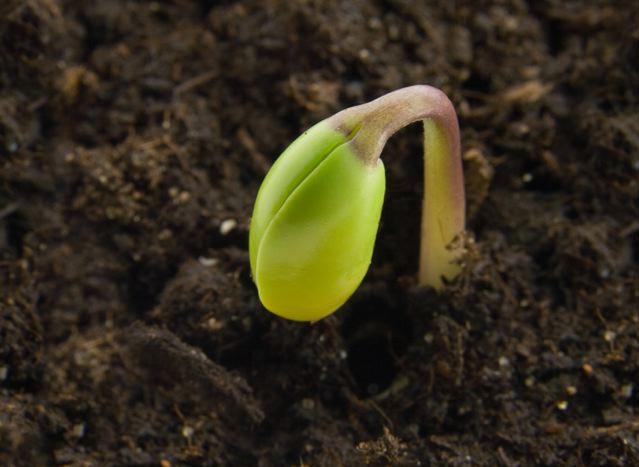
I’m reminded every spring, as we break the soil in the garden for that season’s planting, how challenging is the job of the seed.  It is a plain, unadorned and ordinary thing, a little boring even, practically forgotten once it is placed in the ground.   Yet the ordinariness is only the outer dress; the extraordinary is contained inside, and within days a tender shoot braves all to come to the surface, bowed and humble. It establishes a root that ensures survival, even in the most inhospitable ground.

So it is with Jesus whose ordinary origins belied his holiness and majesty.   Hardy root and tender shoot, he reaches up to the heavens and deeply into the earth,  both at once.

And we will be fed.

Isaiah 53:2

Advent Meditation–Shiloh

Especially in the hubbub of holiday activities, I yearn for moments in which to breathe deeply, sit quietly and absorb the impact of what the Lord’s advent (“arrival”) really means.  Typically I find that respite when I’m lingering in the barn after feeding our animals and listening to them chew–a sense of contentment and fulfillment is a contagious thing.  It is my time of calm reflection: I long for an emerging peace to overtake me and flow with me afloat, like a river.

“Until Shiloh comes” is a prophecy of not yet unlocked mystery, as the name itself has potentially different meanings.  What is clear:  the Hebrew children of God were to expect great things from a future ruler to whom everything belongs.  Already in Genesis, there is written a promise of tranquility, an assurance of peace to come.

Peace arrived unexpectedly in a barn, softly, gently, swaddled and sleeping in a manger–and we all can linger there, overtaken and overwhelmed by tranquility,  a little longer.

Genesis 49:10

Sun Settling

It is soon time to bid farewell to autumn and accept the arrival of the winter solstice signaling the long slow climb back to daylight. A recent December sunset was a startling send-off for fall, coloring Mt. Baker pink in the Cascade range and surrounding an almost full moon with purple in the eastern sky. Our farm, for a deceptive few minutes, appeared rosy and warm in crisp subfreezing weather. Then all became gray again, and within an hour we were shrouded in thick fog which iced the asphalt as darkness fell and it became a challenge to avoid the deep ditches along our county roads, with the white fog line being the critical marker preventing potential disaster.

The everpresent evening fog this time of year cloaks and smothers in the darkness, not unlike the respiratory viruses that have hit so many households. People are feverish, coughing and snuffling, unable to see past the ends of their own swollen noses, as if the fog descended upon each in an impenetrable gray cloud. It is an unwelcome reminder of our vulnerability to microscopic organisms that defeat us and lay us low in a matter of hours, just as a sudden fog can misguide us to the ditch. We are forced to stay put, at a time when there are dozens of responsibilities vying for attention in preparation for the holidays. Little gets accomplished other than the slow wait for healing and clarity–at some point the viral fog will dissipate and we can try climbing back into life and navigating without the fog lines as guides.

So the day’s transition to night is bittersweet: bright flames of color, yet heralding our uneasy future sleep. The sun “settles” upon the earth and so must we.

Be at ease, put down the heavy burden and rest. We can celebrate, with chorus and gifts, the arrival of brilliant light in our lives. Instead of darkness overcoming us, our lives have become illuminated in glory and grace.

The Son has settled among us.

Advent Meditation–Refiner’s Fire

It is hard to admit: I need cleaning, and badly.  It isn’t just dirty fingernails after working in the barn, or the messed up hair after being out in the wind.  I am usually presentable most of the time, but there is still plenty of grime in every aspect of my being, primarily invisible and internal.

Refining is a painful process whether by complete melt down by fire  or a thorough scrubbing by soap.   Malachi addresses this and John Piper on www.desiringgod.org helps me understand why this must hurt:

“We were created in the image of God with the potential to reverence God and trust him and obey him and glorify him, but we were born in iniquity and in sin did our mothers conceive us. We are shot through with the impurity of rebellion and unbelief, and we fall short of God’s glory again and again.

You can prove this to yourself in many ways. For example, you can notice how readily your heart inclines to those things that will show your strengths to other people, and how resistant your heart is to communion with God in solitude.

So we are impure by nature and by practice. But God will have no alloys in heaven. ‘Blessed are the pure in heart, for they shall see God.’ And yet he will have someone in heaven. He will have a redeemed people. His banquet hall will be full. And therefore he must be a refiner’s fire. If he were only a forest fire, heaven would be empty. If he were only an incinerating fire, heaven would be empty. And if he were no fire, heaven would be empty.”

Malachi 3:2

Advent Meditation–Quickening Spirit

There is a distinct and memorable moment in pregnancy, around 16 weeks, when there is an undeniable awareness of movement within the womb–initially a fluttery feeling, but then over the next few days, there are tickly sensations, then rolling, then pushes.  It is referred to clinically as “quickening”–an emphatic evidence of life within–and there is profound acknowledgment that one’s life is no longer one’s own.   It is now shared.

Jesus is called the “second Adam”  through his death and resurrection,   a quickening spirit now shared with us, so much more than the  simple life and breath of the first Adam.  The spirit lives and breathes within us, fluttering and rolling, pushing us from inside, creating in us more than we ever could become on our own.  We are startled by its presence, amazed by its touch, forever transformed, and never, never to be the same again.

1 Corinthians 15:45

Looking For An Explanation

“Thank you Jesus!”  the mother cried out as she bore down one more time, pushing her third child in three years, her first girl, into my lap.

It was this prayer that marked as memorable an otherwise unremarkable labor, this prayer that transcended the blood and amnion pooling at my feet, this prayer that marked this family’s destiny as unlike any other.

At that moment, during my family practice residency training in Seattle in 1981, I could not have known that within four years this family of five would become an orphan of one.  I could not have known the vague and unremitting symptoms of achy muscles,  tiredness, and headaches this woman experienced before and during her pregnancy were not just those of a weary mother of young children.  In addition, her husband, a hemophiliac, had troubling chronic fatigue and weight loss as well as frequent respiratory infections.  Two of their children seemed to always be sick with something–usually sore throats, swollen lymph nodes, poor appetites.  No diagnostic testing, despite extensive searching for an answer,  explained this family’s struggles.

As believers in the power of prayer and alternative approaches to healing, these parents had done some reading on their own and were certain it was too much yeast in their diet causing the problem.   They tried elimination diets, tried antifungal medications on their own, tried homeopathy.  Nothing made a difference.  My inability to find an explanation was frustrating to them, and only confirmed my sense of inadequacy as a diagnostician, much less a competent healer.

This new baby girl seemed healthy, a sign that everything might be restored.   Instead, the birth marked the beginning of the end.  By the time she was three years old,  not gaining adequate weight and failing to thrive,  a new blood test finally became available.  She was HIV positive.

Both parents and the other two children were tested.  All were positive except the oldest son.  Unscreened blood products transfused into the father had infected him, then sexually transmitted to the mother, and passed during pregnancy or breast feeding to the youngest two children.

There was no known treatment and no hope for cure.  All that was left to them was prayer. So we all prayed.  Their church community rallied to care for them as the disease took them, one by one.  Their son, spared by an inexplicable grace, was entrusted to friends.

Remarkably, incredibly, in its own way healing, his parents continued to pray, until the very end, “Thank you, Jesus.”

Advent Meditation–Paschal Lamb

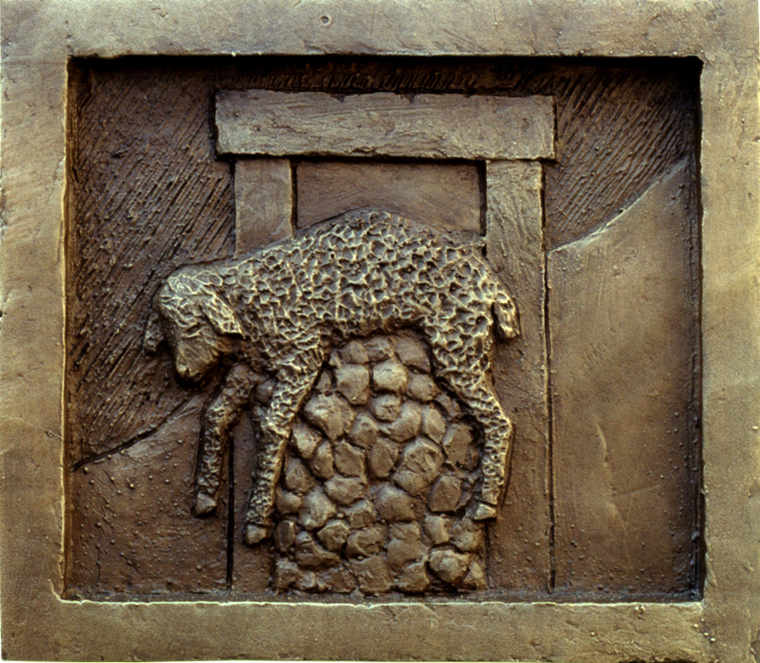
bronze sculpture by C. Malcolm Powers from www-personal.umich.edu/~mmpowrs/front.html

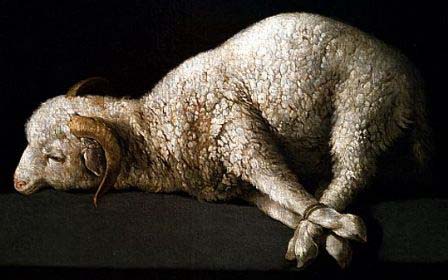
When I was growing up, when hearing the Old Testament Passover story from the Book of Exodus, I’d always flinch at the choosing of the year old male lamb “without blemish” to be selected as the sacrifice for the meal, and whose blood was used to mark the doorposts of the homes of God’s people, enslaved in Egypt.  His blood spared those residing inside from the angel of death slaying the firstborns, securing the “Passover” of that home,  so the lamb became the sacrificial replacement as directed by the Lord Himself.   Although I understood the reason for the sacrifice of the perfect lamb, as a child I secretly thought it would be preferable to have a blemish or two, thus avoiding being chosen.  What became clear later was that lambs, particularly the ones with blemishes, were doomed to be slaughtered for meat anyway–their death was a certainty.

Only the Passover lamb actually saved lives, lives that were to be liberated from the bondage of slavery.  Lives that are liberated from the bondage of sin.

Jesus is the Worthy Lamb, sacrificed so that death will pass over us, that we will be changed forever, freed from who we have been.  Death is no longer our certainty.

1 Corinthians 5:7-8

Breaking Through the Ice

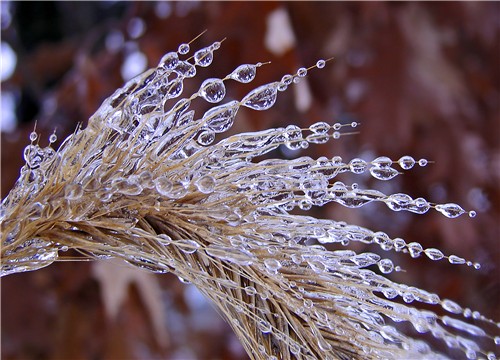
http://www.photo.accuweather.com

Freezing rain needs to happen every two or three years just to remind Pacific Northwesterners that regular rain isn’t such a bad thing.  We webfoot Washingtonians tend to grouse about our continuously gray cloud-covered bleak dreary drizzly wet mildew-ridden existence. But that’s not us actually grumbling.  That’s just us choosing not to exhibit overwhelming joy.  They don’t call Bellingham, the town ten miles from our farm,  the “city of subdued excitement” for no good reason.

So when the temperatures drop in our moderate climate and things start to ice up, or the snowflakes start to fall, we celebrate the diversion from rain.  Our children are out building snowmen when there is a mere 1/2 inch of snow on the ground, leaving lawns bare and green with one large snowman in the middle.  Schools start to cancel at 2 inches.  We natives are pitifully terrible snowy road drivers compared to the highly experienced (and at times overconfident) midwestern and northeastern transplants in our midst.

But then this little meteorologic phenomenon known as freezing rain and the resultant silver thaw happens.  It warms up enough that it really isn’t snowing but it also really isn’t raining because the temperatures are still subfreezing at ground level, so it spills ice drops from the sky–noisy little splatters that land and stay beaded up on any surface.  Branches become botanical popsicles, sidewalks become bumpy rinks, roads become sheer black ice, windows encase with textured glass twice as thick as usual.

So in the midst of this frozen concoction coming from the sky, I put off farm chores tonight as long as possible, knowing it would take major navigation aids to simply make my way out the back steps, across the sidewalk and down the hill, then up the slick cement slope to open the big sliding barn doors.  Chains on my muck boots help, to a degree.  The barn doors thankfully hadn’t iced together as they have in the past when the northeast wind blows freezing rain into the tiny gap between them, so by breaking foot holds into the ice on the cement, I was able to roll back the doors just enough to sneak through before shutting them quickly behind me, blocking the arctic wind blast.  Then I turned around to face the barn aisle and drink in the warmth of seven stalls of hungry Haflinger horsie bodies, noisily greeting me by chastising me for my tardiness in feeding them dinner.

Wintertime chores are always more time-consuming but ice time chores are even more so.  Water buckets need to be filled individually because the hoses are frozen solid.  Hay bales stored in the hay barn must be hauled up the slick slope to the horse barn.  Frozen manure piles need to be hacked to pieces with a shovel rather than a pitchfork.   Who needs a bench press and fancy weight lifting equipment when you can lift five gallon buckets, sixty pound bales and twenty pounds of poop per shovel full?  Why invest in an elliptical exerciser to get the aerobic work out in?  This farm life is saving me money… I think.

Once inside each stall, I take a moment to run my ungloved hand over a fluffy golden winter coat, to untangle a mane knot or two, and to breathe in sweet Haflinger hay breath from a velvety nose.   It is the reason I slide downhill and I land on my face pushing loads of hay uphill to feed these beloved animals, no matter how hazardous the footing or miserable the weather.  It is why their stalls get picked up more often than our bedrooms, their stomachs are filled before ours, and I pay for hoof trims for the herd rather than manicures and pedicures for the people residing in the house.

The temperatures will rise tomorrow, the overwhelming ice covering will start to thaw and our farm will be happily back to drippy and overcast.  No matter what the weather,  the barn will always be a refuge of comfort, even when the work is hard and the effort is a challenge for this middle aged farmer.

It’s enough to melt even the most grumbly heart and the thickest coating of ice.

Advent Meditation–Omega

As Jesus is the beginning and the end, the first and the last,  he becomes everything in between. We are to remember him in anything we do, or say, or think.

From Charles Spurgeon: “… if you have left out Christ, there is no manna from heaven, no water from the rock, no refuge from the storm, no healing for the sick, no life for the dead.  If you leave out Christ, you have left the sun out of the day, and the moon out of the night, you have left the waters out of the sea, and the foods out of the river, you have left the harvest out of the year, the soul out of the body, you have left joy out of heaven, yea, you have robbed all of its all.  There is no gospel worth thinking of, much less worth proclaiming in Jehovah’s name, if Jesus be forgotten.”

Revelation 22:16

Advent Meditation–Nazarene

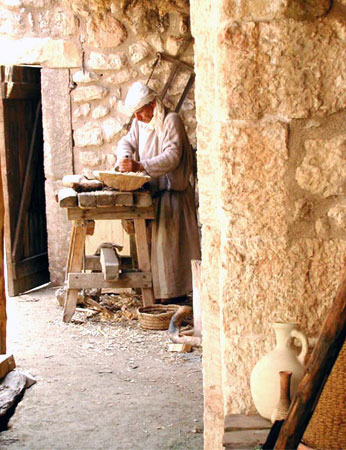
from http://www.nazarethvillage.com

“Nazareth!  Can anything good come from there?”  Even a future disciple, Nathanael, was derisive when he heard about Jesus from his friend Philip.   Philip persisted that this man was the one about which the prophets had written.

“Come and see.”

Hailing from an inconsequential small town is always a dubious distinction, and it is a decidedly negative title in the case of Jesus being called a “Nazarene”  as part of prophecy fulfillment.  Since the precise word Nazarene is not found in the Old Testament, it is not clear what prophecy is being referred to here, but the connotation is clear: this man deserves no honor or respect simply because of where he comes from.

Jesus even returns to Nazareth as an adult to teach in the temple and there his own townspeople reject him, insulting him by saying “isn’t this the carpenter?”  The child they watched grow up couldn’t possibly be equipped to preach profound teachings, or perform miracles.  He could not possibly be especially blessed because they themselves were nothings.  He could not come from Nazareth and be the Son of God.  Nazareth was simply not important enough.  They were underestimating what potential they themselves possessed.

They were wrong.   They were wrong about Jesus, and they were wrong about how the Lord uses the obscure, the despised, and the nothings for His purposes.

Those who come from a small town should never be underestimated.

Matthew 2:23