May 19, 1975

This is another piece of my Gombe saga, working as a student research assistant for Jane Goodall in western Tanzania in 1975.

At first glance,  Gombe National Park in Tanzania felt like paradise—a serene piece of the earth filled with exotic and fascinating wildlife, an abundance of fish and fruit to eat, and the rich unfamiliar sounds and smells of the tropical jungle.  It was a façade.  It was surrounded by the turmoil and upheaval of political rebellion and insurgencies in its neighboring countries, inflamed even more by the fall of Saigon in Vietnam a month previously due to the earlier pull out of the Americans from that long and tragic war.

Only a few miles north of our research station in Gombe National Park in western Tanzania, there had been years of civil war in the small land locked country of Burundi.  When the wind was just right, we could hear gunfire and explosions echoing over the valleys that separated us.  Escaping refugees would sometimes stop for food on their way to villages in Tanzania to the south, seeking safe haven in one of the poorest countries in the world, only a decade into its own experiment with socialism, Ujamaa.

There was also word of ongoing military rebellion against the dictatorship of President Mobutu in the mountainous country of Zaire twelve miles west across Lake Tanganyika.

Morning comes early for field studies of wildlife, as the research day must start before the chimpanzee and baboon subjects wake up and begin to stir. Before midnight, while we slept soundly in our metal huts scattered up the mountainside, a group of armed soldiers arrived by boats to the shore of Gombe National Park.

Storming the beach huts housing two unarmed Gombe park rangers and their families, the soldiers seized one and demanded to be told where the researchers were. The ranger refused to provide information and was severely beaten about the head and face by the butts of the rifles carried by the invaders.  The armed soldiers then divided into smaller groups and headed up the trails leading to the huts, coming upon four sleeping student researchers, tying them up, taking them hostage, forcing them into boats and taking them across the lake back to Zaire.

Asleep farther up the mountain, we were wakened by some students who were fleeing, hearing the commotion.  No one really understood what was happening down lower on the mountain. There were shouts and screams, and gun shots had been heard.  Had someone been injured or killed?   There was no choice but to run and hide deep in the bush at a predetermined gathering spot until an “all clear” signal was given by the rangers.

We hurried along barely familiar  trails in the black of the jungle night, using no flashlights, our hearts beating hard, knowing we had no defense available to us other than the cover of darkness.

That was the longest wait for morning of my life, sitting alongside Jane holding her son Grub.  A hand full of other students had also made their way to the hiding spot, none of us knowing what to think, say or do.  We could only barely see each other’s faces in the darkness and were too frightened to make any sounds.  We carried no weapons, and there was no way to communicate with the outside world.   We had no idea how many of us may be missing, or possibly dead.

Jane held Grub in her arms, trying to keep him quiet, but his eight year old imagination was ignited by the events that had just unfolded.

“Will they kidnap me, Jane?  Will they come for me?  Where will they take us?  Will they shoot us dead?”

Jane, her face hidden by her blonde hair loose about her shoulders,  sat rocking him, cradling him. “Shhh, shhh, we don’t want them to find us.  We’re safe staying right here.  Everything will be fine in the morning.  No one will take you from me.”

She concluded: “They would have to shoot me first…”  and at that, Grub began to sob silently into her shoulder.  He knew that was how baby chimpanzees were captured by bounty hunters, by shooting the mother dead and snatching the infant from her protective embrace.

When the morning of May 20 dawned, the park rangers located us, and pieced together the events as best they could–the soldiers were Zairean rebels living in remote mountains, fighting  an insurgency against the Zaire government. Seeking funds for their cause, they saw a kidnapping of Americans and Europeans as a way to raise quick funds and world publicity and sympathy.  Four of our friends/coworkers were missing, the camp was ransacked and the rangers hurt but with no life threatening injuries.   There was no way to remain safe at the Park, and our colleagues needed whatever help we could offer for their rescue.

We were able to send a messenger to a nearby fishing village, and a radio call was sent out to the small town of Kigoma, then relayed to Dar Es Salaam and Nairobi.  Help arrived within a few hours, when a United Nations boat monitoring the civil war activities in Burundi pulled off shore near our camp.  We were told we needed to evacuate Gombe that day, and would be taken to Kigoma, and then flown by bush pilot to Nairobi, Kenya to cooperate in the investigation of the kidnapping.

In Nairobi, at the US Embassy, I met CIA agents who viewed our wild primate studies with some suspicion.  Each of us were grilled individually as to our political beliefs, our activities at the camp and whether we may be somehow involved in subversive actions against the Zaire or Tanzanian governments.  We were dumbfounded that our own countrymen would be so skeptical about our motives for being in Africa.  It became clear our own government would be no help in resolving the kidnapping and bringing our friends home to safety.  The agents did not shed any light on whether our friends were alive or dead.

We were then hustled into a press conference where we were interviewed for television and print media by the worldwide news agencies, and my parents saw me on the CBS evening news before they actually heard my voice over the phone.

It took over three months, private negotiations and ransom money to free all four of our friends back to safety.
Rubber Bucket Belly Bumpers

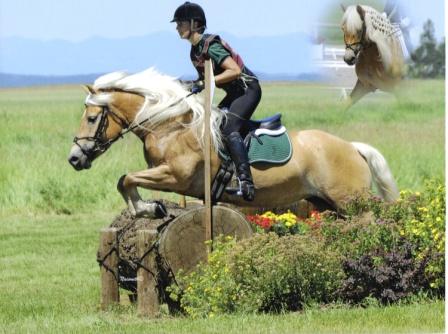
nuancemontage1

Haflingers do have a variety of creative techniques for attracting attention to themselves when someone walks in the barn, especially around feeding time. Over the years, we’ve had the gamut: the noisy neigher, the mane tosser, the foot stomper, the stall door striker, the play with your lips in the water and splash everything, and most irritating of all, the teeth raked across the woven wire front of the stall. Some Haflingers wait patiently for their turn for attention, without fussing or furor, sometimes nickering a low “huhuhuhuhuh” of greeting. That is truly blissful in comparison.

Most creative of all, however, was our mare, Nuance, who did not live up to her name in any way. She was the least “nuanced” Haflinger we’ve owned. Her chosen method of bringing attention to herself was to bump her belly up against her rubber water buckets that hang in the stall, making them bounce wildly about, spraying water everywhere, drenching her, and her stall in the process. She loved it. It was sport for her to see if she could tip the buckets to the point of emptying them and then knock them off their hooks so she could boot them around the stall, destroying a few in the process. Nothing made this mare happier. When she had occasion to share a big stall space with one of her half-siblings, she found that the bucket bouncing technique was very effective at keeping her brothers away, as they had no desire to be drenched and they didn’t find noisy bucket bumping very attractive. So her hay pile was hers alone–very clever thinking.

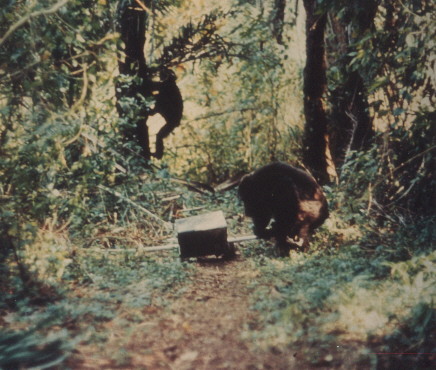
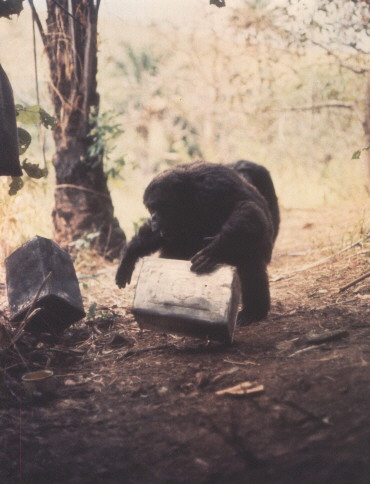
This is not unlike a wild chimpanzee that I knew at Gombe in Tanzania, named “Mike” by Jane Goodall, who found an ingenious way of rising to alpha male status by incorporating empty oil drums in his “displays” of aggression, pounding on them and rolling them down hills to take advantage of their noise and completely intimidating effect on the other male chimpanzees. Mike was on the small side, and a bit old to be alpha male, but assumed the position in spite of his limitations through use of his oil drum displays. So Nuance, my noise and water splashing mare,  became alpha over her peers.

We humans have our various ways of attracting attention too. Some of us talk too much, even if we have nothing much to say, some of us strut our physical beauty and toss our hair, while some of us are pushy to the point of obnoxiousness. And some of us are real bluffers, making a whole lot more noise and fuss than is warranted, but enjoying the chaos that ensues. Meanwhile we may leave a wake of destruction behind us–not unlike my mare with her soaked stall, and mangled buckets–all done to make sure someone notices.

I’ve learned I need to quit stomping and quit knocking the door in my impatience, quit hollering when a quiet greeting is far more welcome. And I need to quit soaking everyone else with my water–after all, it yields me nothing more than empty buckets, and eventually I get very thirsty and wish I hadn’t been so foolish. As my horses are trainable to have better manners, so am I.

And I really am trying.

mikeialpha

Distant Relations

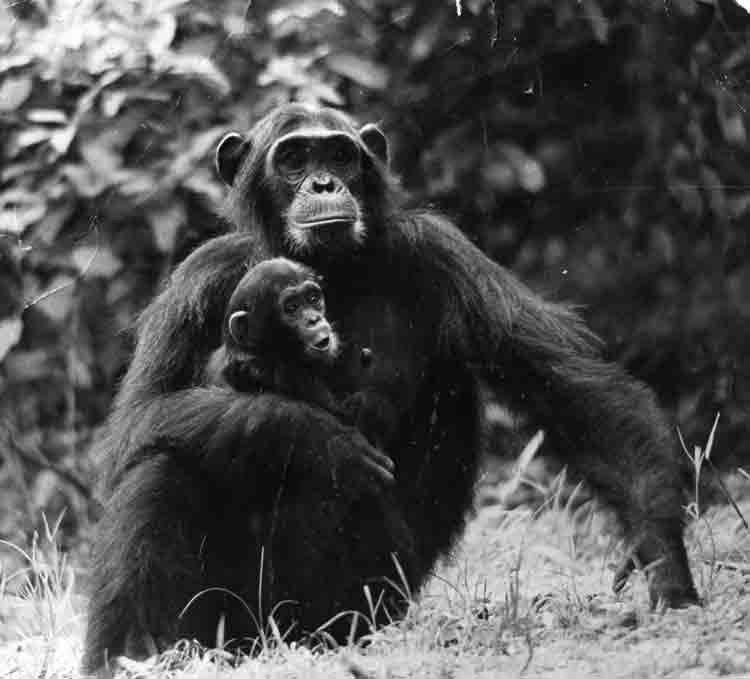
Sparrow and baby Sandi, from original photo by Larry Goldman taken in 1974

It was a routine day in April 1975–as routine as a day spent in central Africa studying wild chimpanzees could be. I awakened before dawn to join up with Rugema, one of the Tanzanian rangers/guides, to follow a chimp mother with her 3 year old and 8 year old offspring on their travels for the day, recording their location and activities every minute on a check sheet and into my tape recorder, to be transcribed later on return to camp in the dark.

Our target chimpanzees were nested high in a tree atop the ridge called “Sleeping Buffalo” a sloping rounded back mountain which rises abruptly from the shore of glistening Lake Tanganyika. Arriving at the nest before the first light of dawn, we sat beneath the tree, waiting for the chimps to stir as the tropical forest awoke before our eyes. It was as if we beheld the dawning of the First Morning. The forest of verdant greens unfurled to the touch of the sun, highlighting spots of brightly colored fruit and flowers. The pungent smell of moist earth mixed with the musk of animal scent and fragrance of foliage.

There is a strong undercurrent of life flowing in such a forest–everywhere there are living creatures above and below, breathing a collective breath, vocalizing in collective voices from the liquid tones of tropical birds to the barking “wahoo” of the baboon. Each individual breath, whisper, song, and call joins the others, until like the rushing streams of Gombe, they form a river of voices, overwhelming to the senses.

As the sunlight filtered through the foliage canopy high above our heads, the three chimpanzees moved in their nests. They rustled in their leafy bed as a chorus of chimpanzee voices was heard across the valley and up the next ridge—a clear invitation from afar.

Our targets raced down the tree and off into the brush to join their comrades. Able to follow only the vocalizations, we plunged after them, occasionally glimpsing the white tuft of hair on the baby’s bottom as he bobbed up and down, jockey-style on his mother’s back. Chimpanzees are expert at traveling through impenetrable thickets, leaving no trace of their whereabouts. I clamored slowly along, listening for the excited voices up the hill, as my shirt caught on countless thorns and vines reached to trip me. About the time I was ready to call it quits, I found myself atop the slope and was rewarded with a sight which made the hard climb well worth the struggle.

Above us and around us were no less than 25 chimpanzees from various interrelated families: brothers, sisters, aunts, uncles, cousins, celebrating an early morning extended family reunion amidst heavily fruited trees with a tremendous din of shrieks and hoots. They jumped from branch to branch, slid fireman style down tree trunks only to race back up again, shaking and breaking off pieces of foliage in their excitement.

As they settled into smaller feeding groups, sitting happily in small circles eating fruit and lazily grooming each other’s fur, I realized how similar their gathering was to the family reunions I attended at home. There would always be lots of hugs and excitement as family members arrive and greet one another, sometimes quite noisily with shouts and claps on the back. Children would run together as reacquainted cousins skirmished and played. The adults would settle into smaller conversational groups to compare lives and reestablish life long bonds, in essence “grooming” each other emotionally as they offered support and advice.

I realized this particular morning in Tanzania was a reunion I could only observe rather than participate in, not being a member of this particular family, although a few of these apes looked awfully similar to people I loved back home. As I pondered that thought, I felt a clunk on the head from behind and realized something or someone had clobbered me with a branch from a tree. I turned around to see a grinning adolescent male chimp, wielding a leafy branch. He was about to wallop me again. At that moment he really did remind me of my brother.

I left that observation out of my written report that night. Months later when I returned home I told my brother I was sure I’d met a distant relation of his in Africa. He reminded me that any relative of his would be a relative of mine. Right.

So it seems we’re all just one big extended happy family.