At the Feeding Trough

If I recall correctly, the first catalog with holiday theme items arrived in our mailbox in late July. The “BEST CHRISTMAS ISSUE EVER!” magazines hit the racks in September. Then, with the chill in the air in October and Halloween past, the stores put out the Santa decorations and red and white candy, instead of the orange and black candy of the previous 6 weeks. I have been inundated with commercial “Christmas” for months now and finally, it is about to arrive, after considerable fanfare and folderol. I don’t know about you, but I’m exhausted, beat to a “best ever holiday” pulp.

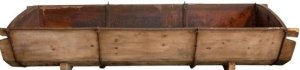
All of this has little to do with the original gift given that first Christmas night, lying small and helpless in a barn feed trough. I know a fair amount about feed troughs, having daily encounters with them in our barn, and there is no fanfare there and no grandiosity. Just basic sustenance– every day needs fulfilled in the most simple and plain way. Our wooden troughs are so old, they have been filled with fodder thousands of times over the decades. The wood has been worn smooth and shiny from years of being sanded by cows’ rough tongues, and over the last two decades, our horses’ smoother tongues, as they lick up every last morsel, extracting every bit of flavor and nourishment from what has been offered there. No matter how tired, how hungry, there is comfort offered at those troughs. The horses know it, anticipate it, depend on it, thrive because of it.

The shepherds in the hills that night were starving too. They had so little, yet became the first invited to the feast at the trough. They must have been overwhelmed, having never known such plenty before. Overcome with the immensity of what was laid before them, they certainly could not contain themselves, and told everyone they could about what they had seen.

His mother listened to the excitement of the visiting shepherds and that she “treasured up all these things and pondered them in her heart”. Whenever I’m getting caught up in the frenetic overblown commercialism of modern Christmas, I go out to the barn and look at our rough hewn feed troughs and think about what courage it took to entrust an infant to such a bed. She knew in her heart, indeed she had been told, that her son was to feed the hungry souls of human kind and He became fodder Himself.

Now I am at the trough, starving, sometimes stamping in impatience, often anxious and weary, at times hopeless and helpless. He was placed there for good reason: a treasure to be shared plain and simple, nurture without end for all.

Who needs Christmas cookies, pumpkin pies and the candy canes to fill the empty spot deep inside?

Just kneel at the manger.n707166118_2339813_1983
Getting a Handel–A Small Town Takes on the “Messiah”

One small town
Containing more churches than banks,

A ninety year old choral society
With a Christmas tradition of singing Handel’s Messiah,

Sixty-some enthusiastic singers recruited without auditions
Through church bulletin announcements

Farmers, store clerks, machinists, students
Middle schoolers to senior citizens

Gather in an unheated church for six weeks of rehearsal
To perform one man’s great gift to sacred music.

Handel, given a libretto, commissioned to compose,
Isolated himself for 24 days, barely ate or slept

Believed himself confronted by all heaven itself
To see the face of God,

And so created overture, symphony, arias, oratorios
Soaring, interwoven themes repeating, resounding

With despair, mourning, anticipation
Renewal, redemption, restoration, triumph.

Delicate appoggiaturas and melismata
Of astounding complexity and intricacy.

A tapestry of sound and sensation unparalleled
To be shouted from the soul, wrung from the heart.

This group of rural people gathers to join voices
Honoring faith foretold, realized, proclaimed.

Ably led by a forgiving director with a sense of humor
And a nimble organist with flying feet and fingers.

The lilting sopranos with angel song,
The altos provide steadfast support,

The tenors echo plaintive prophecy
The base voices full and resonant.

A violinist paints heaven-sent refrain
In parallel duet of counterpoint melody.

The audience sits, eyes closed
As if in oft repeated familiar prayer.

The sanctuary overflows
With thankfulness:

Glory to God! For unto us a Child is born
And all the people, whether singers or listeners, will be comforted.handel_messiah123

Listening to the Lullaby

The best moment in the barn is in the evening just following the hay feeding, as the animals are settling down to some serious chewing. I linger in the center aisle, listening to the rhythmic sounds coming from each of 12 stalls. It is a most soothing contented cadence, first their lips picking up the grass, then the chew chew chew chew and a pause and it starts again. It’s even better in the dark, with the lights off.

I’ve always enjoyed listening to the eating sounds at night from the remote vantage point of my bedroom TV monitor system set up to watch my very pregnant mares before foaling. A peculiar lullaby of sorts, strange as that seems, but when all my farm animals are chewing and happy, I am at peace and sleep better.

It reminds me of those dark deep nights of feeding my own newborns, rocking back and forth with the rhythm of their sucking. It is a moment of being completely present and peaceful, and knowing at that moment, nothing else matters–nothing else at all. That must be a little bit how Mary felt cradling her newborn son in a barn so many years ago. We are told she “pondered these things in her heart”, knowing more, much more, was to come…

If I am very fortunate, each day I live has a rhythm that is reassuring and steady, like the sounds of hay chewing, or rocking a baby. I wake knowing where the next step will bring me, and try to live in each moment fully, without distraction by the worry of the unknown.

But the reality is:
life’s rhythms are often out of sync, the cadence is jarring, the sounds are discordant, and sometimes I’m the one being chewed on, so pain replaces peacefulness. Maybe that is why those moments in the barn~~that sanctuary~~are so treasured. They bring me home to that doubting center of myself that needs reminding that pain is fleeting, and peace, however elusive now, is forever. I always know where to find it for a few minutes at the end of every day, in a pastoral symphony of sorts.

Someday my hope for heaven will be angel choruses of glorious praise, augmenting a hay-chewing lullaby.

So simple yet so grand.

ZuZu’s Petals

its-a-wonderful-life-title

ZuZu’s Petals
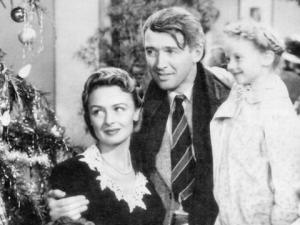
Lessons from “It’s a Wonderful Life”

Our sons had to be convinced
Watching black and white movies
Was worthwhile
This old tale and its characters
Caught them up right away
From steadfast George to evil Mr. Potter
They resonate in our hearts

What surprised me most
Was their response to Donna Reed’s Mary
As “hot”–where can we find one like her?
Her loyalty and love unequaled
Never wavering

I want to be like her for you
When things go sour
I won’t forget what brought us together
In the first place
I’m warmth in the middle-of-the-night storm
When you need shelter
I’m ZuZu’s petals in your pocket
When you are trying to find your way home.

Readying the Stable

barn36

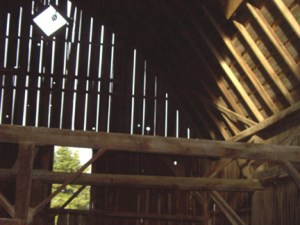
As is my routine on Saturdays, I spent part of yesterday in the barn, breaking ice and refilling water buckets, then going from stall to stall to clean out frozen manure and wet spots, and finally adding fresh bedding. Then I climbed high in the hay stack in the barn and rolled hay bales down to load into the wheel barrow to push into the stable for the next day’s feedings. It was preparation for today, Sunday, which we try to treat as Sabbath, a day of rest, as much as we are able on a farm. There are always chores to do every day, but they can be abbreviated on Sunday thanks to the work accomplished the previous day. This is the nature of farming– preparing and readying for what is to come.

Farmers, by nature, are a hopeful lot. We plan ahead, plot out our next year’s crop, choose our seed in advance and plant it with anticipation. We prune and we plow and we store up mountains of feed far in advance. We evaluate pedigrees and scrutinize genetics carefully. And we wait patiently. As I clean their stalls, I watch my mares’ bellies roll with the movement of their unborn foals and I picture the new life in my mind’s eye. There is a harvest of hope in those bellies.

Unlike many modern horse barns, my decades old stable is a particularly plain and humble place with dirt floors, and as the support beams have settled over the years the door hinges don’t hang balanced and true any longer, so the stall doors are sticky and sometimes hard to open in the winter weather. Despite the lack of fancy design though, I haven’t heard the horses complain–their meals taste as good, they are warm and dry in the cold windy weather and cool in the hot weather. Their needs are met there and amazingly, so are mine.

Christmas began in a stable–probably a dark cave that served the purpose of housing animals. It most assuredly was plain and humble, smelling of manure and urine, and animal fur. Yet it also would have smelled of the sweetness of stored forage, and there would have been the reassuring sounds of animals chewing and breathing deeply. It was truly the only place a group of scruffy shepherds could have felt welcomed without being tossed out as unsuitable visitors– they undoubtedly arrived at the threshold in bad need of a bath, smelly, dirty and terrified and yet left transformed, returning to their fields full of praise and wonder, telling all they met what they had seen. No bath could scrub clean as the sight of what that stable contained.

There could not have been a more suitable place for this birth that was to change the world: the promise of cleansing hope and peace in the midst of filth that must be removed so as not to overwhelm us as we stand knee deep in it. Despite our sorry state, we are welcomed into the sanctuary of the stable, sown, grown, pruned and harvested to become seed and food for others.

If the shepherds became a harvest of hope, then surely so can we.