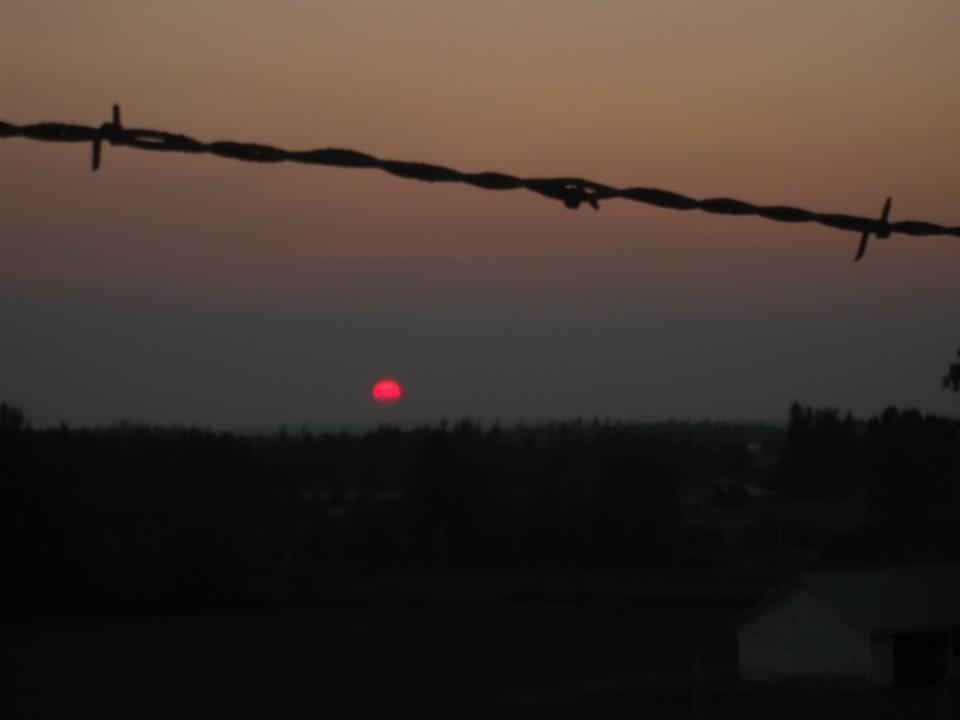
“On the planet the winds are blowing: the polar easterlies, the westerlies, the northeast and southeast trades…Lick a finger, feel the now.”
Annie Dillard
We fell asleep last night content in the knowledge that the weather forecast on three different websites confirmed no rain. This is particularly important when there are about 750 bales worth of cut hay lying in our fields curing, getting ready for raking and baling the next day. Rain is the farmer’s best friend most of the time, but definitely not when there is cut hay on the ground. Wet hay becomes moldy hay, or worse–combustible–if not allowed to thoroughly dry, and it gradually loses nutrient value the longer it dries.
As opposed to drought conditions in much of the nation, in the northwest a stretch of at least four days of warmer weather had been long awaited. It was a relief to get the hay finally cut, several weeks later than typical with a promise of at least three more clear days to ted, rake, bale and get it in the barn without being rained on. The air felt sticky and still when we went to bed. I woke about two hours later to a cool breeze coming through the open window–it felt a little too cool. I could hear rumbling in the distance–too low pitched for airplane or truck sounds. Somewhere nearby it was thundering. Thunder meant heavy moisture-filled clouds. Heavy clouds meant showers. Showers meant wet hay. Wet hay meant…well, you get my drift.
The rumbling moved closer and closer, with accompanying flashes of lightning, finally cracking right above us. The wind picked up. I got out of bed to go outside to feel the direction of the wind and see if the rain– licking a finger and holding it up. The wind was southerly but not consistent–the air was changing so quickly that all I could do was acknowledge and anticipate the change, knowing a storm was coming and there was no stopping it. It was the inevitability of feeling the “now” of which Dillard writes.
The breeze was moisture-laden: wet without raindrops. Then they began to fall, gentle at first but finally earnest showering–not a downpour. It lasted less than an hour, just long enough to dampen but not soak. The hay would not be a complete ruin. It could be salvaged. The storm had passed, leaving little damage in its wake, just plenty of noisy drama and jangled nerves.
The experience of a thunder storm overhead is unlike any other. It commands our attention, wakes us from sound sleep, turns night into day in a flash, drowns humid heat in a downpour. As some pray for the relief of such a storm, others fear its effects, whether igniting forest fires from lightning strikes, frightening animals or molding cut hay.
I’m content to just be a witness, in wonder at the storm’s strength and command. All I can do is lick a finger and hold it up in awe, knowing I’m here and it’s now.
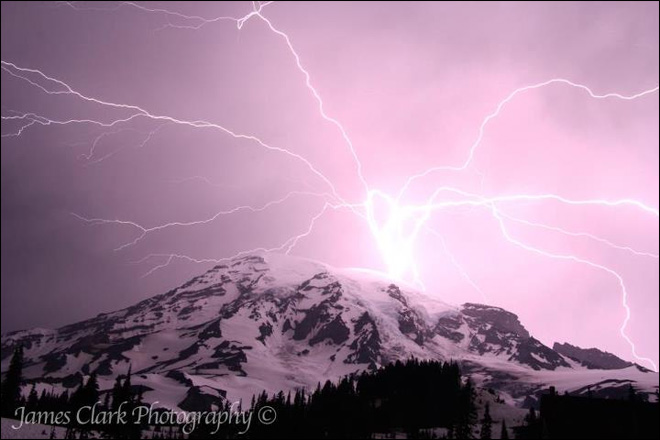 photo by James Clark Photography of lightening strike over Mt. Rainier 7/8/12
 Barnstorming