Lenten Meditation–We Are Healed

photo by Josh Scholten http://www.cascadecompass.com

and with his stripes we are healed
Isaiah 53:5

I’d much rather think about God as a baby taking his first breath born in a stable than a dying man breathing his last on a cross.  I didn’t grow up in churches with crucifixes, so didn’t dwell on the wounds inflicted on a bleeding and suffering God.  Instead, the empty cross represented a symbol of hope:  death defeated.

But there can be no victory without the wounds, without the bloodshed and without the death.   And there is no victory without a baby born of blood amid the waste and squalor of a dark cave meant to house animals. Mine can be no sterile faith immune from all the messiness of human anguish, sorrow and pain in a fallen and sinful world.  His skin shed real blood.  His cries echoed the agony we feel when abandoned and forsaken.

Sitting in a packed church today among hundreds mourning the sudden and incomprehensible loss of a sister in Christ, I knew there were many broken and bleeding hearts in that sanctuary.  We were all struggling with the dichotomy of our faith: we struggle to express joy when confronted with the harsh reality of the grave, we know God’s purpose is not always knowable yet we express confidence in His sovereign plan, we acknowledge His timing is different than our timing yet we live as though we have forever on earth, we have seen His love is strongest when we are hurting and need comforting yet we don’t want to appear that we need it.

Beyond the beautiful hymns, the scriptural assurances and the floral arrangements, we were desperate for the tender mercies that can come only from a bleeding God.  He understands how badly the hurt feels and how anguished is our cry.

And so as he reaches out to share our pain, man to man, God to man, we are restored.   Our wounds must be exposed, the bleeding for all to see, in order for everlasting healing to take place.

Lenten Meditation–Bringing Peace

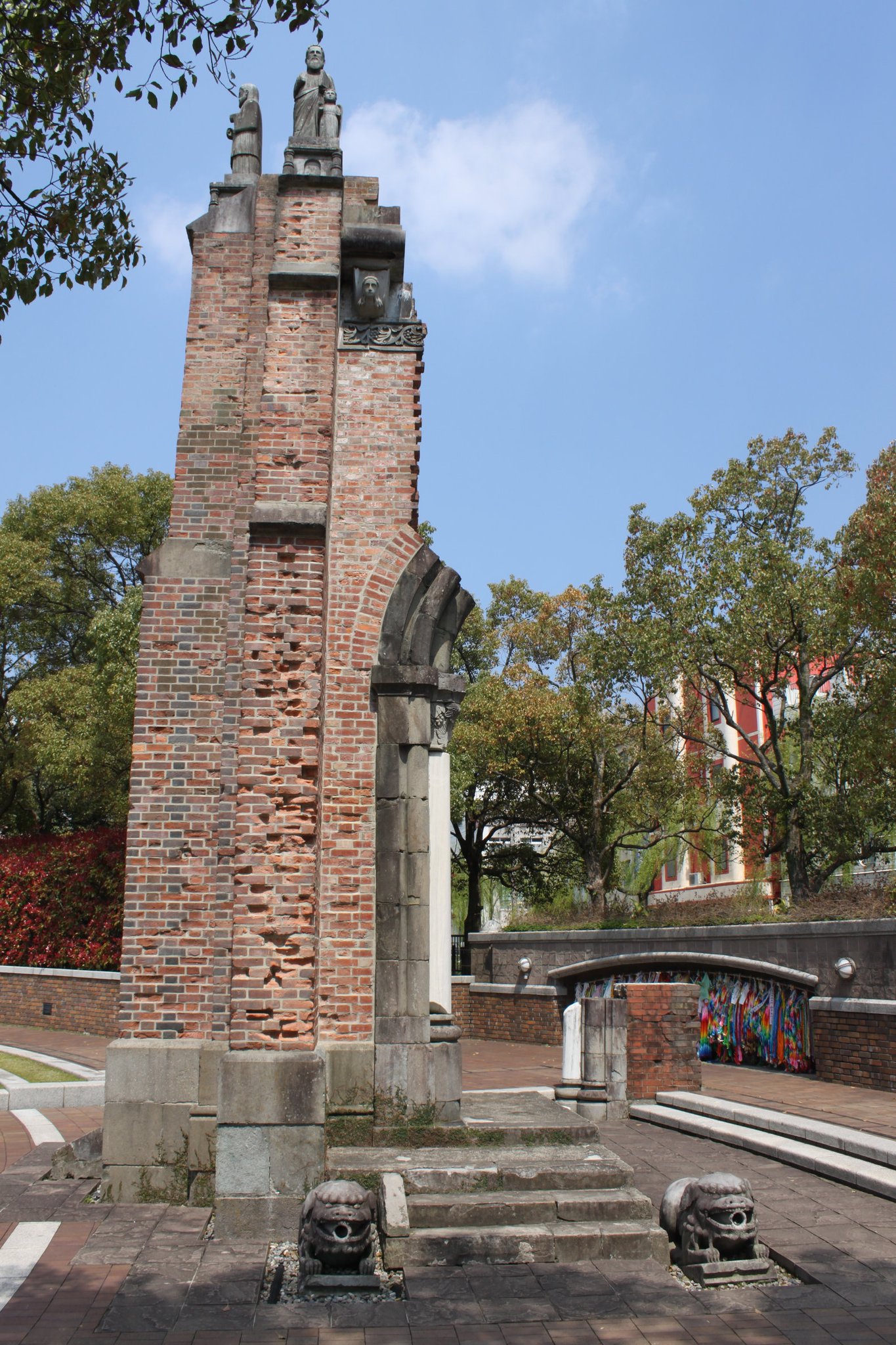
Urakami Cathedral fragment remaining in Nagasaki photo by Nate Gibson

…the punishment that brought us peace was upon him
Isaiah 53:5
On a ruined wall in Hiroshima is dimly etched the figure of a human being who was standing next to it when the flash came.  The body, through instantaneously vaporized, stopped enough of the awful light to leave that abiding epitaph.  When German theologian Heinrich Vogel gazed at the dim silhouette, the thought gripped him: Jesus Christ was there in the inferno with that person;  what was done to him was done to Christ; the horror he may have had no instant to feel, Jesus felt.  The Light of the world stood uncomprehended, comprehending, and undone by the hideous splendor of humankind’s stolen fire…Jesus’ presence in the midst of atomic holocaust was intimated also in the fact that the bomb on Nagasaki exploded very close to the largest Christian cathedral in all Asia, annihilating 1,100 worshippers.  God, in order that we might meet him, narrowed himself down into Jesus.  But Jesus was also the narrowing down of the totality of humankind.   Our Lord does not ask that we stare heroically into the nuclear abyss; he asks that we look toward him and let our sight become aligned with his.  Will we put our lives on the line, his line, against the onrush of chaos?”
from “The Central Murder” by  Dale Aukerman

Lenten Meditation–Bruised and Wounded

photo by Josh Scholten http://www.cascadecompass.com

But he was wounded for our transgressions, he was bruised for our iniquities
Isaiah 53: 5

All day long I look for wounds needing healing in my work.  Some are visible and obvious.  Most are invisible.  Sometimes I am not even sure what wounds I’m looking for as my patient won’t or can’t tell me.  I need to probe the surface and then peel away the layers, deeper and deeper,  until I find where it hurts.

Some wounds never do reveal themselves as the patient has no intention of letting them be discovered.  The suffering, intense as it is, remains unrelieved and unknowable.

Not so the wounds described in Isaiah, revealed as our tender God unfurls, willingly exposing His selfless bruised core.

Lenten Meditation–Surely

photo by Josh Scholten http://www.cascadecompass.com

Surely, he has borne our griefs
and carried our sorrows.  Isaiah 53:4

Weighed down by life, we sometimes cry for relief from the burden we carry.  This is such a part of the human condition that the cry even came from Jesus Himself:  “Take this cup from me”.   Even He needed help to carry the cross to the hill;  another was needed to bear His heavy load for Him.

So He knows there are times we cannot bear it alone because He has felt overwhelmed too.  He knows what it means for someone to come alongside and share the burden.  He knows what we need even before we need it.  He has borne for us and carried for us.

Surely.  We know this with utter confidence and certainty.  It is so.

Lenten Meditation–Hid Not From Shame

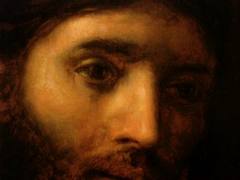
Rembrandt Head of Christ

I offered my back to those who beat me,
my cheeks to those who pulled out my beard;
I did not hide my face from mocking and spitting.
Isaiah 50:6

So this is how humanity treats God.  Still.  He does not turn His face from us, but we continually turn from Him.  We only add to His suffering.

“In the real world of pain, how could one worship a God who was immune to it?  He entered our world of flesh and blood, tears and death.  He suffered for us.” John Stott

“No matter how deep our darkness, he is deeper still.” Corrie ten Boom

“…even the darkness will not be dark to you; the night will shine like the day, for darkness is as light to you.” Psalm 139:12

Lenten Meditation–Acquainted With Grief

Detail from "Descent from the Cross" by Rogier van der Weyden

A man of sorrows and acquainted with grief
Isaiah 53:3

There is a tsunami of tears overflowing our small community tonight.  When a healthy wife, mother, teacher, former missionary, active volunteer in church and school is suddenly stricken by a virulent pneumonia and taken from us in a matter of four days, there can never be an end to tears shed. Sorrow at her loss fills a chasm so deep and dark that it is a fearsome thing to even peer from the edge, as I do.  Her family and close friends have surely fallen inside, swallowed up by their grief, uncertain if they will ever be recovered.

We can never understand why inexplicable tragedy befalls such good and gracious people, taking them when they are not yet finished with their selfless work on earth.  From quakes that topple buildings burying people to waves that wipe out whole cities and sweep away thousands of people, to a pathogen too swift and powerful for all the weapons of modern medicine,  we are reminded every day–we live on perilous ground and our time here is finite.

There is assurance in knowing we do not weep alone.  Our grief is so familiar to a suffering God who too wept at the death of a friend, who cried out when asked to endure the unendurable.

There is comfort in knowing He understands and overcomes all peril to come to our rescue.

Lenten Meditation–Despised and Rejected

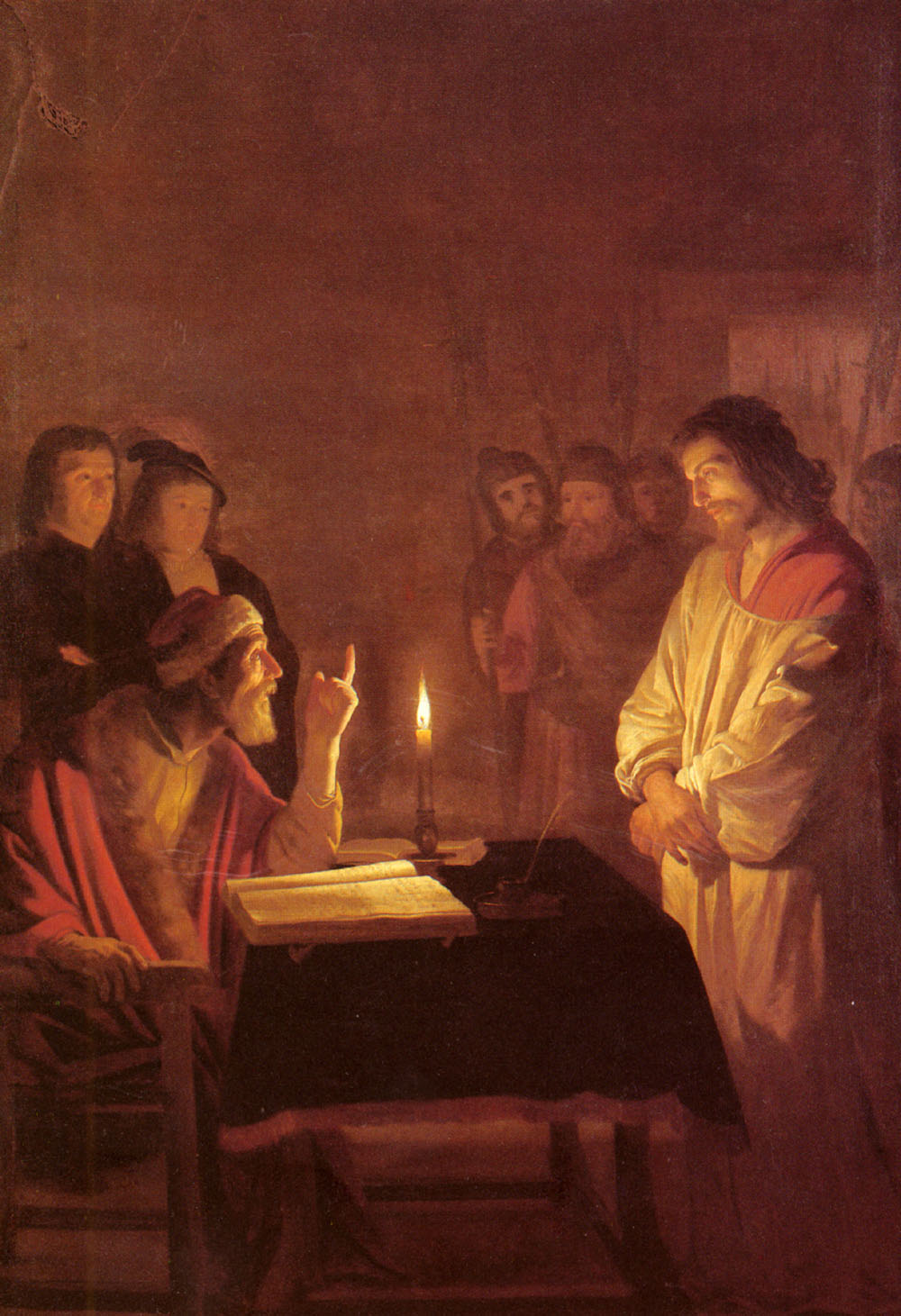
Christ Before the High Priest by Gerrit van Honthorst

He was despised, rejected of men…
Isaiah 53:3

There is much in the news these days about bullying –horrific examples of man’s inhumanity to man, or children’s inhumanity to other children, as the case may be.   Those who are the brunt of such treatment certainly know how it feels to be despised and rejected, isolated from others, victimized and humiliated.   It can be so severe it can drive some individuals to take their own lives in their desperation to be free of the psychological and sometimes physical torture.   Even death can seem a respite from such rejection.

So many years ago, and still today,  God is despised and rejected both privately and in public.  There were plenty of bullies in the story of the Passion but more disturbing than the public bullying by the high priests, Herod and the Romans, was the turning away of His friends, disciples and followers.   This was worse than cruelty that comes from people in power who need someone to pick on to make them feel they are in control.  This was indifference to His severe emotional struggle in the Garden, this was betrayal for a few silver coins, this was His closest ally denying knowing Him not once but three times, this was choosing a convicted insurgent murderer to be set free so He could take his place on the cross,  this was derision while He was hanging there suffering.

Even worse than the abuse from bullies wanting to look powerful and the turning away of friends when their support was most needed:  rejection of God by God.  No human rejection can come close.   Being hung on the cross by fellow humans cannot compare to the torture of being left there by God.

God is no bully and has no need to look more powerful to man.   He came to earth in the most humble of circumstances.  It is our turning away, our rejection of Him that brought Him to come beside us, live and walk among us, eat with us, love us with His human heart and then, despite His cries for relief,  die our death.

Our God is wholly God because He was willing to be broken like the most helpless and despicable among us, experiencing our struggles, identifying with us.  Death can be no respite for God.    Instead of remaining shattered,  He rose in victory, undefeated, with power over death itself.

We are invited to turn back, walk alongside and believe, our hearts burning within us for this man who is God living among us.


Lenten Meditation–The Lamb

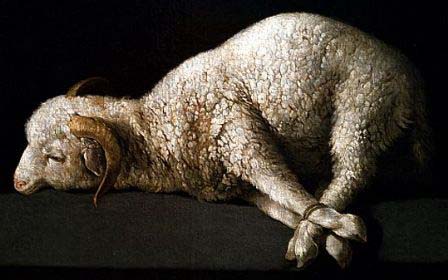
Behold the Lamb of God who takes away the sins of the world.
John 1:29

John the Baptist is the only one who actually calls Jesus a Lamb to His Face.  It seems a curious label to put on the Messiah expected to bring the Kingdom of God to His people with great power, might and fanfare.
A lamb?
A defenseless helpless lamb?
How could God send a mere lamb?

The label is particularly apt for this Messiah.  This mere lamb is marked for slaughter, destined for sacrifice.  The Jewish people well understood the age-old directive to find a “year old male lamb without defect”, the perfect lamb, as only that blood would demarcate their Passover rescue in Egypt.  There would be no mistaking what “Lamb of God” implied to the Jews who knew their Passover history.

But John is even more revolutionary than simply calling Jesus a Lamb of God.  He is not talking about a sacrifice meant only for his own people.  He is talking about a sacrifice on behalf of the world.    For the Jews, for the Gentiles, for the enemies of the Jews, for the millions of people as yet unborn.  His words cannot be clearer, ringing through to the unsettled times and people of today.

The perfect lamb is sacrificed, his blood marking the hands of the slaughterers, and washing them clean.
No mere lamb would forgive the holder of the knife.  Only so for the Lamb of God.

Lenten Meditation–Humble in Heart

photo by Josh Scholten http://www.cascadecompass.com

Take my yoke upon you and learn from me,
for I am gentle and humble in heart,
and you will find rest for your souls.
Matthew 11:29

Over twenty years ago, our first two Haflinger horses were a brother and sister team we sent for training together to learn to pull farm implements like a plow and manure spreader.  They were learning, in essence,  to be “yoked” together in their efforts to do their job.  Hans, the older brother, had previously been trained in harness, so understood what was expected and was always ready to go, usually taking on more than his share of the load.  Greta was new to this work, younger and more slightly built, so needed to be taught how to lean into the collar, how to take her fair share of the pull, and how to work in tandem with her team partner.

As it turned out, Hans became the primary work horse wanting to push on to the end of the row and Greta learned that she could be a slacker, hang back and let her brother do the brunt of the pulling.   Hans would be exhausted (and if a horse can be resentful, he probably was) and Greta was happily watching the scenery go by.  It was an uneven relationship that never quite gelled.

We can’t be slackers in faith, letting others do our job.  We are to take on the work of this world by throwing ourselves into the harness without holding back.  Our teacher walks alongside as we learn, handing us what we can manage of the load to share,  reassuring and encouraging every step of the way, being an example in gentleness and humility.   There is no contest to win here, no pride in accomplishment or trophy upon crossing the finish line.

The reward is the relationship itself and,  eventually,  the promise of rest when the work is done.


Lenten Meditation: I Will Give You Rest

photo by Josh Scholten http://www.cascadecompass.com

Come to me, all you who are weary and burdened, and I will give you rest.
Matthew 11:28

Our oldest son contacted me online today around 12:30 AM his time from a rural location in Thailand about 50 miles from the 7.0 epicenter of yesterday’s Myanmar earthquake.  He and other teachers had been spending the past 5 days supervising a group of high school seniors from their international school in Tokyo on a mission service project.   They now wondered, somewhat ironically, if they had brought seismic instability with them to a part of the world that has not had an earthquake in decades.  As he talked to me, his computer camera began to waver and shake again as he sat through another one of several aftershock tremors.

It was unnerving, to say the least.  He couldn’t relax enough to sleep.  The long planned week in Thailand so far had been a welcome relief from the constant tremors over the previous ten days in Japan, and seemed like an opportunity to forget the uncertainty of that evolving disaster.  Instead, uncertainty followed this dedicated group of teachers and students and found them tucked away on a mountainside, building a foundation for a rural Thai school, almost a stone’s throw from Myanmar.

He was weary, I could tell.  He was burdened and troubled by all he and the others had experienced over the last two weeks, it was obvious.   He was worried about his students and how they were coping, at such a young age, with another powerful reminder that human control of events on this earth is illusory.  As his mother, sitting helplessly at my kitchen computer over 8000 miles away where he could see through the window behind me how our farm was starting to bloom with spring, the only thing I could say was something he knew and had already shared with his students.

You are in God’s care, no matter what.
He is in control, not us.
He knows what being afraid feels like and tells us not to fear.
He has promised you will know His care and comfort.
He will not abandon you in your time of need.
He will let you rest.

Despite the earth trembling as he lay down his head, he fell asleep.

Amen.