Lenten Meditation: My Soul Thirsts

Psalm 42: 1-2

As the deer pants for streams of water,
so my soul pants for you, O God.

My soul thirsts for God, for the living God.
When can I go and meet with God?

On any given day, at some point, I start thirsting.  Not for water, which, living in the northwest,  I’m fortunate to have close by at almost any moment.  Not for alcohol, which puts me to sleep and makes me too fuzzy to function after a couple of swallows.  Not for milk which was all I ever drank growing up on a farm with three Guernsey cows that produced more than a family of five could possibly consume in a day.

No, I’m ashamed to admit I thirst for a Starbucks mocha.  With whip.   With little hesitation, I will indulge my thirst.  No, I didn’t give it up for Lent.  I acknowledge it is not truly thirst I am feeling but only a desire. I’m not panting and dehydrated.  This is a want rather than a need.  I will not die without my mocha.

It just feels as if I might.

If only I could thirst daily for God with the same visceral fervor and singlemindedness!   If I could dive into His word daily and savor it like I do my mocha, I would be much less fluffy in stature, and much more solid in faith.

This psalm reminds me of my constant thirstiness and how no mocha, no glass of water, indeed nothing of this earth will truly slake it.  I must wait to meet the Lord to know what it feels like to no longer want, and then all needs are fulfilled.

“You have made us for Yourself, and we cannot find rest until we find it in You.”   St. Augustine

Lenten Meditation: You are not your own

1 Corinthians 6: 19b-20a

You are not your own; you were bought at a price.

There is a well known story with a number of variations, all involving a scorpion that stings a good-souled frog/turtle/crocodile/person who tries to rescue it from drowning.    Since the sting dooms the rescuer and as a result the scorpion as well,  the scorpion explains “to sting is in my nature”.   In one version, the rescuer tries again and again to help the scorpion, repeatedly getting stung, only to explain before he dies  “it may be in your nature to sting but it is in my nature to save.”

This is actually a story originating from Eastern religion and thought, the purpose of which is to illustrate the “dharma”, or orderly nature of things.  The story ends perfectly for the Eastern religions believer even though both scorpion and the rescuer die in the end, as the dharma of the scorpion and of the rescuer is realized, no matter what the outcome.  Things are what they are, without judgment,  and actualization of that nature is the whole point.

However, this story only resonates for the Christian if the nature of the scorpion is forever transformed by the sacrifice of the rescuer on its behalf.   The scorpion is no longer its own so no longer slave to its “nature”.  It is no longer just a scorpion with a need and desire to sting whatever it sees.  It has been “bought” through the sacrifice of the rescuer.

So we too are no longer our own, no longer who we used to be before we were rescued.  We are bought at a price beyond imagining.  And our nature to hurt, to punish, to sting shall be no more.

1 Corinthians 15: 55

Where, O death, is your victory?  Where, O death,  is your sting?

Lenten Meditation: Redeeming the Time

“Therefore look carefully how you walk, not as unwise, but as wise; redeeming the time, because the days are evil.”  Ephesians 5: 15-16

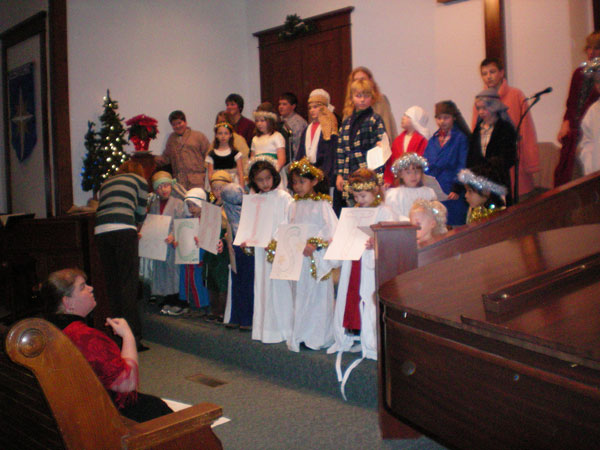
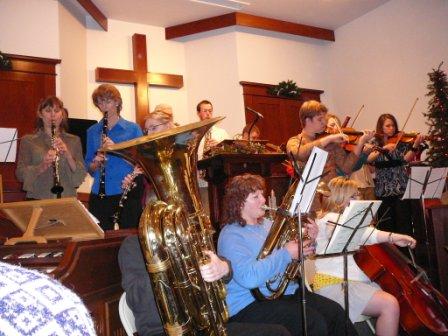
Tonight was a celebration of Wiser Lake Chapel’s history with some of the folks who have attended this little church for over 50 years.  It was a joy to review how the original Methodist-Episcopal church built for $600 in 1916 was subsequently disbanded by the Methodists and then leased for $25/month by the Christian Reformed Churches in our area to become an outreach mission Sunday School and Daily Vacation Bible School for hundreds of migrant and Native American children in our county.  From that outreach ministry came worship services that brought in a diverse congregation from the rural neighborhoods, and most recently, over the last 20 years, it is a thriving non-denominational church with a strong reformed Presbyterian perspective.  Scores of children learned about the Lord inside our humble sanctuary, and how to sing from their hearts to His glory.

I’m blessed to be a part of this incredible church family, not a mega-church, but vibrant all the same.  We need to remember what we came from and why.

For all you Wiser Lake Chapel alums out there in all different walks of life in the faith: we will celebrate a centennial in 2016 and we will have a great picnic, so plan on it!  Watch http://www.wiserlakechapel.org for details.

“Everything you do today, or I do, affects not only what is going to happen but what has already happened, years and centuries ago. Maybe you can’t change what has passed, but you can change all the meaning of what has passed.  You can even take all the meaning away.”  –words of an old preacher, quoted by Martin Wright, a friend of Herbert Butterfield (British historian)


Lenten Meditation: Character produces hope

Romans 5:3-4:  “we also rejoice in our sufferings, because we know that suffering produces perseverance; perseverance, character; and character, hope.”


Janis Babson

I was eight years old in June 1963 when the Readers’ Digest arrived in the mail inside its little brown paper wrapper. As usual, I sat down in my favorite overstuffed chair with my skinny legs dangling over the side arm and started at the beginning,  reading the jokes, the short articles and stories on harrowing adventures and rescues, pets that had been lost and found their way home, and then toward the back came to the book excerpt: “The Triumph of Janis Babson” by Lawrence Elliott.

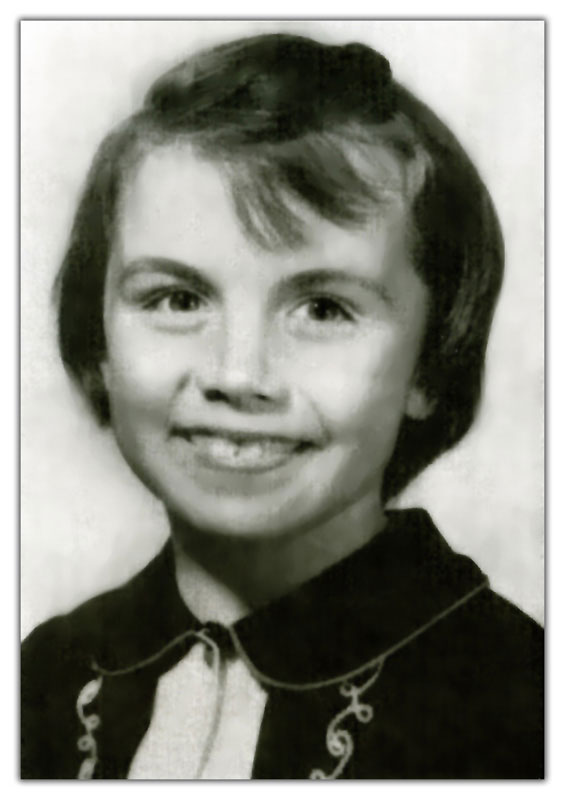
Something about the little girl’s picture at the start of the story captured me right away–she had such friendly eyes with a sunny smile that partially hid buck teeth.  This Canadian child, Janis Babson, was diagnosed with leukemia when she was only ten, and despite all efforts to stop the illness, she died in 1961.  The story was written about her determination to donate her eyes after her death, and her courage facing death was astounding.  Being nearly the same age, I was captivated and petrified at the story, amazed at Janis’ straight forward approach to her death, her family’s incredible support of her wishes, and especially her final moments, when (as I recall 47 years later) Janis looked as if she were beholding some splendor, her smile radiant.

”Is this Heaven?” she asked.   She looked directly at her father and mother and called to them:  “Mommy… Daddy !… come… quick !”

And then she was gone.  I cried buckets of tears, reading and rereading that death scene.  My mom finally had to take the magazine away from me and shooed me outside to go run off my grief.  How could I run and play when Janis no longer could?  It was a devastating realization that a child my age could get sick and die, and that God allowed it to happen.

Yet this story was more than just a tear jerker for the readers.  Janis’ final wish was granted –those eyes that had seen the angels were donated after her death so that they would help another person see.  Janis  had hoped never to be forgotten.  Amazingly, she influenced thousands of people who read her story to consider and commit to organ donation, most of whom remember her vividly through that book excerpt in Readers’ Digest.  I know I could not sleep the night after I read her story and determined to do something significant with my life, no matter how long or short it was.  Her story influenced my eventual decision to become a physician.  She made me think about death at a very young age as that little girl’s tragic story could have been mine and I was certain I could never have been so brave and so confident in my dying moments.

She did suffer with her disease, and despite that, she persevered with a unique sense of purpose and mission for one so young.  As a ten year old, she developed character that some people never develop in a much longer lifetime.  Her faith and her deep respect for the gift she was capable of giving through her death brought hope and light to scores of people who still remember her to this day.

Out of the recesses of my memory, I recalled Janis’ story a few months ago when I learned of a local child who had been diagnosed with a serious cancer.  I could not recall Janis’ name, but in googling “Readers’  Digest girl cancer story”,  by the miracle of the internet I rediscovered her name, the name of the book and a discussion forum that included posts of people in their mid-fifties, like me,  who had been incredibly inspired by Janis when they read this same story as a child.  A number were inspired to become health care providers like myself and some became professionals in working with organ donation.

Janis and family, may you know the gift you gave so many people through your courage in suffering, your perseverance, your character and the resulting hope in the glory of the Lord–the angels are coming!

We do remember you!

To join a Facebook page set up by Janis’ family in her memory go here

For excerpts from “The Triumph of Janis Babson”, click here

Lenten Meditation: Perseverance produces character

Romans 5: 3b-4

We know that suffering produces perseverance; perseverance, character;

When I first wrote this story and published it on my blog, I heard from members of Minnie’s family and learned that her youngest daughter was still living, now over 100 years old.  It was a joy to receive copies of newspaper articles from the time of the Coloma shipwreck, outlining Minnie’s brave trek to notify rescuers.  I hope to expand this story in the future, now that I have more information about the character of this remarkable woman, wife and mother.  EPG

Minnie Paterson rocked, nursing her infant son. She sat near the south window of the lighthouse living quarters, and studied the rain streaming down in rivulets. Wind gusts rattled the window. A lighthouse keeper’s home was constantly buffeted by wind, but this early winter storm picked up urgency throughout the night. Now with first light, Minnie looked out at driving rain blowing sideways, barely able to make out the rugged rocks below. The Pacific Ocean was anything but; the mist hung gray, melding horizon into sea, with flashes of white foam in crashing waves against the rocky cliffs of Cape Beale.

Whenever storms came, it seemed the Paterson family lived at the edge of civilization. Yet these storms were the reason she and Tom and their five children lived on the rugged west coast of Vancouver Island, in isolation at the southern edge of Barkley Sound. Tom’s job was to keep the foghorn blaring and the light glowing above the treacherous rocks, to guide sea vessels away from certain peril. The storms sometimes were too powerful even with the lighthouse as a beacon of warning. In January 1906, the ship Valencia had wrecked off the coast and only a few survivors had managed to make their way to shore, staggering up the rocky trail to the lighthouse where she warmed them by the stove and fed them until rescuers could come.

Eleven months later, Minnie was setting about getting breakfast ready when her husband came down the stairs in a rush from the upper room where he tended the light.

“Mother, it’s a ship! I just now see it. It is battered by the waves, its sails in tatters! I can see a man waving a distress signal from the deck. It will surely run aground against the rocks—I must telegraph the village to send out rescuers.”

Minnie went to the window again but could see nothing in the mist. Surely this could not be another Valencia disaster! Tom went to the telegraph in the corner of the room and tapped out the urgent message to the fishing village of Bamfield, five miles away inside Barkley Sound. He sat impatiently waiting for a reply, drumming his fingers on the desk. After ten minutes, he sent the message again with no response.

“The lines are down. I’m certain of it. The fallen trees pull them down in this wind. We’ll be unable to summon the rescuers. This ship is doomed, just like the Valencia. There is no way we can reach them in this weather and they can’t come ashore here in lifeboats. They’ll crash on the rocks…”

Seeing the helplessness Tom felt, Minnie knew immediately what she must do. He could not leave his post—it was a condition of his job. She would have to run the five miles for help, through the forest. She kissed Tom and the children goodbye, donned a cap and sweater, and as her feet did not fit in her boots, she put on her husband’s slippers. She ran down the long stairway down the hill taking their dog as a precaution to help warn her of bears on the trails.

Minnie first had to cross through a tideland inlet with water waist deep. She quickly stripped from the waist down, held her pants and slippers over her head and crossed through the icy water, her dog swimming alongside. Shivering on the other side, she quickly dressed, and started down the narrow winding forest trail, scrambling over large fallen trees blocking the way. She waded through deep mud, and crossed rocky beaches where wild waves drenched her. At times the tide was so high she crawled on her hands and knees through underbrush so as not to be swept away by the storm.

After four hours, she reached a home along the trail and with a friend, launched a rowboat to go on to Bamfield. The two women notified the anchored ship Quadra, which set out immediately for Cape Beale. Within an hour, the Quadra had reached the Coloma which was taking on water fast, and drifting close to the rocks on shore.

Minnie walked the long way back home that night, clothing tattered, muscles cramping, exhausted and chilled. Her breasts overflowing, she gratefully fed her baby, unaware for days that her efforts rescued the crew of the Coloma. Tragically, her health compromised, she died in 1911 of tuberculosis, forever a heroine to remember.

Source material: Bruce Scott’s Barkley Sound and oral history from Bamfield residents
Author’s note:
I wrote this for a writing challenge on the theme of “Canada”. This is a story Dan and I were told while staying in Bamfield on our honeymoon, and on a bright September day we walked the trail to the Cape Beale lighthouse, a most challenging and beautiful part of the world. The trail was so difficult, I was sure I was not going to make it, so how Minnie persevered in a December storm, in the dark, is beyond imagining. Her bravery captured me and I honor her sacrifice with this rendering of her story. EPG

Lenten Meditation: Truth from the inside out

Psalm 51: 6–various translations

Surely you desire truth in the inner parts;
you teach me wisdom in the inmost place. (NIV)

What you’re after is truth from the inside out.
Enter me, then; conceive a new, true life. (The Message)

Behold, you delight in truth in the inward being,
and you teach me wisdom in the secret heart.” (ESV)

This is clearly a challenging passage to translate–the NIV translation includes footnotes that admit “the Hebrew meaning is uncertain”.  So in the context of this psalm of repentance, there is something appealing about God seeking the  “truth from the inside out” within us.  We cannot hide the truth from Him, nor should we even try.

He draws us out of our hidden-ness; we spiral forth in His knowledge of us.  We will never be the same again.

Lenten Meditation: Suffering produces perserverance

Romans 5:2b-3

And we rejoice in the hope of the glory of God. Not only so, but we also rejoice in our sufferings, because we know that suffering produces perseverance;

At seventeen years old, I thought I had things figured out.  I had graduated at the top of my class, was heading off to a “big name” college, and felt confident about who I was becoming.  I had attended church all my life but my commitment to my faith was actually waning rather than strengthening.

In anticipation of college tuition bills, I took a summer job at a local nursing home for $1.25 an hour as a nurses’ aide.  My training was two days following a more experienced aide on her rounds of feeding, pottying, dressing and undressing, and bathing her elderly patients.  Then I was assigned patients of my own and during a typical shift I carried a load of 13 patients.  It didn’t take long for me to learn the rhythm of caretaking, and I enjoyed the work and my patients.

One woman in particular remains vivid in my memory 38 years later.  Betty was in her 80’s, bedridden with a painful bone disease that had crippled her for a decade or more.  She was unable to do any of her own self care but her mind remained sharp and her eyes bright.  Her hearty greeting cheered me when I’d come in her room several times a shift to turn her in her bed to prevent pressure sores on her hips and shoulders.  The simple act of turning her in her bed was an ordeal beyond imagining.  I would prepare her for the turn by cushioning her little body with pads and pillows, but no matter how careful I was, her bones would crackle and crunch like Rice Crispies cereal with every movement.  Tears would flow from her eyes and she’d always call out “Oh Oh Oh Oh” during the process but then once settled in her new position, she’d look up at me and say “thank you, dear, for making that so much easier for me.”  I would nearly weep in gratitude at her graciousness in her suffering.

Before I’d leave the room, Betty would grab my hand and ask when I would be returning.  Then she’d  say “I rejoice in the hope of the glory of the Lord” and she would murmur a prayer to herself.

As difficult as each “turning” was for both of us, I started to look forward to it.  I knew she prayed not only for herself, but I knew she prayed for me as well.  I felt her blessing each time I walked into her room knowing she was waiting for me.

One evening I came to work and was told Betty was running a high fever, and struggling to breathe.  She was being given oxygen and was having difficulty taking fluids.  The nurse I worked under thought she was likely to pass away on my shift and asked that I check her more frequently than my usual routine.

As I approached her bed, Betty reached out and held my hand.  She was still alert but very weak.  She looked me in the eye and said “Do you know our Lord?  He is coming for me today.”   I could think of nothing more to say than “I know He is coming.  You have waited for Him a long time.”   I returned to her room as often as I could and found her becoming less responsive, yet still breathing, sometimes short shallow breaths and sometimes long and deep.  Near the end of my shift, as morning was dawning, when I entered the room, I knew He had come.

She lay silent and relaxed for the first time since I had met her.  Her little body, so tight with pain only hours before, seemed at ease.  It was my job to prepare her for the mortuary workers who would come for her shortly.  Her body still warm to touch, I washed and dried her skin and brushed her hair and wrapped her in a fresh sheet, wondering at how I could now turn her with no pain and no tears.  I could see a trace of a smile at the corners of her mouth.  I knew then the Lord had lifted her soul from her imprisonment and He had rewarded her perseverance.

I rejoice in the hope of the glory of the Lord, thanks to Betty.  She showed me what it means to watch for the morning when He will come.  Immobile in bed, crippled and wracked with pain, her perseverance led to loving a young teenager uncertain in her faith.  Betty had brought the Lord home to me and she went home to Him.

Lenten Meditation: The Paradox

St. Augustine

From The Confessions of Saint Augustine:

“The Maker of man was made man, that the Ruler of the stars might suck at the breast; that the Bread might be hungered; the Fountain, thirst; the Light, sleep; the Way, be wearied by the journey; the Truth, be accused by false witnesses; the Judge of the living and the dead, be judged by a mortal judge; the Chastener, be chastised with whips; the Vine, be crowned with thorns; the Foundation, be hung upon the tree; Strength, be made weak; Health, be wounded; life, die.  To suffer these and suchlike things, undeserved things, that He might free the undeserving, for neither did He deserve any evil, who for our sakes endured so many evils, nor were we deserving of anything good, we who through Him received such good.”

Lenten Meditation: With Friends Like These…

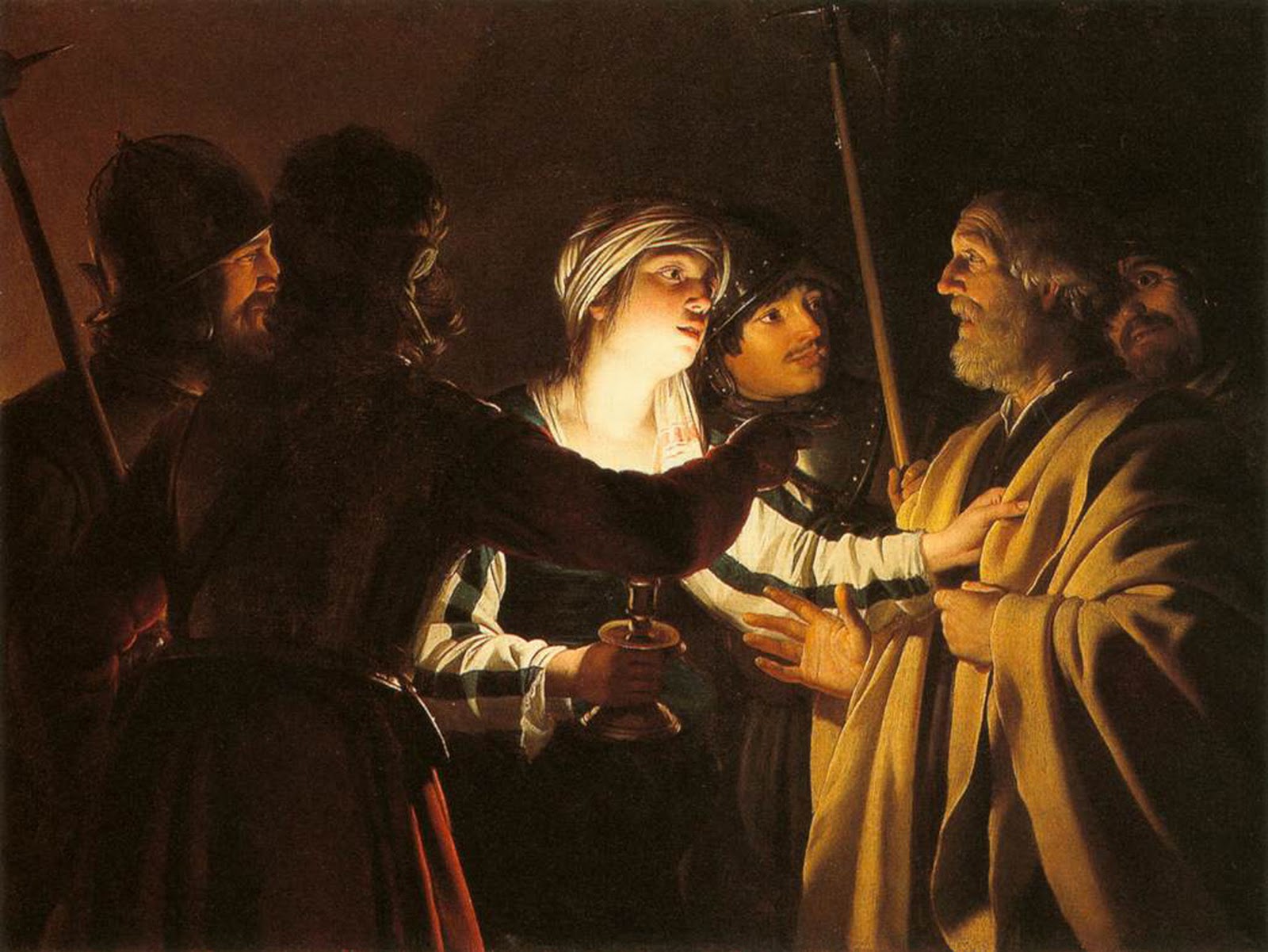
Denial of St. Peter–Gerrit van Honthorst

Lent is a time to contemplate who Christ’s enemies really are.  It is too tempting to read the story of his trial, crucifixion and suffering and point the finger at Romans and Jews.  To the Pharisees, He was perceived as heretical to their rigid obsession with the law as the means to salvation.  To the Romans,  He was an inconvenient itinerant rabbi who tended to attract crowds of the rabble, the common people–an undesirable thing in the law and order world.

The reality is Jesus’ enemies weren’t really the Romans and Jews.  They were those whoprofessed to love Him the most but then turned away when loving Jesus meant suffering with Him.  The betrayals that take place, resulting in His arrest and death,  are not by those who hated Jesus.   Jesus told His betrayers the truth about who they were, and what was in their hearts, by shining His light on their weakness, illuminating their sin even before they committed it.  He does the same with us every day.  We cannot hide from His light illuminating the dark corners of our heart.

We must face the fact that we continue to betray Him, usually in small ways that we hope are insignificant or hidden because, after all, we are Christians, we pray, we go to church, we are “good” people who certainly mean well.

We do no less than what Peter did three times.   We deny knowing Him when it is inconvenient to admit it.

We are no less selfish than Judas selling out for silver when what is being asked of us is to give up the material things of this world we hold dear.

We are no less cowardly than the throngs crying “Crucify Him!” when only days before they were  lauding him as the King of Kings and Lord of Lords, going along with the crowd,  as it feels risky to stand out, stand apart, be utterly alone in our devotion to Him rather than live out our love affair with the world along with everyone else.

So with friends like us…

We have some serious explaining to do.  Amazing that He knows our hearts even before we utter a word.

Lenten Meditation: Create in me a clean heart

So much of Psalm 51 is about being cleansed and transformed.  This is understandable given the nature of King David’s heinous acts of infidelity and murder.  It must have felt like the blood would never leave his hands and that he would be marked with sin forever.

But part of penitence is expressing deep regret, overwhelmed with the guilty sorrow of having done wrong, very wrong, and wanting to do whatever it takes to feel right with God again.  So this verse resonates with anyone who has erred in both large and small ways, having laid awake at night thinking about it, weeping in remorse, crying out with contrition.

Lent is the reminder that we have renewal at hand.  It is coming.  Our hearts will be light again, loving and full of joy.