Lenten Meditation: Lost and Now Is Found

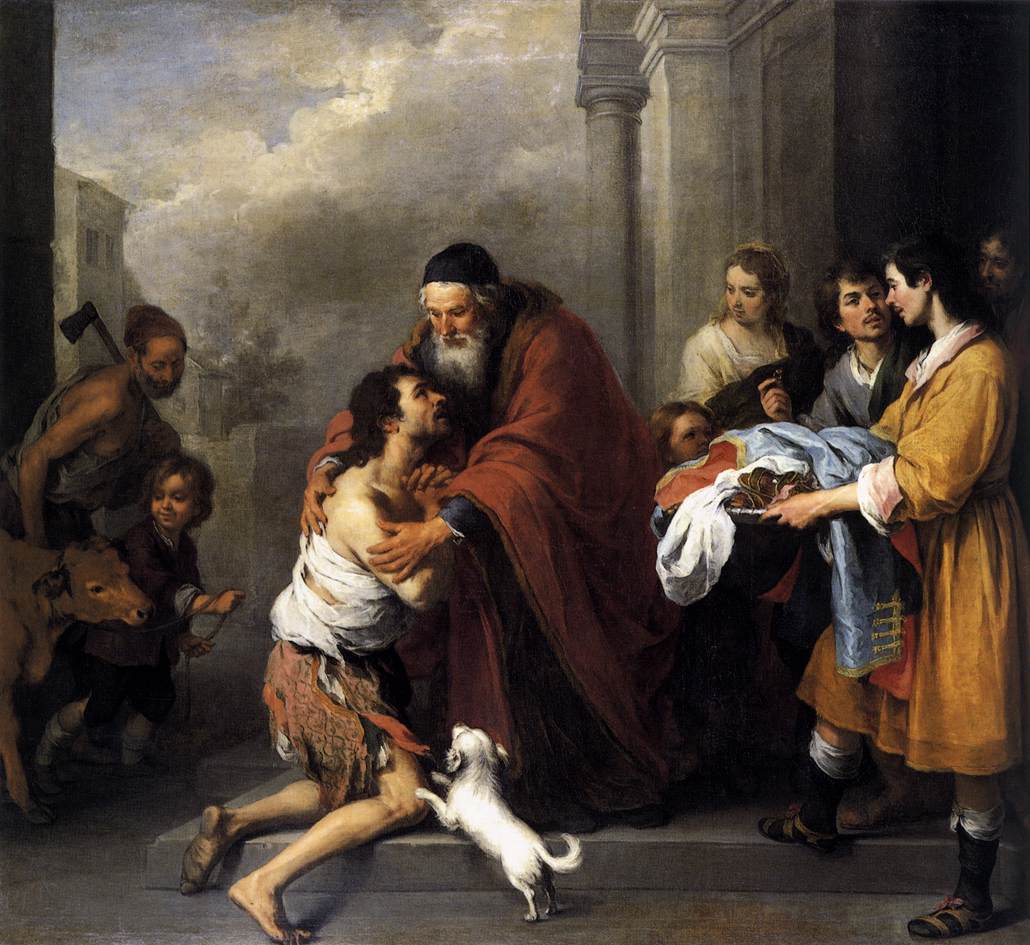
Return of the Prodigal Son --Bartolome Esteban Murillo

Luke 32: 15

this brother of yours was dead and is alive again; he was lost and is found.

There is a unique aspect to the “Prodigal” story that is not always apparent on first reading/hearing.  It is, on the surface, a warm and tender story of a loving father welcoming his wayward son back to the fold after squandering all, and realizing his life would be better working as one of his father’s servants than literally wallowing in a pig sty.  Instead,  his father greets him home with utter joy, bringing him the best of all he possesses to celebrate.   It is the ultimate story of grace and forgiveness.

It is told by Jesus in the context of a warning to the Pharisees and keepers of the Jewish law.  It is actually a parable far more about the older brother–the obedient  “nose to the grindstone”  guy– who is resentful and angry that his father lavishes such special attention on the younger brother returned home from a life of sin.   The father “pleads” with his older son to participate in the celebration, reminding him:  “You are always with me and everything I have is yours, but we had to celebrate and be glad because this brother of yours was dead and is alive again; he was lost and is found.”  We don’t know what the older brother decided to do, and whether he could ever get over his resentment of his brother and his anger at his father.  Jesus leaves that part of the story open-ended, just as our own decisions are open-ended.

It is clear what we must do.   We cannot have expectations for what we feel is owed us because of our “good” behavior, our hard work, or our obedient nature.  We deserve nothing.

Yet our Father hears our righteous anger, sees our self-absorbed resentment and instead entreats us, with all the power of His love,
“You are always with me; everything I have is yours.”

What can be greater than that?   As we are lost in our selfish judgment, He reminds us how firmly He holds us.  We are meant to be found resting, living, breathing in Him.

And so, it is not only the prodigal who lives again.

Lenten Meditation: A Broken Spirit

Psalm 51: 17

The sacrifices of God are a broken spirit;
a broken and contrite heart…

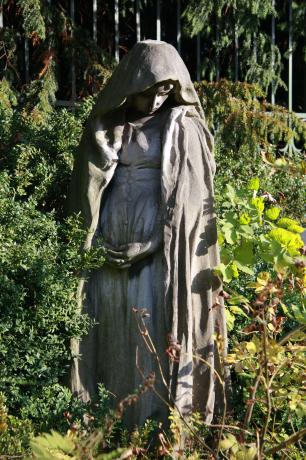
When we are at our most tender and vulnerable, hurting and barely able to breathe–that is when we gift ourselves to God, and He welcomes us with open arms, knowing the sacrifice we make.   He was once just like us.

No longer burnt offerings, nor money, but He asks for a sacrifice of us, broken and yielding, ready for healing, begging for wholeness.  He becomes our glue to shore up our shattered pieces.

An old Shaker hymn says it better than I:

I will bow and be simple,
I will bow and be free,
I will bow and be humble,
Yea, bow like the willow tree.

I will bow, this is the token,
I will wear the easy yoke,
I will bow and will be broken,
Yea, I'll fall upon the rock.

Lenten Meditation: Resting in the Yoke

Matthew 11:28-30

Come to me, all you who are weary and burdened, and I will give you rest. 29Take my yoke upon you and learn from me, for I am gentle and humble in heart, and you will find rest for your souls. 30For my yoke is easy and my burden is light.

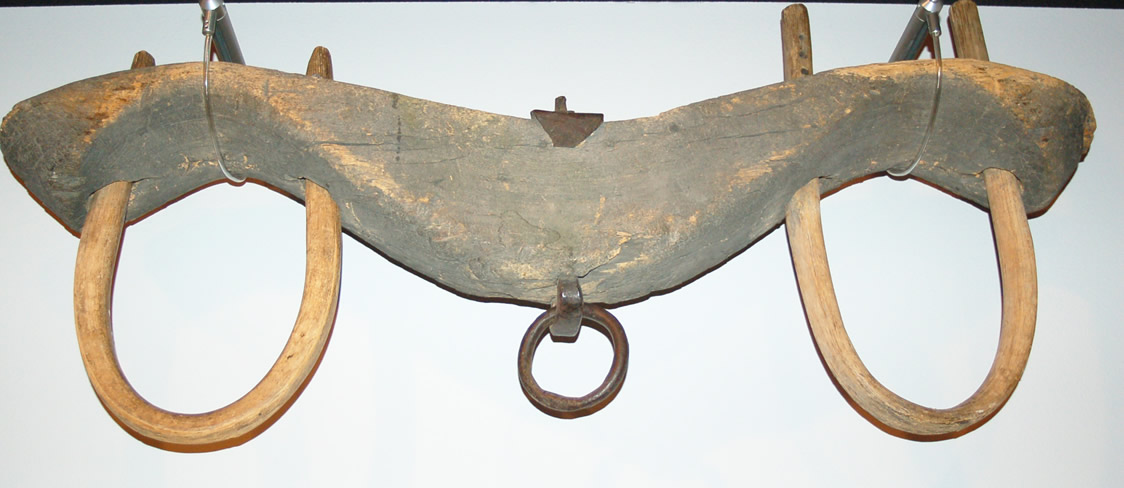
There doesn’t appear to be anything remotely restful about a yoke.  It represents hard sweaty pulling work no matter what.   Why would taking on a yoke be “easy”, and the “burden light”?

It is the shared load that makes the work easier.  Although single yokes can be used, the efficiency is far greater when two pull together under the same yoke.  Jesus is clearly saying, “come walk alongside me, share my yoke and I’ll pull you through whatever you need to go through.”    Together, it will be easier, the load less heavy, the relief profound.

I can actually imagine happiness in wearing such a harness when the pulling partner is not only gentle and humble in heart, but encouraging and reassuring every step of the way.

I will never cast off this yoke.  I am bound in joy.

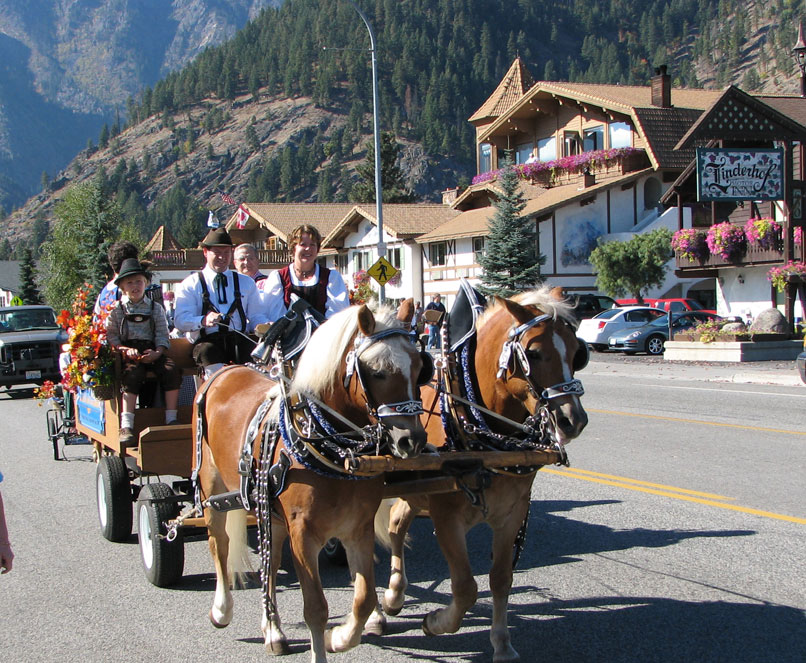
The Forchemers in Leavenworth

Lenten Meditation: All We Like Sheep

Isaiah 53:6

We all, like sheep, have gone astray, each of us has turned to his own way; and the LORD has laid on him the iniquity of us all.

I am privileged to be learning Handel’s Messiah with a group of really wonderful folks in my small town, readying ourselves for our twice yearly performances.   The “All We Like Sheep”  chorus is one of the most challenging of all, simply because the melody lines intertwine in seemingly random fashion, as if our choir were sixty some individual sheep running amok, each in a different direction.    Sheep are skilled  at ignoring boundaries, running over anything in their way, doubling back and retracing their steps and giving in to whim rather than doing what is right and orderly.

It is brilliantly organized musical chaos, as only Handel can create, until the final Adagio, like a shepherd of sorts,  brings all the voices together in one powerful final lament:  the Lord lifts from us the burden of our depravity and takes it upon Himself in the ultimate sacrifice.  We are absolved, sheared of our heavy burden, though unworthy as only a herd of dumb sheep can be.

We are sheep in desperate need of a Shepherd who knows what it is to be the Paschal Lamb.   Worthy is that Lamb.

Lenten Meditation: Watch With Me

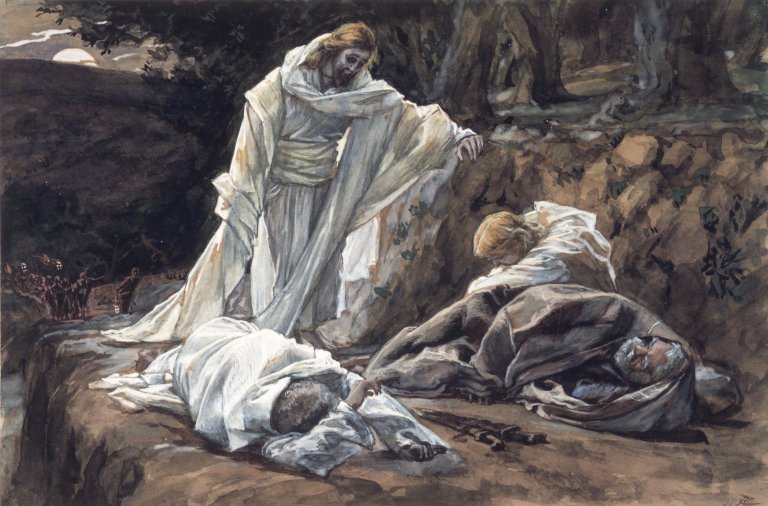
You could not watch one hour with me--James Tissot

Matthew 26:40

Then he returned to his disciples and found them sleeping. “Could you men not keep watch with me for one hour?” he asked Peter.

Every time I read of this scene in Gethsemane, I am convicted yet again of my own drowsing faith and how inadequate it is when the pressure is on.  “Gethsemane” means “oil press”  so it becomes an appropriate setting among the olive trees for the pressure to be turned up high, on the disciples, as well as Jesus.

The disciples are expected, indeed commanded, to keep watch by the Master, to be filled with prayer, to avoid the temptation thrown at them at every turn.  But they fail pressure testing and fall apart.  And so too, we are lulled by the complacency of our modern times, by an over-indulged satiety for material comforts that do not truly fill hunger or quench thirst,   by an expectation that being called a disciple of Jesus is enough.

It is not enough.

We sleep through His anguish.  We dream, oblivious, while He sweats blood.  We deny we know Him when the pressure is turned up,  yet incredibly He loves us anyway.

So, like the disciples who walked alongside Him, we must pray: to remain watchful, to be faithful under stress, to be forgiven for falling asleep when He needs us most.

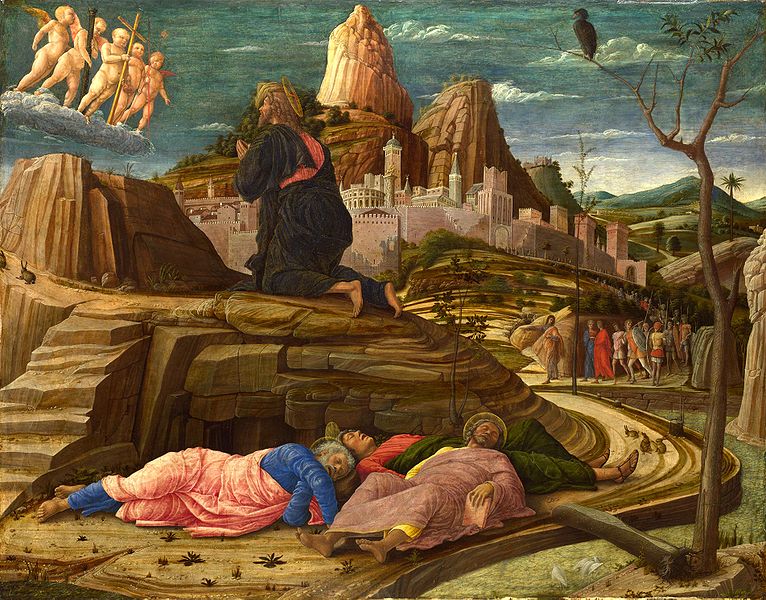
Andrea Mantegna: Agony in the Garden, circa 1460

Lenten Meditation: Wash Me

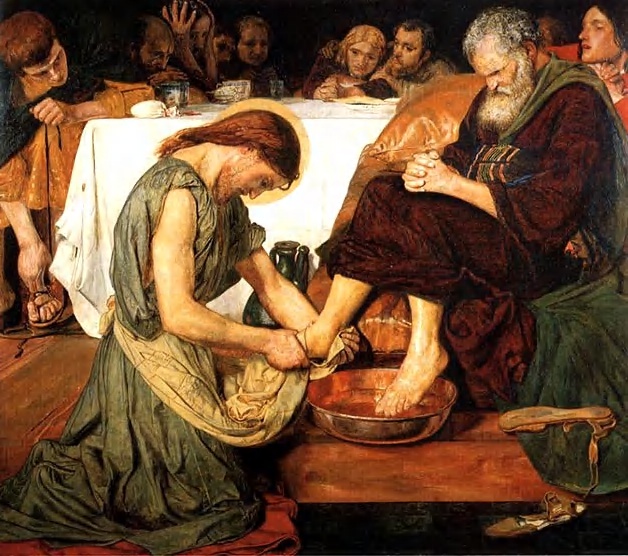
Christ Washing Peter's Feet by Ford Madox Brown

Psalm 51: 7

Cleanse me with hyssop, and I will be clean;  wash me.

It had to have been mortifying.  The Master, with a towel wrapped around His waist like a slave,  kneeling to wash His disciples’ dirty smelly feet covered with the dust of Jerusalem.  Though Peter protested, he was rebuked to submit, to comprehend the symbolism of the act.

It was this reversal that carried Him to the cross, the ultimate cleansing coming not just from His hands, but from His wounds, from His suffering, from His blood.

So He continues to wash off our everyday grime and gently, tenderly wipes us clean, knowing, realizing we will only get soiled again.

What wondrous love is this?

Lenten Meditation: Cast Me Not Away

Psalm 51:11

Do not cast me from your presence
or take your Holy Spirit from me.

Usually tucked away in one of my pockets of my lab coat at work, or in my jean pocket at home, or in a pocket of my purse is one of several small smooth stones that I keep.  I prefer them a bit flat, with a nice depression that is perfect for my thumb to nestle in as I hold the stone in my pocket.  It is a reassuring feeling to hold onto something that is so solid, so ancient and which traveled many miles,  bumped and ground to a silky smoothness just to end up in my pocket.  These are stones that I spend time harvesting at my favorite southwestern Vancouver Island shore, where the newly named “Salish Sea”  pours out from Puget Sound through the Straits of Juan de Fuca to the Pacific.  I probably should be declaring them at the border when we return home, but I’m never sure how to put a value on a ziplock bag of perfect “holding” stones.  I think the border guard would likely confiscate them and I’d have a lot of explaining to do.

Ostensibly I’m picking up these rocks to try my hand at skipping them on the surface of the water.  That is only my excuse.  But I’m a miserable skipper, yielding rarely more than four skips per stone.  I guess I might be more aptly called a “stoner”.   I actually can’t bear to let the best ones go, perhaps never to be heard from again.   They would truly be lost forever.  To cast them away, to actually feel them leave my hand, is a painful act.

I suspect God feels that same anguish at letting go of one of His children.  We are not flung away for His entertainment (how many skips can this one make?), nor are we thrown away in anger.  We are cast away from God’s hand when we could have chosen to cling to Him when we needed Him most.  We too often let go when He urges us to stay.   He wants us firm and solid in His hand, having been sanded and ground to a fine sheen by the bumps and bruises of life.   He snugly holds us,  His thumb nestled in the depression of our soul.

Tucked away in God’s pocket forever.

Lenten Meditation: Crushed Bones Rejoice

Psalm 51:8

Let me hear joy and gladness;
let the bones you have crushed rejoice.

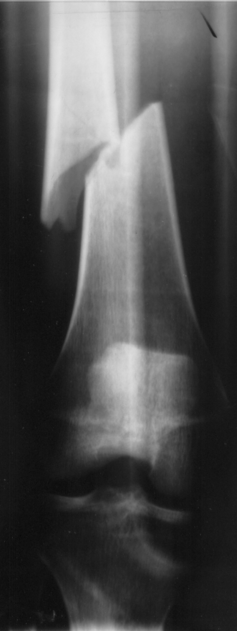
I’ve worked in many medical settings, and have seen lots of illnesses and injuries over 30+ years of doctoring.  Despite all that experience, I really don’t do well with badly broken bones.  Basic wrists and fingers and ankles are no problem but open compound and comminuted fractures (i.e. “crushed bones”) are downright terrifying.  It appears to me they can never be pieced back together.   Even looking at the xrays makes me cringe.  I avoided doing a surgical orthopedic rotation during my training because I knew I’d have issues with the saws and the smells involved in fixing bad fractures.  And witnessing the pain is unforgettable.

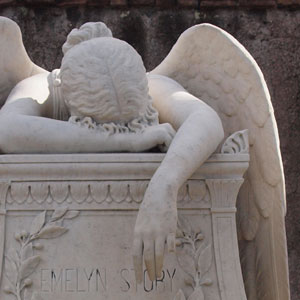
Crush injuries hurt– there are few things that hurt more. It is very difficult to imagine those injured bones (or their owner) rejoicing about anything.   This psalm makes explicit the extreme pain David was experiencing in his guilt and separation from God.    To realize such profound relief from that pain must have been miraculous, and well worth rejoicing.

Two years ago on April 1,  my 87 year old mother shattered her lower femur trying to stand up after getting down on her hands and knees to retrieve a pill that had dropped to the floor and rolled under her desk.  The pain was overwhelming until the paramedics managed to immobilize her leg in an air cast for transport to the ER.  As long as her leg wasn’t moved, she was quite comfortable– in fact overjoyed to see me in the middle of a workday when I arrived at the hospital.  She was so chatty that when she was asked by the ER doctor “how did this happen?” she launched into a long description of just how she had dropped the pill, where it had rolled, and what pill it was, what color it was, why she was taking it, etc etc.  I started to get antsy, knowing how busy he was and said, with just a *wee bit* of irritation, “Mom, he doesn’t need to know all that.  Just tell him what happened when you tried to stand up.”   That did it.  Now it wasn’t just her leg that hurt, it was her feelings too, including her own sense of responsibility for what had happened, and the tears started to flow.  The ER doc shot me a sideways glance that clearly said “now look what you’ve done” and then took my Mom’s hand tenderly,  looking her straight in the eye and said, “That’s all right, these things happen despite our best intentions—you go right ahead and tell me the whole story, right from the beginning…”

So she did, completely reaffirmed and feeling absolved of her guilt that she had somehow done this to herself.   Having been shown compassion and a healing grace from a total stranger, she never really complained about the pain in her leg again.  Then it was my turn to feel guilty.

Although her leg was fixed and she did eventually take a few steps with assistance, she never again lived independently, and as happens so often with older people with fractures, she died only eight months later.  The bones heal but the spirit doesn’t.   That day really was the beginning of the end for her, and in my heart, I knew that was likely to be the case.  My irritation was for what I suspected was coming, and for what I knew it meant for her, but mostly for me.

What I had forgotten in that moment of selfishness and what I will not forget again:

Even the most horrendous pain can be relieved by grace.  And the crushed will stand, and walk, and smile again.

Lenten Meditation: Whiter Than Snow

Psalm 51:7

Cleanse me with hyssop, and I will be clean;
wash me, and I will be whiter than snow.

It was a bright December day, she remembered, a great day for a snow shoeing trek near Artist’s Point, eat lunch, then head home.  All three college students wound their way slowly around the base of Table Mountain, enjoying a final day together before parting for the long Christmas break.

The avalanche came without warning; a sudden low rumble, then building to a roar, and the ground was moving beneath them, rolling them over and over helplessly in a wave of white that carried them down the slope.  It swooshed over top of them, everything awash in white.  There was no way to know up from down, and when finally coming to rest, the white became black, still, and suffocating.

Remembering her avalanche survival course, she waved her arms in front of her as hard as she could, creating a small open pocket beneath her face as she found herself bent forward, hunched into a folded crouched position.  There was a sense of light coming through the snow above her, but nothing but black below.  She tried to force her way up through the snow, to push her way out but it weighted her down like concrete blocks.  There was no moving from the small space that contained her.

She realized she was trapped and began to panic.  She tried to shout but her voice too was entombed in snow.

So she began to pray.   She prayed for her safety, for calmness, for a rescue, she prayed for her two friends, she prayed for her parents.  She remembered relaxing as she spoke to God, sensing Him in the darkness with her, knowing He was the only one to know where she was at that moment. He had found her.

Growing colder, she was unable to feel her feet or hands any longer.  She was fading; she tried to stay awake by praying harder, but it was no use.

_________

Sometime later she felt herself being pulled into the light, heard excited voices shouting, and then she was being carried on a stretcher.  In the ambulance, on the way to the hospital, she began to talk to her rescuers as they warmed her with blankets, and once her skin softened, they put warm intravenous fluids in her veins.  By the time she arrived in the emergency room, her face had some color, though her feet were blue, her toes white and completely numb.

It wasn’t until later that she was clear enough to ask about her friends.   One was the reason she had been rescued.  He had fought his way through his snow covering and thereby freeing himself, had gone for help.  With the help of dogs, she had been found.  Her third friend was still missing.

As she mentioned to a nurse what a close call she had, being buried under two feet of heavy snow for several minutes, and surviving relatively unscathed,  the nurse stopped what she was doing and looked at her oddly.

“Don’t you know?  You were buried for almost 24 hours before they found you! It’s amazing you are alive at all and look at you, barely a mark on you, only a little frostbite!”

A miracle whiter than snow.

based on a true story of avalanche survival near Mount Baker by two WWU students.  The third student perished.

Lenten Meditation: Naked Before God

Peter Paul Rubens 1597

Genesis 3:11

And (God) said: ‘who told you that you were naked?”
Those fig leaves really don’t cover up much.  It must have felt pretty ridiculous to be hiding in the bushes while God walked in the cool of  the day in the Garden looking for Adam and Eve.

Hide our nakedness from the Creator who formed and designed the body parts we are trying futilely to cover?  Hide our thoughts and deeds from the God who knows our hearts and minds better than we ourselves do?  We are still naked in every aspect of our beings, completely and utterly uncovered and transparent, especially when it comes to our sin.

So who told us we were naked?  Who instilled shame in our bodies, when we are designed in the image, in the likeness of God who loved us enough to walk with us in the Garden?

It was not God who did this.  He was not ashamed of what He had made.

In our fall, in our terrible disobedience, we could no longer bear (or bare) to stand naked before God.   So in our place,  God, in His ultimate love for us, became our  Savior hanging naked, exposed, and humiliated instead.

“The essence of sin is man substituting himself for God, while the essence of salvation is God substituting himself  for man. Man asserts himself against God and puts himself where only God deserves to be; God sacrifices himself for man and puts himself where only man deserves to be.  Man claims prerogatives that belong to God alone; God accepts penalties which belong to man alone.”   John Stott