Lenten Meditation: Cast Me Not Away

Psalm 51:11

Do not cast me from your presence
or take your Holy Spirit from me.

Usually tucked away in one of my pockets of my lab coat at work, or in my jean pocket at home, or in a pocket of my purse is one of several small smooth stones that I keep.  I prefer them a bit flat, with a nice depression that is perfect for my thumb to nestle in as I hold the stone in my pocket.  It is a reassuring feeling to hold onto something that is so solid, so ancient and which traveled many miles,  bumped and ground to a silky smoothness just to end up in my pocket.  These are stones that I spend time harvesting at my favorite southwestern Vancouver Island shore, where the newly named “Salish Sea”  pours out from Puget Sound through the Straits of Juan de Fuca to the Pacific.  I probably should be declaring them at the border when we return home, but I’m never sure how to put a value on a ziplock bag of perfect “holding” stones.  I think the border guard would likely confiscate them and I’d have a lot of explaining to do.

Ostensibly I’m picking up these rocks to try my hand at skipping them on the surface of the water.  That is only my excuse.  But I’m a miserable skipper, yielding rarely more than four skips per stone.  I guess I might be more aptly called a “stoner”.   I actually can’t bear to let the best ones go, perhaps never to be heard from again.   They would truly be lost forever.  To cast them away, to actually feel them leave my hand, is a painful act.

I suspect God feels that same anguish at letting go of one of His children.  We are not flung away for His entertainment (how many skips can this one make?), nor are we thrown away in anger.  We are cast away from God’s hand when we could have chosen to cling to Him when we needed Him most.  We too often let go when He urges us to stay.   He wants us firm and solid in His hand, having been sanded and ground to a fine sheen by the bumps and bruises of life.   He snugly holds us,  His thumb nestled in the depression of our soul.

Tucked away in God’s pocket forever.

Lenten Meditation: Crushed Bones Rejoice

Psalm 51:8

Let me hear joy and gladness;
let the bones you have crushed rejoice.

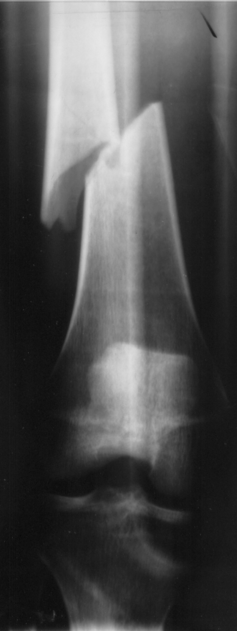
I’ve worked in many medical settings, and have seen lots of illnesses and injuries over 30+ years of doctoring.  Despite all that experience, I really don’t do well with badly broken bones.  Basic wrists and fingers and ankles are no problem but open compound and comminuted fractures (i.e. “crushed bones”) are downright terrifying.  It appears to me they can never be pieced back together.   Even looking at the xrays makes me cringe.  I avoided doing a surgical orthopedic rotation during my training because I knew I’d have issues with the saws and the smells involved in fixing bad fractures.  And witnessing the pain is unforgettable.

Crush injuries hurt– there are few things that hurt more. It is very difficult to imagine those injured bones (or their owner) rejoicing about anything.   This psalm makes explicit the extreme pain David was experiencing in his guilt and separation from God.    To realize such profound relief from that pain must have been miraculous, and well worth rejoicing.

Two years ago on April 1,  my 87 year old mother shattered her lower femur trying to stand up after getting down on her hands and knees to retrieve a pill that had dropped to the floor and rolled under her desk.  The pain was overwhelming until the paramedics managed to immobilize her leg in an air cast for transport to the ER.  As long as her leg wasn’t moved, she was quite comfortable– in fact overjoyed to see me in the middle of a workday when I arrived at the hospital.  She was so chatty that when she was asked by the ER doctor “how did this happen?” she launched into a long description of just how she had dropped the pill, where it had rolled, and what pill it was, what color it was, why she was taking it, etc etc.  I started to get antsy, knowing how busy he was and said, with just a *wee bit* of irritation, “Mom, he doesn’t need to know all that.  Just tell him what happened when you tried to stand up.”   That did it.  Now it wasn’t just her leg that hurt, it was her feelings too, including her own sense of responsibility for what had happened, and the tears started to flow.  The ER doc shot me a sideways glance that clearly said “now look what you’ve done” and then took my Mom’s hand tenderly,  looking her straight in the eye and said, “That’s all right, these things happen despite our best intentions—you go right ahead and tell me the whole story, right from the beginning…”

So she did, completely reaffirmed and feeling absolved of her guilt that she had somehow done this to herself.   Having been shown compassion and a healing grace from a total stranger, she never really complained about the pain in her leg again.  Then it was my turn to feel guilty.

Although her leg was fixed and she did eventually take a few steps with assistance, she never again lived independently, and as happens so often with older people with fractures, she died only eight months later.  The bones heal but the spirit doesn’t.   That day really was the beginning of the end for her, and in my heart, I knew that was likely to be the case.  My irritation was for what I suspected was coming, and for what I knew it meant for her, but mostly for me.

What I had forgotten in that moment of selfishness and what I will not forget again:

Even the most horrendous pain can be relieved by grace.  And the crushed will stand, and walk, and smile again.

Lenten Meditation: Whiter Than Snow

Psalm 51:7

Cleanse me with hyssop, and I will be clean;
wash me, and I will be whiter than snow.

It was a bright December day, she remembered, a great day for a snow shoeing trek near Artist’s Point, eat lunch, then head home.  All three college students wound their way slowly around the base of Table Mountain, enjoying a final day together before parting for the long Christmas break.

The avalanche came without warning; a sudden low rumble, then building to a roar, and the ground was moving beneath them, rolling them over and over helplessly in a wave of white that carried them down the slope.  It swooshed over top of them, everything awash in white.  There was no way to know up from down, and when finally coming to rest, the white became black, still, and suffocating.

Remembering her avalanche survival course, she waved her arms in front of her as hard as she could, creating a small open pocket beneath her face as she found herself bent forward, hunched into a folded crouched position.  There was a sense of light coming through the snow above her, but nothing but black below.  She tried to force her way up through the snow, to push her way out but it weighted her down like concrete blocks.  There was no moving from the small space that contained her.

She realized she was trapped and began to panic.  She tried to shout but her voice too was entombed in snow.

So she began to pray.   She prayed for her safety, for calmness, for a rescue, she prayed for her two friends, she prayed for her parents.  She remembered relaxing as she spoke to God, sensing Him in the darkness with her, knowing He was the only one to know where she was at that moment. He had found her.

Growing colder, she was unable to feel her feet or hands any longer.  She was fading; she tried to stay awake by praying harder, but it was no use.

_________

Sometime later she felt herself being pulled into the light, heard excited voices shouting, and then she was being carried on a stretcher.  In the ambulance, on the way to the hospital, she began to talk to her rescuers as they warmed her with blankets, and once her skin softened, they put warm intravenous fluids in her veins.  By the time she arrived in the emergency room, her face had some color, though her feet were blue, her toes white and completely numb.

It wasn’t until later that she was clear enough to ask about her friends.   One was the reason she had been rescued.  He had fought his way through his snow covering and thereby freeing himself, had gone for help.  With the help of dogs, she had been found.  Her third friend was still missing.

As she mentioned to a nurse what a close call she had, being buried under two feet of heavy snow for several minutes, and surviving relatively unscathed,  the nurse stopped what she was doing and looked at her oddly.

“Don’t you know?  You were buried for almost 24 hours before they found you! It’s amazing you are alive at all and look at you, barely a mark on you, only a little frostbite!”

A miracle whiter than snow.

based on a true story of avalanche survival near Mount Baker by two WWU students.  The third student perished.

Lenten Meditation: Naked Before God

Peter Paul Rubens 1597

Genesis 3:11

And (God) said: ‘who told you that you were naked?”
Those fig leaves really don’t cover up much.  It must have felt pretty ridiculous to be hiding in the bushes while God walked in the cool of  the day in the Garden looking for Adam and Eve.

Hide our nakedness from the Creator who formed and designed the body parts we are trying futilely to cover?  Hide our thoughts and deeds from the God who knows our hearts and minds better than we ourselves do?  We are still naked in every aspect of our beings, completely and utterly uncovered and transparent, especially when it comes to our sin.

So who told us we were naked?  Who instilled shame in our bodies, when we are designed in the image, in the likeness of God who loved us enough to walk with us in the Garden?

It was not God who did this.  He was not ashamed of what He had made.

In our fall, in our terrible disobedience, we could no longer bear (or bare) to stand naked before God.   So in our place,  God, in His ultimate love for us, became our  Savior hanging naked, exposed, and humiliated instead.

“The essence of sin is man substituting himself for God, while the essence of salvation is God substituting himself  for man. Man asserts himself against God and puts himself where only God deserves to be; God sacrifices himself for man and puts himself where only man deserves to be.  Man claims prerogatives that belong to God alone; God accepts penalties which belong to man alone.”   John Stott

Lenten Meditation: My Soul Thirsts

Psalm 42: 1-2

As the deer pants for streams of water,
so my soul pants for you, O God.

My soul thirsts for God, for the living God.
When can I go and meet with God?

On any given day, at some point, I start thirsting.  Not for water, which, living in the northwest,  I’m fortunate to have close by at almost any moment.  Not for alcohol, which puts me to sleep and makes me too fuzzy to function after a couple of swallows.  Not for milk which was all I ever drank growing up on a farm with three Guernsey cows that produced more than a family of five could possibly consume in a day.

No, I’m ashamed to admit I thirst for a Starbucks mocha.  With whip.   With little hesitation, I will indulge my thirst.  No, I didn’t give it up for Lent.  I acknowledge it is not truly thirst I am feeling but only a desire. I’m not panting and dehydrated.  This is a want rather than a need.  I will not die without my mocha.

It just feels as if I might.

If only I could thirst daily for God with the same visceral fervor and singlemindedness!   If I could dive into His word daily and savor it like I do my mocha, I would be much less fluffy in stature, and much more solid in faith.

This psalm reminds me of my constant thirstiness and how no mocha, no glass of water, indeed nothing of this earth will truly slake it.  I must wait to meet the Lord to know what it feels like to no longer want, and then all needs are fulfilled.

“You have made us for Yourself, and we cannot find rest until we find it in You.”   St. Augustine

Lenten Meditation: You are not your own

1 Corinthians 6: 19b-20a

You are not your own; you were bought at a price.

There is a well known story with a number of variations, all involving a scorpion that stings a good-souled frog/turtle/crocodile/person who tries to rescue it from drowning.    Since the sting dooms the rescuer and as a result the scorpion as well,  the scorpion explains “to sting is in my nature”.   In one version, the rescuer tries again and again to help the scorpion, repeatedly getting stung, only to explain before he dies  “it may be in your nature to sting but it is in my nature to save.”

This is actually a story originating from Eastern religion and thought, the purpose of which is to illustrate the “dharma”, or orderly nature of things.  The story ends perfectly for the Eastern religions believer even though both scorpion and the rescuer die in the end, as the dharma of the scorpion and of the rescuer is realized, no matter what the outcome.  Things are what they are, without judgment,  and actualization of that nature is the whole point.

However, this story only resonates for the Christian if the nature of the scorpion is forever transformed by the sacrifice of the rescuer on its behalf.   The scorpion is no longer its own so no longer slave to its “nature”.  It is no longer just a scorpion with a need and desire to sting whatever it sees.  It has been “bought” through the sacrifice of the rescuer.

So we too are no longer our own, no longer who we used to be before we were rescued.  We are bought at a price beyond imagining.  And our nature to hurt, to punish, to sting shall be no more.

1 Corinthians 15: 55

Where, O death, is your victory?  Where, O death,  is your sting?

Lenten Meditation: Redeeming the Time

“Therefore look carefully how you walk, not as unwise, but as wise; redeeming the time, because the days are evil.”  Ephesians 5: 15-16

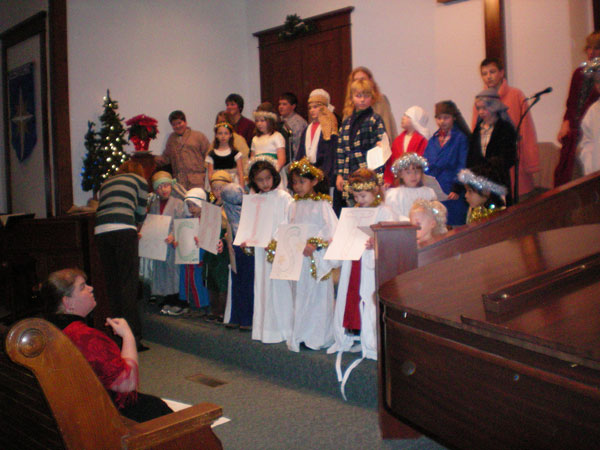
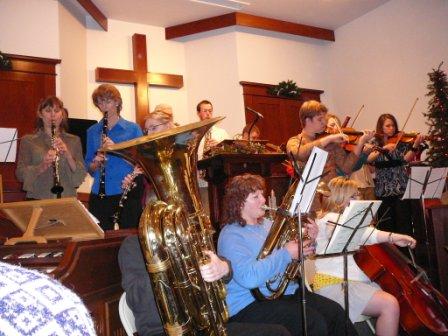
Tonight was a celebration of Wiser Lake Chapel’s history with some of the folks who have attended this little church for over 50 years.  It was a joy to review how the original Methodist-Episcopal church built for $600 in 1916 was subsequently disbanded by the Methodists and then leased for $25/month by the Christian Reformed Churches in our area to become an outreach mission Sunday School and Daily Vacation Bible School for hundreds of migrant and Native American children in our county.  From that outreach ministry came worship services that brought in a diverse congregation from the rural neighborhoods, and most recently, over the last 20 years, it is a thriving non-denominational church with a strong reformed Presbyterian perspective.  Scores of children learned about the Lord inside our humble sanctuary, and how to sing from their hearts to His glory.

I’m blessed to be a part of this incredible church family, not a mega-church, but vibrant all the same.  We need to remember what we came from and why.

For all you Wiser Lake Chapel alums out there in all different walks of life in the faith: we will celebrate a centennial in 2016 and we will have a great picnic, so plan on it!  Watch http://www.wiserlakechapel.org for details.

“Everything you do today, or I do, affects not only what is going to happen but what has already happened, years and centuries ago. Maybe you can’t change what has passed, but you can change all the meaning of what has passed.  You can even take all the meaning away.”  –words of an old preacher, quoted by Martin Wright, a friend of Herbert Butterfield (British historian)


Lenten Meditation: Character produces hope

Romans 5:3-4:  “we also rejoice in our sufferings, because we know that suffering produces perseverance; perseverance, character; and character, hope.”


Janis Babson

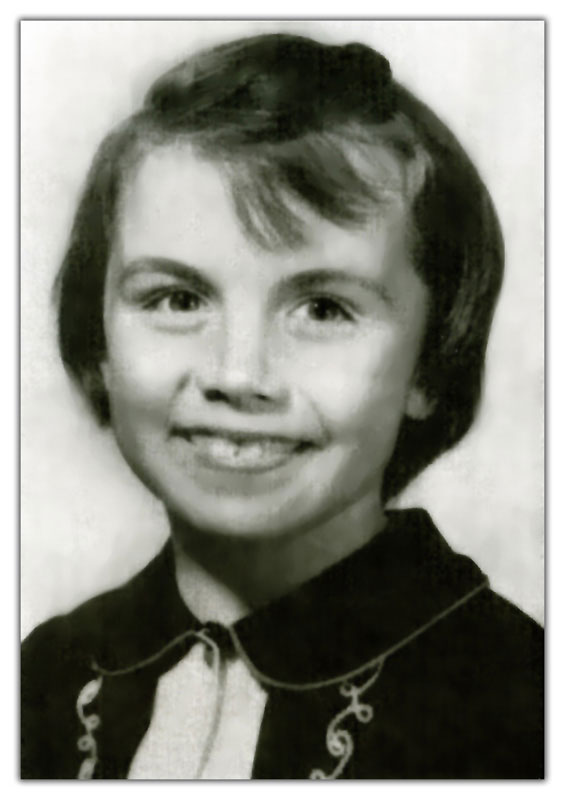
I was eight years old in June 1963 when the Readers’ Digest arrived in the mail inside its little brown paper wrapper. As usual, I sat down in my favorite overstuffed chair with my skinny legs dangling over the side arm and started at the beginning,  reading the jokes, the short articles and stories on harrowing adventures and rescues, pets that had been lost and found their way home, and then toward the back came to the book excerpt: “The Triumph of Janis Babson” by Lawrence Elliott.

Something about the little girl’s picture at the start of the story captured me right away–she had such friendly eyes with a sunny smile that partially hid buck teeth.  This Canadian child, Janis Babson, was diagnosed with leukemia when she was only ten, and despite all efforts to stop the illness, she died in 1961.  The story was written about her determination to donate her eyes after her death, and her courage facing death was astounding.  Being nearly the same age, I was captivated and petrified at the story, amazed at Janis’ straight forward approach to her death, her family’s incredible support of her wishes, and especially her final moments, when (as I recall 47 years later) Janis looked as if she were beholding some splendor, her smile radiant.

”Is this Heaven?” she asked.   She looked directly at her father and mother and called to them:  “Mommy… Daddy !… come… quick !”

And then she was gone.  I cried buckets of tears, reading and rereading that death scene.  My mom finally had to take the magazine away from me and shooed me outside to go run off my grief.  How could I run and play when Janis no longer could?  It was a devastating realization that a child my age could get sick and die, and that God allowed it to happen.

Yet this story was more than just a tear jerker for the readers.  Janis’ final wish was granted –those eyes that had seen the angels were donated after her death so that they would help another person see.  Janis  had hoped never to be forgotten.  Amazingly, she influenced thousands of people who read her story to consider and commit to organ donation, most of whom remember her vividly through that book excerpt in Readers’ Digest.  I know I could not sleep the night after I read her story and determined to do something significant with my life, no matter how long or short it was.  Her story influenced my eventual decision to become a physician.  She made me think about death at a very young age as that little girl’s tragic story could have been mine and I was certain I could never have been so brave and so confident in my dying moments.

She did suffer with her disease, and despite that, she persevered with a unique sense of purpose and mission for one so young.  As a ten year old, she developed character that some people never develop in a much longer lifetime.  Her faith and her deep respect for the gift she was capable of giving through her death brought hope and light to scores of people who still remember her to this day.

Out of the recesses of my memory, I recalled Janis’ story a few months ago when I learned of a local child who had been diagnosed with a serious cancer.  I could not recall Janis’ name, but in googling “Readers’  Digest girl cancer story”,  by the miracle of the internet I rediscovered her name, the name of the book and a discussion forum that included posts of people in their mid-fifties, like me,  who had been incredibly inspired by Janis when they read this same story as a child.  A number were inspired to become health care providers like myself and some became professionals in working with organ donation.

Janis and family, may you know the gift you gave so many people through your courage in suffering, your perseverance, your character and the resulting hope in the glory of the Lord–the angels are coming!

We do remember you!

To join a Facebook page set up by Janis’ family in her memory go here

For excerpts from “The Triumph of Janis Babson”, click here

Lenten Meditation: Perseverance produces character

Romans 5: 3b-4

We know that suffering produces perseverance; perseverance, character;

When I first wrote this story and published it on my blog, I heard from members of Minnie’s family and learned that her youngest daughter was still living, now over 100 years old.  It was a joy to receive copies of newspaper articles from the time of the Coloma shipwreck, outlining Minnie’s brave trek to notify rescuers.  I hope to expand this story in the future, now that I have more information about the character of this remarkable woman, wife and mother.  EPG

Minnie Paterson rocked, nursing her infant son. She sat near the south window of the lighthouse living quarters, and studied the rain streaming down in rivulets. Wind gusts rattled the window. A lighthouse keeper’s home was constantly buffeted by wind, but this early winter storm picked up urgency throughout the night. Now with first light, Minnie looked out at driving rain blowing sideways, barely able to make out the rugged rocks below. The Pacific Ocean was anything but; the mist hung gray, melding horizon into sea, with flashes of white foam in crashing waves against the rocky cliffs of Cape Beale.

Whenever storms came, it seemed the Paterson family lived at the edge of civilization. Yet these storms were the reason she and Tom and their five children lived on the rugged west coast of Vancouver Island, in isolation at the southern edge of Barkley Sound. Tom’s job was to keep the foghorn blaring and the light glowing above the treacherous rocks, to guide sea vessels away from certain peril. The storms sometimes were too powerful even with the lighthouse as a beacon of warning. In January 1906, the ship Valencia had wrecked off the coast and only a few survivors had managed to make their way to shore, staggering up the rocky trail to the lighthouse where she warmed them by the stove and fed them until rescuers could come.

Eleven months later, Minnie was setting about getting breakfast ready when her husband came down the stairs in a rush from the upper room where he tended the light.

“Mother, it’s a ship! I just now see it. It is battered by the waves, its sails in tatters! I can see a man waving a distress signal from the deck. It will surely run aground against the rocks—I must telegraph the village to send out rescuers.”

Minnie went to the window again but could see nothing in the mist. Surely this could not be another Valencia disaster! Tom went to the telegraph in the corner of the room and tapped out the urgent message to the fishing village of Bamfield, five miles away inside Barkley Sound. He sat impatiently waiting for a reply, drumming his fingers on the desk. After ten minutes, he sent the message again with no response.

“The lines are down. I’m certain of it. The fallen trees pull them down in this wind. We’ll be unable to summon the rescuers. This ship is doomed, just like the Valencia. There is no way we can reach them in this weather and they can’t come ashore here in lifeboats. They’ll crash on the rocks…”

Seeing the helplessness Tom felt, Minnie knew immediately what she must do. He could not leave his post—it was a condition of his job. She would have to run the five miles for help, through the forest. She kissed Tom and the children goodbye, donned a cap and sweater, and as her feet did not fit in her boots, she put on her husband’s slippers. She ran down the long stairway down the hill taking their dog as a precaution to help warn her of bears on the trails.

Minnie first had to cross through a tideland inlet with water waist deep. She quickly stripped from the waist down, held her pants and slippers over her head and crossed through the icy water, her dog swimming alongside. Shivering on the other side, she quickly dressed, and started down the narrow winding forest trail, scrambling over large fallen trees blocking the way. She waded through deep mud, and crossed rocky beaches where wild waves drenched her. At times the tide was so high she crawled on her hands and knees through underbrush so as not to be swept away by the storm.

After four hours, she reached a home along the trail and with a friend, launched a rowboat to go on to Bamfield. The two women notified the anchored ship Quadra, which set out immediately for Cape Beale. Within an hour, the Quadra had reached the Coloma which was taking on water fast, and drifting close to the rocks on shore.

Minnie walked the long way back home that night, clothing tattered, muscles cramping, exhausted and chilled. Her breasts overflowing, she gratefully fed her baby, unaware for days that her efforts rescued the crew of the Coloma. Tragically, her health compromised, she died in 1911 of tuberculosis, forever a heroine to remember.

Source material: Bruce Scott’s Barkley Sound and oral history from Bamfield residents
Author’s note:
I wrote this for a writing challenge on the theme of “Canada”. This is a story Dan and I were told while staying in Bamfield on our honeymoon, and on a bright September day we walked the trail to the Cape Beale lighthouse, a most challenging and beautiful part of the world. The trail was so difficult, I was sure I was not going to make it, so how Minnie persevered in a December storm, in the dark, is beyond imagining. Her bravery captured me and I honor her sacrifice with this rendering of her story. EPG

Lenten Meditation: Truth from the inside out

Psalm 51: 6–various translations

Surely you desire truth in the inner parts;
you teach me wisdom in the inmost place. (NIV)

What you’re after is truth from the inside out.
Enter me, then; conceive a new, true life. (The Message)

Behold, you delight in truth in the inward being,
and you teach me wisdom in the secret heart.” (ESV)

This is clearly a challenging passage to translate–the NIV translation includes footnotes that admit “the Hebrew meaning is uncertain”.  So in the context of this psalm of repentance, there is something appealing about God seeking the  “truth from the inside out” within us.  We cannot hide the truth from Him, nor should we even try.

He draws us out of our hidden-ness; we spiral forth in His knowledge of us.  We will never be the same again.