Lenten Meditation–Repentance


He wasn’t just any drunk.  He was a mean drunk.  Surly, cursing, prone to throwing things and people.

My grandmother used to say he learned to drink in the logging camps and I suspect that is true.  He started working as a logger before he was fully grown, dropping out of school around age sixteen and heading up to the hills where real money could be made.  He learned more than how to cut down huge old growth Douglas Fir trees, skid them down the hills using a team of horses, and then roll them onto waiting wagons to be hauled to the mills.  He learned how to live with a group of men who surfaced once or twice a month from the hills to take a bath and maybe go to church with their womenfolk. Mostly he learned how to curse and drink.

He returned to the home farm with muscles and attitude a few years later, and started the process of felling trees there, creating a “stump farm” that was a challenge to work because huge stumps dotted the fields and hills.  He slowly worked at blasting them out of the ground so the land could be tilled.  It proved more than he had strength and motivation to do, so his fields were never very fruitful, mostly growing hay for his own animals.  He went to work in the local saw mill to make ends meet.

He cleaned up some when he met my grandmother, who at eighteen was twelve years younger, and eager to escape her role as chief cook and bottle washer for her widowed father and younger brother.   She was full of energy and talked constantly while he, especially when sober, preferred to let others do the talking.  It was an unusual match but he liked her cooking and she was ready to be wooed.

It was a marriage in a rush with a baby born a bit earlier than the calendar would have predicted.  They settled on the stump farm and began raising a family, trying to eke out what living they could from the land, from the sporadic work he found at the saw mill, and every Sunday, took the wagon a mile down the road to the Summit Park Bible Church where they both sang with gusto.

He still drank when he had the money, blowing his pay in the local tavern, and stumbling in the back door roaring and burping, falling into bed with his shoes on.  Grandma was a teetotaler and yelled into his ruddy face about the wrath of God anytime he drank, their four children hiding when the dishes started to fly, and when he would whip off his belt to hit anyone who looked sideways at him.

When their eldest daughter, the reason for their getting married in the first place, took sick and died quickly of cancer despite the little doctoring that was available, Grandpa got sober for awhile.  He saw it as punishment from God, or at least, that is what Grandma told him through her sobs as she struggled to cope with her loss.

Over the years, he relapsed many times, losing fingers in his work at the mill, and losing the respect of his wife, his children and the people in the community.  Grandma left with the kids for several months to cook in a boarding house in a neighboring town, simply to be able to feed her family while Grandpa squandered what he had on drink.

Grandpa sobered up for good while his boy fought in the war overseas, striking a bargain with God that his boy would come home safe as long as Grandpa left the booze alone.  It stuck and he stayed sober.  His boy came home.  Grandpa felt forgiven and became an elder in his Bible Church, taught Sunday School and gave his extra cash to the church rather than the tavern.

Sitting in a Christmas Sunday School program one Christmas Eve, Grandpa leaned toward Grandma and she noticed his face broken out in sweat, his face ashen.

“Phew, it’s hot in here, “ he said and collapsed in her lap.    He was gone, just like that, in church, sober as can be,  on the day before Christmas.

He was home at last.

The Sunday School Express

photo by Gary Herbert

The rusty, scratched and dented shell of a school bus sounded as if it would barely make it around the corner. Yet it always ran if Pete was at the wheel as he drove the “Sunday School Express” in our rural neighborhood, picking up all willing (and some not so willing) children within a 6 mile radius.

This was the only way these children would get to attend Sunday School at Wiser Lake Chapel. The bus was the cast off donation that made the pick up routine possible. Pete provided the fuel for the bus and, along with his wife and a few other steadfast volunteers, was one of the teachers of the classes. This was a mission effort to reach the local kids, most of whom were growing up poor. Their immigrant and Native American parents were too weary from a week of working the fields, logging or fishing to get to church themselves, so were grateful for the two hour respite from their noisy children offered by the Sunday School Express.

The chapel was a humble destination. It was a boxy building with flaking paint and loose shingles, with a squared off steeple and a large bell to ring in the belfry. The children would take turns tugging on the rope inside the front door each Sunday, announcing the clarion call to all within a ½ mile that once again the Word of God was being proclaimed in this little building.

Pete made sure these hungry children were fed from the Word along with a lunch that would carry them through the day. He taught them the old hymns and made sure each one received their own Bible by age eight. For years, he and his family spent their Sunday mornings at this little chapel, not attending a church service with a preacher or a sermon, except when it came time to do the rounds of local congregations to ask for continued financial support for the mission outreach he was doing.

He came to know the children well as he picked them up in the bus and then delivered them back to their homes and would occasionally stop briefly to chat with their parents, to ask about any needs they may have and encouraging them to consider coming to one of the larger churches in town for worship. As he traveled about his Sunday morning bus route week after week, he’d sometimes discover the children’s homes abandoned, suddenly dark and empty, with no way to know or find out where the family had gone. He would pray they would find another home and another church would find them.

His unique ministry continued for almost a generation. As Pete’s own children grew up and moved away, he and his wife Esther helped recruit a pastor for the little chapel, and it grew to become the vibrant worshiping community it is today, to include some of the adults he had taught when they were young. They had been fed to the point of being able to feed others and a number of them became Sunday school teachers themselves.

Pete passed away several years ago, a beloved and respected father to his own children and teacher to many hundreds of others’. His funeral service was a simple service befitting a devout and faithful servant. What made it most remarkable was the overflowing chapel sanctuary, filled with people who he had picked up and delivered over the years in his rickety Sunday school bus, picking them up from their humble surroundings and delivering them into the grace and glory of God. He had fed them the Word and he had fed them lunch. And they returned in the fullness of their gratitude.

http://www.wiserlakechapel.org


Great Aunt Marion

My great aunt Marion was considered odd, no question about it.  She usually dressed in somber woolens, smelling faintly of mothballs and incense. Her gray hair was bobbed with bangs,  unfashionable for the wavy permanents of the fifties and the beehives of the sixties.  Aunt Marion was a second grade teacher all her life, never marrying,  and she lived for over 50 years in the same small apartment until the day she died in 1975.    She bequeathed what little she had to the church she had faithfully attended a few blocks away and was buried in the family plot on a windswept hill overlooking Puget Sound.

I was overseas when she died, and to my knowledge, none of the extended family attended her funeral.  In her retirement years she had become reclusive and remote.  It was not at all clear visitors were welcome so visits to her became rare.  In an effort to counteract that, I have annually visited her gravesite for the past 20 years, paying homage to this aunt who remained an enigma in life and has become even more mysterious in death.

She grew up in the early 20th century in an impoverished German immigrant family who relocated from Wisconsin to the northwest. Her father was gone most of the year running steamboats up the Yukon, leaving her mother to make do as a some time school teacher and full time mother. Her older brother dropped schooling early for the rough and ready life of the local logging camps but Marion finished teachers’ college and began her life’s work teaching 2nd grade, and became the primary caretaker in her mother’s declining years.

Her shock over her brother’s marriage to a much younger (and pregnant) teenage girl in 1917 created foment within the family that persisted down through the generations.  As the offspring of that union, my father tried to prove his worth to his judgmental aunt.  She politely and coldly tolerated his existence and would never acknowledge his mother.  Though Marion was childless, her heart belonged to her students as well as a number of children she sponsored through relief organizations in developing countries around the world.  Her most visible  joy came from her annual summer trip to one of those countries to meet first hand the child she was sponsoring.  It seemed to fuel her until the next trip could be planned.  She visited Asia and India numerous times, as well as Central and South America.  It  provided the purpose that was missing in the daily routine of her life at home.

I moved to my great aunt’s community two decades ago, 10 years after she had died.  I’d occasionally think of her  as I drove past her old apartment building or the Methodist church she attended.  Several months ago, I noticed a new wing on the old church, modern, spacious and airy.  I commented on it to a co-worker who I knew attended that church.

He said the old church had undergone significant remodeling over the years to update the wiring and plumbing, to create a more welcome sanctuary for worship and most recently to add a new educational wing for Sunday School and after school programs during the weekdays. As one of the council members in the church’s leadership, he commented that he was fortunate to attend a church equipped with financial resources to provide programs such as this in a struggling neighborhood that had more than its share of latch-key kids and single parents barely making do.   He mentioned an endowment from a bequest given over 30 years ago by a schoolteacher in her will.  This lady had attended the church faithfully for years, and was somewhat legendary for her stern weekly presence in the same pew and that she rarely spoke to others in the church.  She arrived, sat in the same spot, and left right after the service, barely interacting.  Upon her death, she left her entire estate to the church, well over $1 million in addition to the deed to an oil well in Texas which has continued to flow and prosper over the past several decades.  The new wing was dedicated to her as it represented her expressed desire for her neighborhood.

I asked if her name was Marion and he stared at me baffled.  Yes, I knew her, I said.  Yes, she was a remarkable woman.  Yes, how proud she would be to see this come to fruition.

There were times as I was growing up I wondered if my Aunt Marion had a secret lover somewhere, or if she led a double life as her life at home seemed so lonely and painful.  I know now that she did have a secret life.  She loved the children she had made her own and she lived plainly and simply in order to provide for others who had little.  Our family is better off having never inherited that money or that oil well.  It could have torn us apart and Marion knew, estranged from her only blood relatives due to her own bitterness and inability to forgive,  money would hurt us more than it would help.

Her full story has died with her.  Even so, I mourn her anew, marveling at the legacy she had chosen to leave.  Of this, I can be deeply proud.

Advent Meditation–Headstone of the Corner

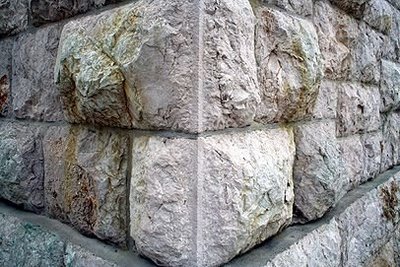
Constructing a corner is complicated business: joining two right angle pieces together in such a way that the resulting union is stronger than either one alone.   The corner piece, whether it is a pole with bracing in the case of field fencing, or a large stone in the case of a building, must be strong enough to hold and support the joined structure together.

In the case of the psalmist, he describes one such large stone that seemed such a “misfit” that it was rejected by the builders as being unusable.  However, once the construction started, it was clear the stone was cut and created exactly for the purpose of becoming the foundational support, and was desperately needed for the project to be able to continue.   It, in fact, fit the need perfectly.

A “cornerstone” installation has become a common ceremonial task with any new building construction to this day.  Even if it has no functional significance to the strength of the building, (it is most often just a plaque with the name and date of the building), it does help bear the emotional weight of the effort made to plan, design, and fund new construction that is finally becoming reality.

It is tempting as well to treat Jesus as a ceremonial headstone of the corner, as there is plenty of emotion in the nativity story during advent.  Who cannot hear the Christmas story without feeling sentimental and awestruck?  But he is no ritual plaque in the side of the wall, simply a reason for a celebratory ceremony and then everyone goes home while someone else finishes the construction.  Jesus is the real foundation, the only foundation we have to build on, and his birth demands that we build his church upon him, rolling up our sleeves and getting dirty and sweaty in the process.  Like the headstone of the psalm, he absolutely was rejected by the pharisees as a misfit for his time, unacknowledged for the strength he bore alone in joining disparate Jews and Gentiles together who had previously been at right angles to one another.

We cannot make the same mistake again.

Psalm 118:22

Beyond the Stained Glass


It started with a one hundred year old church moving into a new building after an earthquake destroyed the old one.  It wasn’t a congregation of great wealth or prestige so the new building, by necessity, was a simple rectangular design, the sanctuary paneled in light birchwood, the high windows with clear textured glass allowing floods of muted natural light to stream in even on cloudy days.  It was a pleasant enough place to worship, well-lit and airy.

Then a new pastor arrived–a man well-traveled, well-read with a keen artist’s eye and a mind able to mix together a palette of history, colors and words.   He could see what others had not in the empty canvas of the huge space.  What he envisioned for the sanctuary was to enhance the worship experience through the illustration of Life’s passage, of people growing and changing in God’s glory.  Any worshipper entering the sanctuary would become part of the woven tapestry of color cast by a series of stained glass windows.

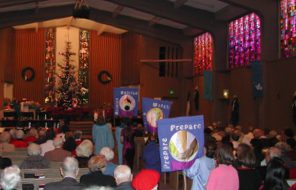
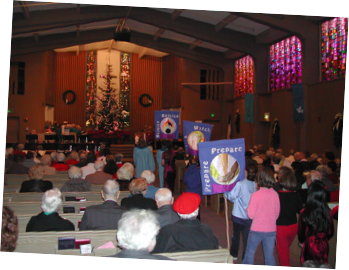
Six large symmetrical panels of divided narrow vertical windows lined both upper outer walls leading up to the altar.   In our pastor’s design, these were to become stained glass representations of the various stages of life from young to old.  Our pastor recruited would-be artisans from the congregation to be the primary stained glass workers, teaching them how to precisely cut and fit the glass pieces.  Each church member had an opportunity to choose and place a pane matching his or her stage of life, to become a permanent part of the portrait of this diverse church family.  The new windows were constructed from back to front over the course of a year, all by volunteer effort, until the transformation was complete from simple functional space of wood and light to an encompassing work of art, inclusive for all who entered.  Mosaics of colored sections represented the transition through life, moving from childhood in the windows at the entrance, on to adolescence,  then to young adulthood, moving to middle age, and then finally to the elder years nearest the altar.

Rainbows of color crisscrossed the pews and aisles, starting with pale and barely defined green and yellow at the outset, blending into a blossom of blue, then becoming a startling fervor of red,  fading into a tranquil purple past the center, and lastly immersed in the warmth of orange as one approached the brown of the wood paneled altar.  Depending on where one chose to sit, the light bearing a particular color combination was cast on open pages of scripture, or favorite hymns, or on the skin and clothing of the people,  reflecting the essence of that life phase.  Included in the design was the seemingly random but intentional scattering of all of the colors in each panel.  Gold and orange panes were sprinkled in the “youth” window predicting the wisdom to come, and a smattering of some greens, blues and reds were found throughout the “orange” window of old age,  just like the “spark”  of younger years so often seen in the eyes of the our eldest citizens.

The colored windows reflected the truth of God’s plan for our lives. There was the certainty of the unrelenting passage of time; there was no turning back or turning away from what was to come.  Although each stage shone with its own unique beauty,  none was as warm and welcoming as the orange glow of the autumn of life.  Those final windows focused their brilliance on the plain wood of the cross above the altar.

Beyond the stained glass, as life fades from the richest of colors to the brownest of dust, the light will continue to shine, glorious.


(written on the theme “orange”)

Becoming Sauce

2887826765_58b298da6c

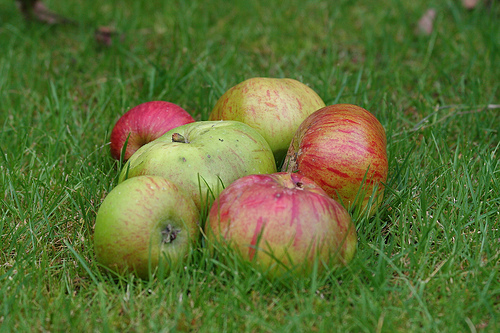
Today will be applesauce-making day on our farm. The number of windfall apples lying on the ground is exponentially increasing, so I could put off the task no longer. The apple trees in our orchard are primarily antique varieties rarely grown any longer. I selected Spitzenburgs, a favorite apple of Thomas Jefferson, a Baldwin or two, some Pippins, a few Kings, but mostly I picked Dutch Mignons, a russet apple undistinguished in appearance, not at all pretty, and easy to pass by for something more showy.

It took no time at all to fill several large buckets. Sadly, some apples were beyond hope; they lay rotting, half consumed by slugs and other critters. Those I left behind.

The task of washing, peeling and coring organic apples is time consuming. They require a fair amount of preparation: the bruised spots must be cut out, as well as the worm holes and tracks. The apples are cut to the core and sliced into the simmering pot to be stirred and slowly cooked down to sauce. Before long, before my eyes, together they become a pale yellow mash, blending their varied flavors together. However the smooth sweetness of this wonderful sauce is owed to the Dutch Mignon. It is a sublime sauce apple despite its humble unassuming appearance. Used alone, it would lack the “stand out” flavors of the other apple varieties, but as it cooks down, it becomes a foundation allowing the other apples to blend their unique qualities.

So it should be with the fellowship of diverse people. We are bruised, wormy, but salvageable. We are far better together than we are separate. And we are transformed into something far better than how we began.

Seven Ducks in a Muddy Pond

_wsb_442x347_Ducks+in+a+pond+2

Perhaps it was his plain talk about the Word of God.  Perhaps it was his folksy stories tying that Word to our lives.  Perhaps it was because he was, like the rest of us, so fully a flawed and forgiven human being.  Pastor Bruce Hempel ministered to thousands over his lifetime of service, yet the simple act of climbing the steps up to the pulpit was nearly impossible for him.

Bruce had one leg.  The other was lost to an above the knee amputation due to his severe diabetes.  He wore an ill-fitting prosthetic leg that never allowed a normal stride and certainly proved a challenge when ascending stairs.  He would come early to the sanctuary to climb the several steps to the chair behind the pulpit so he would not have to struggle in front of the congregation at the start of the service.  As we would enter to find our pew seats, he would be deep in thought and prayer, already seated by the pulpit.

He often said he was a difficult person to live with because of his constant pain and health problems.  His family confirmed that was indeed true, but what crankiness he exhibited through much of the week evaporated once he was at the pulpit.  Standing there balanced on his good leg with his prosthesis acting as a brace, he was transformed and blessed with clarity of thought and expression.  His pain was left behind.

He came to our church after many years of military chaplaincy, having served in Korea and Vietnam and a number of stateside assignments.  He liked to say he “learned to meet people where they were” rather than where he thought they needed to be.  His work brought him face to face with thousands of soldiers from diverse faiths and backgrounds, or in many cases, no faith at all, yet he ministered to each one in the way that was needed at that moment.  He helped some as they lay dying and others who suffered so profoundly they wished they would die.  He was there for them all and he was there for us.

One memorable sermon came from 2Kings 5: 1-19 about the healing of the great warrior Naaman who was afflicted with leprosy.  Pastor Bruce clearly identified with Naaman and emphasized the message of obedience to God as the key to Naaman’s healing.  Like Naaman, no one would desire “Seven Ducks in a Muddy Pond” but once Naaman was obedient despite his pride and doubts, he was cured of the incurable by bathing in the muddy Jordan River.

Even upon retirement, Bruce continued to preach when churches needed a fill in pastor, and he took a part time job managing a community food and clothing bank, connecting with people who needed his words of encouragement.  He was called regularly to officiate at weddings and funerals, especially for those without a church.  He would oblige as his time and health allowed.

His last sermon was delivered on a freezing windy December day at a graveside service for a young suicide victim he had never known personally.  Pastor Bruce was standing at the head of the casket and having concluded his message, he bowed his head to pray, continued to bend forward, appeared to embrace the casket and breathed his last.  He was gone,  just like that.

He was not standing up high at the pulpit the day he died.  He was obediently getting muddy in the muck and mess of life, and waiting, as we all are, for the moment he’d be washed clean.

Sliding to Home

67

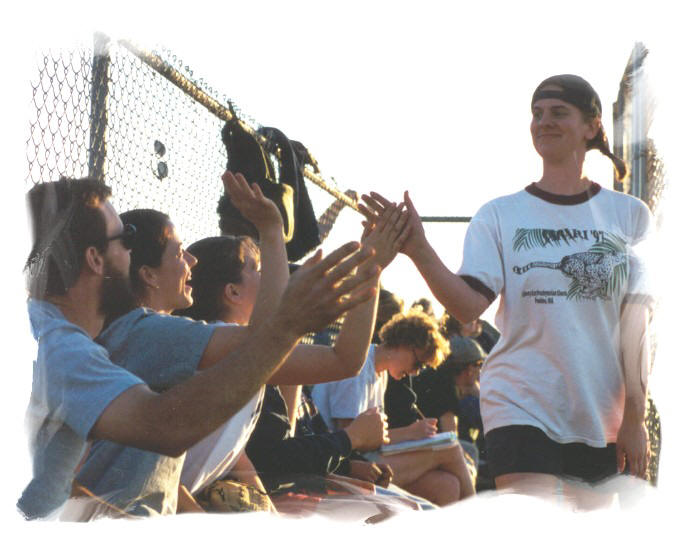
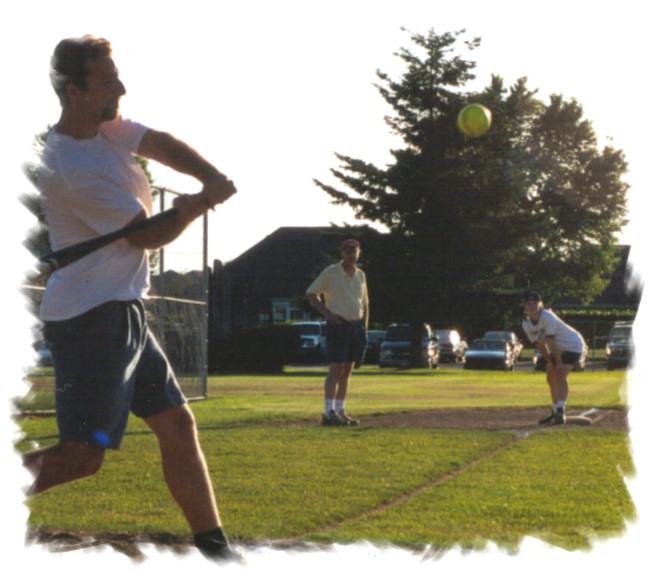
Our church belongs to a summer co-ed softball league, along with 8 other churches and a few local businesses.  This has been a traditional Thursday evening summer activity for the past generation or longer.  Couples have met for the first time on the ball fields and eventually marry. Babies have attended games in back packs and strollers and now are catching at home plate.  Relatives going to different churches find themselves on opposing teams yelling good natured insults.  There are a few bopped heads, abrasions, sprained fingers and broken legs as part of the deal.  Hot dog roasts and ice cream sundaes are the after game rewards.

Yet nothing is quite as wonderful as how a team recreates itself year after year.  It is thrown together by our coach Brenda in a mere two weeks prior to the season starting, with the youngest members needing to be at least age 14 with no upper age limit; we’ve had our share of 70+ year olds on the team over the years.   Some ball players are raw beginners having never played catch or swung a bat outside of school PE class, and others have extensive history of varsity fastpitch in school or other community league play so mean business when they stride out on the diamond.  It is the ultimate diverse talent pool.

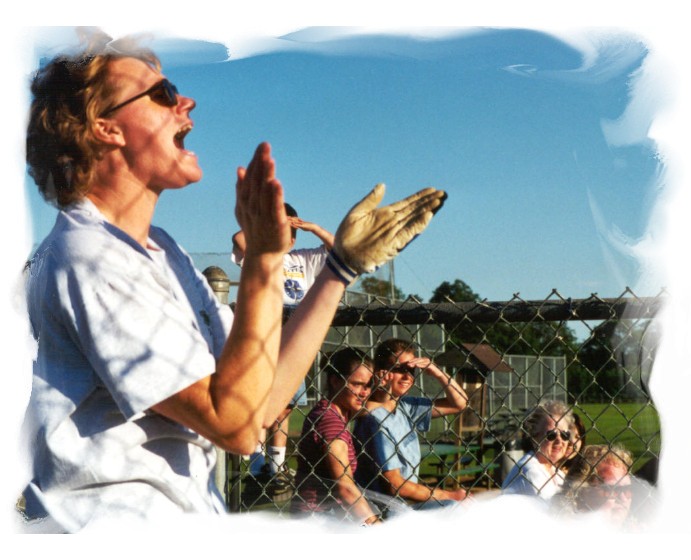
A different dynamic exists in church league softball compared to Little League, Pony League, minors or majors when you watch or play. Sure, there are slow pitch teams that will stock their ranks with “invitation-only” players, reserving the best and most athletic so there is a real chance at the trophy at the end of the summer.  Churches like ours, a mere 150 people average weekly Sunday attendance, have a “come one, come all” attitude, just to make sure we avoid forfeiting by not having enough players week after week.   We always do have enough.  In fact we have more players than we can sometimes find positions for.  And we have a whole bleacher full of fans, dedicated to cheering and clapping for anything and everything our players do, whether it is a pop-up foul ball, a strike out swing, a missed catch, or an actual hit.  We love it all and want our players to know they are loved too, no matter what they do or what happens.

I think that is why the players and fans come back to play week after week, though we haven’t won a game in years.  We root and holler for each other, get great teaching and encouragement from our fantastic coach, and the players’ skills do improve year to year despite months of inactivity.  We have a whole line up of pre-14 year olds eager to grow old enough to play, just so they can be a part of the action.

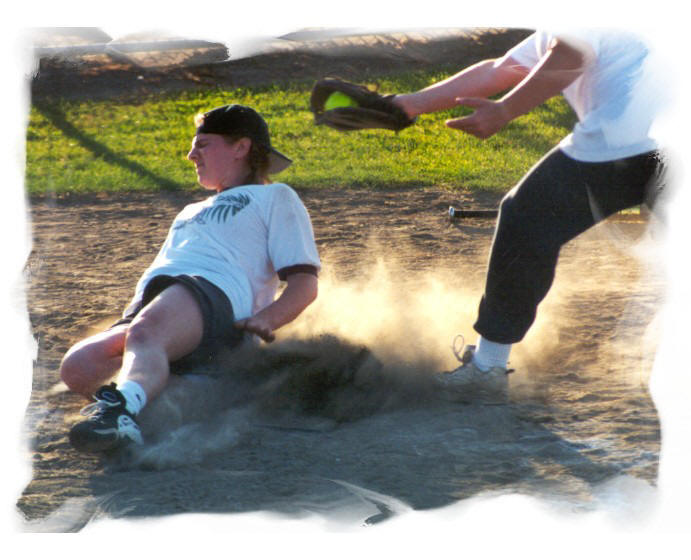
Why does it not matter that we don’t win games?  We are winning hearts, not runs.  We are showing our youngsters that the spirit of play is what it is all about, not about the trophy at the end.  We are teaching encouragement in the face of errors, smiles despite failure, joy in the fellowship of people who love each other–spending an evening together week after week.  We are family; family picks you up and dusts you off when you’ve fallen flat on your face during your slide to base while still being called “out.”

Most of all, I see this as a small piece of God’s kingdom in action.

Our coach models Jesus’ acceptance of all at the table, and embodies the fruits of the spirit: love, joy, peace, patience, kindness, gentleness, faithfulness, and self control.

Our players are the eager, the ambivalent, the accurate, the flawed, the strong, the weak, the fast, the slow: chosen for the game even if they are completely inadequate to the task at hand, volunteering to be part of each moment as painful as it can sometimes be.

The cheering from the bleachers comes as if from heaven itself:  Do not be afraid.  Good will to all.  We are well pleased. Amen!

We’re sliding to home plate, running as hard as we can, diving for safety, covered in the dust and mire and blood of living/dying and will never, ever be called “out”.

Let’s play ball.

1315

Forgetting to Remove Our Shoes

DirtyFeetAfterCrossing

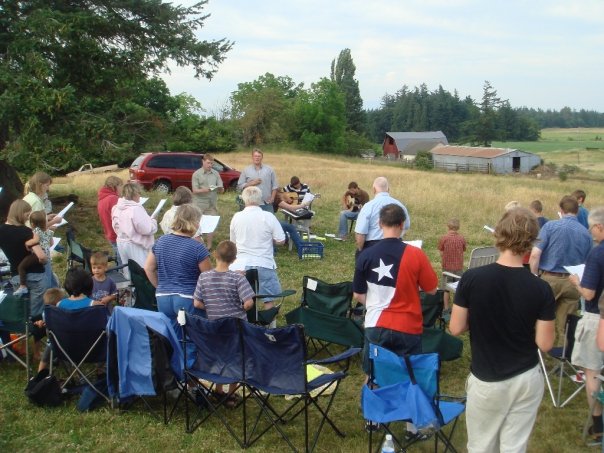
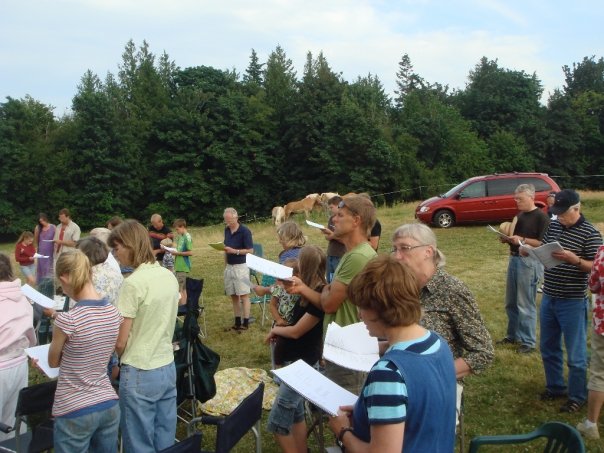
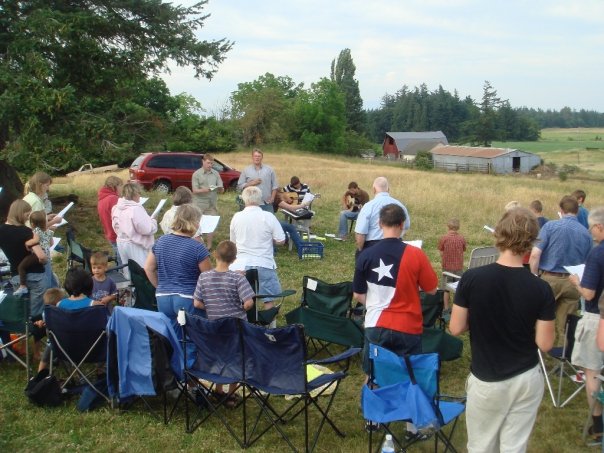
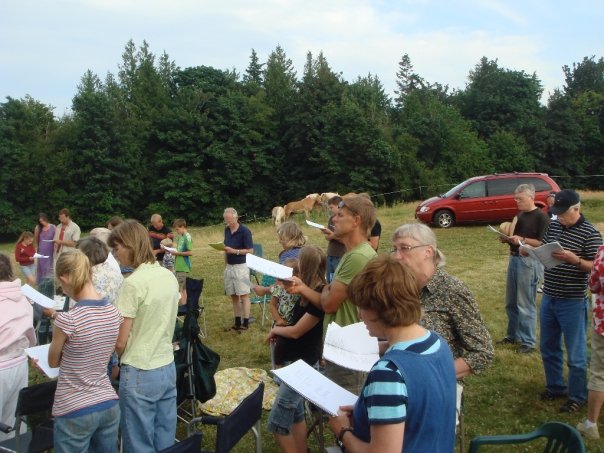
Within the hour, sixty folks would be coming to our hilltop pasture for “campfire church” and a wiener roast.  That was when I realized there were plenty of old horse manure piles still needing to be picked up from the very spots where families would be sitting on the ground, eating their hot dogs and singing their praise songs.  I grabbed the wheelbarrow and pitchfork and trudged up the hill to try to purge the field of poop, at least superficially.

It was no use.  Manure piles don’t pick up easily out of long grass, and the number of mole hills outnumbered poop hills 2 to 1 so there was plenty of dirty stuff to go around.  This would not be a hygienic eating and worshipping experience, no matter what I did at the last minute to try to change things.

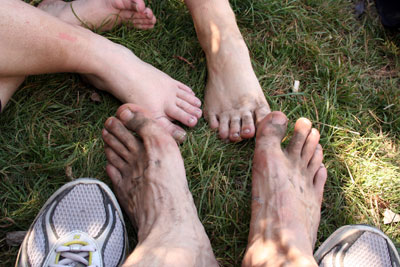
Sure enough, many of the kids and a few of the adults pulled their shoes off to walk barefoot in the pasture grass, and I’m sure a few walked in stuff I’d rather not think about.  Only one got stung by a bee.  The rest of us kept our shoes, sandals and flip flops on,  which meant plenty of the farm went home on bare feet and soles of shoes after the service was over–people actually leaving dirtier than they arrived.  It seemed a bit backwards from how it is supposed to work…

Muslim, Shinto,  Hindu, or Buddhist worshippers ritually leave their shoes at the door of the temple or mosque.  Christians wear shoes into church every Sunday, having walked in muck and mire of one sort or another all week.   We might do our best to try and clean up for Sunday, but we track in the detritus of our lives when we come to sit in the pews.  Rather than leave it at the door, it comes right in with us, not exactly hidden and sometimes downright stinky.  That is when we are in obvious need for a good washing, shoes, feet, soul and all,  and that is why we worship together as a church family.  Jesus Himself demonstrated this on the last night of His life, washing the dusty feet of His disciples.

The Lord told Moses:  “Remove your sandals from your feet, for the place on which you are standing is holy ground.”    He knows it is time for a good bath.

5260_1191428264259_1184942921_564393_5982503_n

5260_1191428304260_1184942921_564394_3562308_n

Where’s the Party?

gnomeparty

Fireworks on our farm's hill taken by Nate Gibson

I  remember childhood summers as 3 months of full-out celebration– long lazy days stretching into nights that didn’t seem to really darken until 11 PM and bright birdsong mornings starting out at 4:30 AM.  Not only were there the brief family vacations at the beach or to visit cousins, but there was the Fourth of July, Daily Vacation Bible School, the county fair, family reunions, and of course and most importantly, my July birthday.  Yes, there were mundane chores to be done, a garden to tend, a barn to clean, berries to pick,  a lawn to mow and all that stuff, but my memories of summer are mostly about fluff and frolic.

So where are the summer parties now?  Who is out there celebrating without me?  Nothing seems to be spontaneous as it was when I was a child. Instead there is still the routine of going to work most days in the summer.

I’m finding myself in the midst of my 55th summer and I have to create celebrations if they are going to happen in my life.  Without that perspective, the bird song at 4:30 AM can feel more irritant than blessing and the long days often mean I fall asleep nodding over a book at 9 PM.  I want to treasure every, every minute of this precious time yet they flow through my fingers like so much water, faster and faster.

I realize there will be few “family” summers left as I watch my children grow into adults and spread their wings.  They may be on to their next adventure in future summers.  So each family ritual and experience together takes on special meaning and needs to be appreciated and remembered.

So….for this summer my family has crammed as much in as we can in celebration of the season:

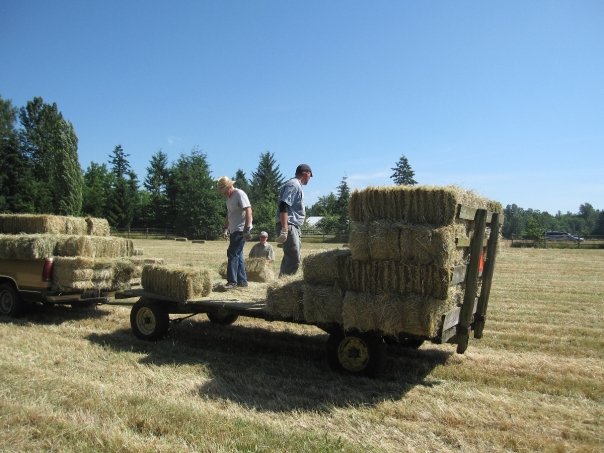
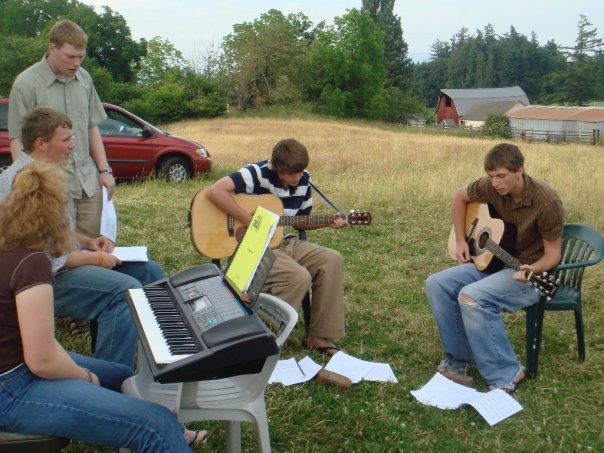
We just spent some time in the hayfields bringing in the bales with friends–our little crew of seven–sweating and itchy and exhausted, but the sight and smell of several hundred hay bales, grown on our own land, harvested without being rained on and piled in the barn is sweet indeed.   Weekly we are out on the softball field in church league,  yelling encouragement and high-fiving each other, hooting at the good hits and the bad, the great catches and the near misses, and getting dirty and sprained, and as happy to lose as to win.  We had a wonderful July 4 barbeque with good friends culminating in the fireworks show on our farm’s hill overlooking miles of valley around us, appreciating everyone else’s backyard displays as well as our own.  We are now able to sing hymns in church in four part harmony, and last night our children helped lead the singing last night in an evening “campfire church” for over fifty fellow worshipers on our hill.  In a couple weeks, we’ll take to the beach for three days of playing in the sand, roasting hot dogs. reading good books, and playing board games.  We’ll try to make the trek down to Seattle by train to spend the day watching the Mariners play (and likely lose). One change this year is we won’t be returning back to the Lynden fair with our horses–due to “off the farm” work and school schedules, we couldn’t muster the necessary round-the-clock crew after seventeen years of being there to display our little part of small town agricultural pursuits.

Yet the real party happens right here every day in small ways without any special planning.  It doesn’t require money or special food or traveling beyond our own soil.  It is the smiles and good laughs we share together, and the hugs for kids taller than I am. It’s adult conversations with the new adults in our family–no longer adolescents.  It’s finding delight in fresh cherries from our own trees, currants and berries from our own bushes, greens from the garden, flowers for the table from the yard.  It is the Haflingers in the field that come right up to us to enjoy rubs and scratches and follow us like puppies. It is babysitting for toddlers who remind us of the old days of having small children, and who give us a glimpse of future grandparenthood.  It is good friends coming from far away to ride our horses and learn farm skills. It is an early morning walk in the woods or a late evening stroll over the hills. It is daily contact with aging parents who no longer hear well or feel well but nevertheless share of themselves in the ways they are able.  It is the awesome power of an evening sunset filled with hope and the calming promise of a new day somewhere else in this world of ours.

Some days may not look or feel like there’s a party happening, but that is only because I haven’t searched hard enough.  The party is here, sparklers and all, even if only in my own mind.

6651_512624400914_148300158_30510731_6701452_n

5260_1191428224258_1184942921_564392_5453600_n

5260_1191428264259_1184942921_564393_5982503_n

Campfire church photos by Bette VanderHaak

sunsett