A Canticle for Advent: Dawning Ray

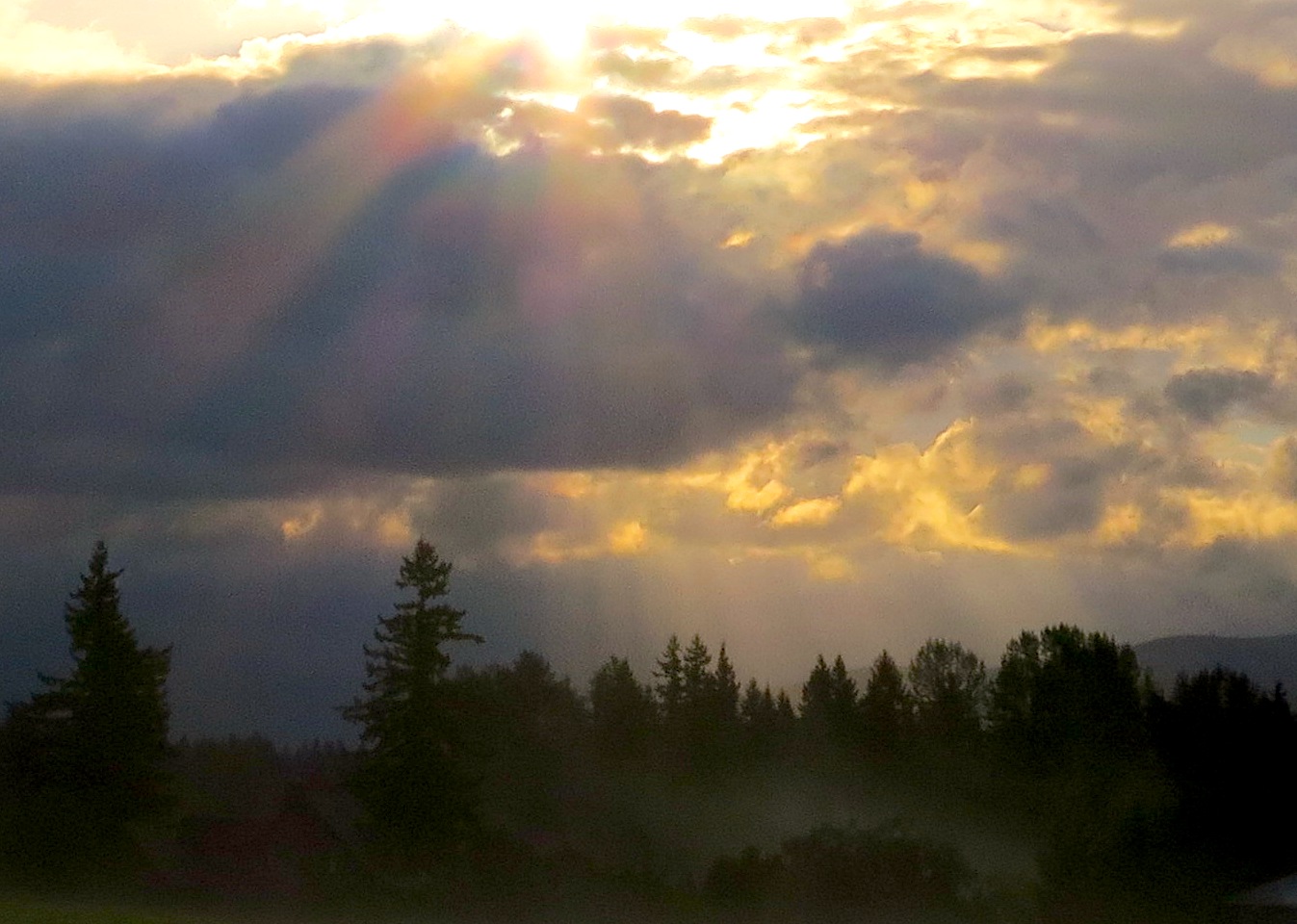
sunbeams2

1. A Babe is born, all of a Maid
To bring salvation unto us:
No more are we to sing afraid,
Veni, Creator Spiritus

2. Bethlehem, That blessed place,
The Child of bliss then born He was;
He aye to serve God give us grace,
O Lux beata Trinitas.

3. There came three kings out of the East,
To worship there that King so free
With gold and myrrh and frankincense,
A solis ortus cardine.

4. The shepherds heard an Angel cry,
O merry song that night sang he,
Why are ye all so sore aghast,
Jam lucis orto sidere?

5. The Angel came down with a cry,
A fair and joyful song sang he,
And in the worship of that Child,
Gloria Tibi Domine.
~15th century carol


The Latin phrases in this old hymn are:

I came as Creator
O light of Holy Trinity
to the focus of birth
dawning ray
Glory to you, O God

May we this day focus on the light of this Birth, this Creator arising from the created, this dawning of glory on earth.


A Canticle for Advent: Ponder Nothing Earthly-Minded

photo by Julie Garrett

1 Let all mortal flesh keep silence,
and with fear and trembling stand;
ponder nothing earthly minded,
for with blessing in his hand
Christ our God to earth descendeth,
our full homage to demand.

2 King of kings, yet born of Mary,
as of old on earth he stood,
Lord of lords, in human vesture,
in the body and the blood,
he will give to all the faithful
his own self for heavenly food.

3 Rank on rank the host of heaven
spreads its vanguard on the way,
as the Light of light descendeth
from the realms of endless day,
that the powers of hell may vanish
as the shadows clear away

4 At his feet the six-winged seraph,
cherubim, with sleepless eye,
veil their faces to the presence,
as with ceaseless voice they cry,
“Alleluia, alleluia,
alleluia, Lord most high!”
~from the Liturgy of St. James, 4th century


The Lord is in his holy temple;
    let all the earth be silent before him.
Habakkuk 2:20


This ancient hymn is one of the most profound of Advent, demanding our silence as we ponder and honor these words that transcend all earthly bounds of our eyes, ears and voices.
How can we be anything but awe-struck silent as we consider Christ our God to earth descendeth?  We should be trembling; we should be standing mute in our shoes, amazed.
So we follow the lead of the angel host as they bring us the incredible news: Glory to God!  Alleluia!
There is nothing earthly minded in their song.
Earth will never be the same since He came,
He died,
He rose
and He readies us to join Him.


A Canticle for Advent: Let Us Be Transformed

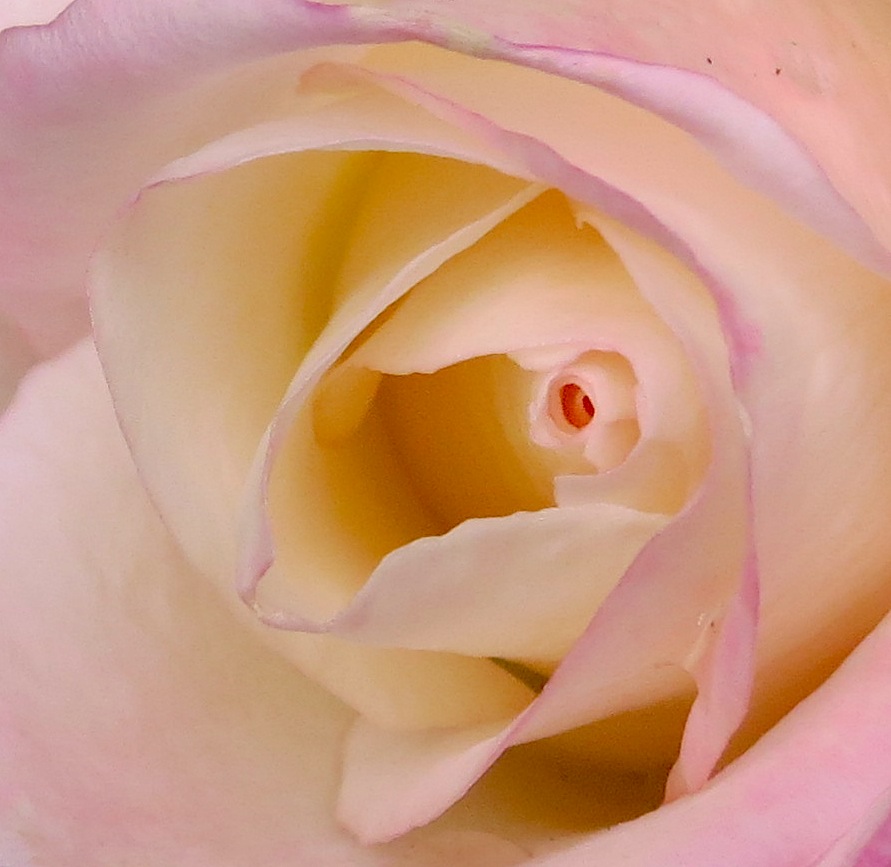
roseinside

There is no rose of such virtue
As is the Rose that bore Jesu:
Alleluia.
For in this rose was contained
Heaven and earth in a small space.
Wondrous thing. Res miranda.
By that rose we may well see
There is one God in persons three.
Equally formed. Pares forma.
The angels sang; the shepherds, too:
Glory to God in the highest!
Let us rejoice. Gaudeamus.
Leave we all these worldly cares
And follow we this joyful birth.
Let us be transformed. Transeamus.
~Benjamin Britten “There is no rose” from “Ceremony of the Carols”1943

…thou shalt go before the face of the Lord to prepare his ways; 77 To give knowledge of salvation unto his people by the remission of their sins,
78 Through the tender mercy of our God; whereby the dayspring from on high hath visited us,
79 To give light to them that sit in darkness and in the shadow of death, to guide our feet into the way of peace.
Luke 1: 76-79 (Zechariah’s Song)

Although there are few references to roses in the Bible,  the symbolism of the depths of beauty and tenderness of the rose is found everywhere from Dante’s Paradisio, to elaborate ancient cathedral Rose Windows with Christ or Virgin Mary at the center.  It represents the miracle of heaven and earth bound together in the person of Christ in the Trinity.   Through His tender mercy, like Zechariah given back his voice,we become transformed by the coming of Christ.   We prepare to go before the Face of the Lord,  in His unfolding universe, unfurling like the center of a rose.

These daily Advent reflections are each devoted to one Christmas carol (or canticle) to prepare us for God dwelling among us– then, now and forever more.

The Heart’s Throne

1069375_10151757689246119_1606886087_nTrue worship can only take place when we agree to God sitting not only on His throne in the center of the universe, but on the throne that stands in the center of our heart.
~Robert Colman

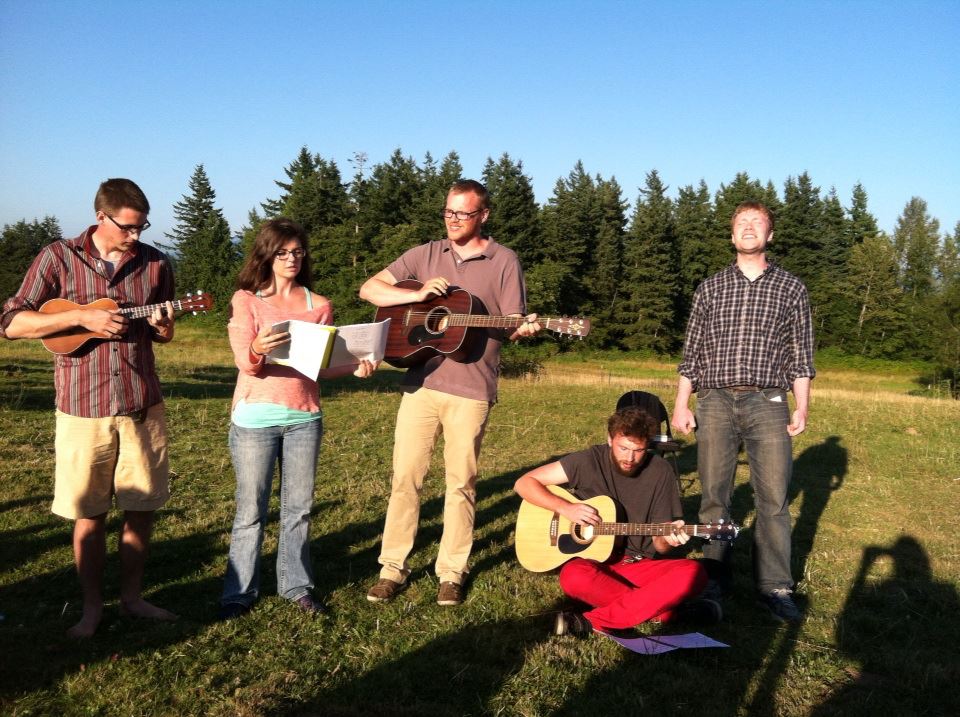
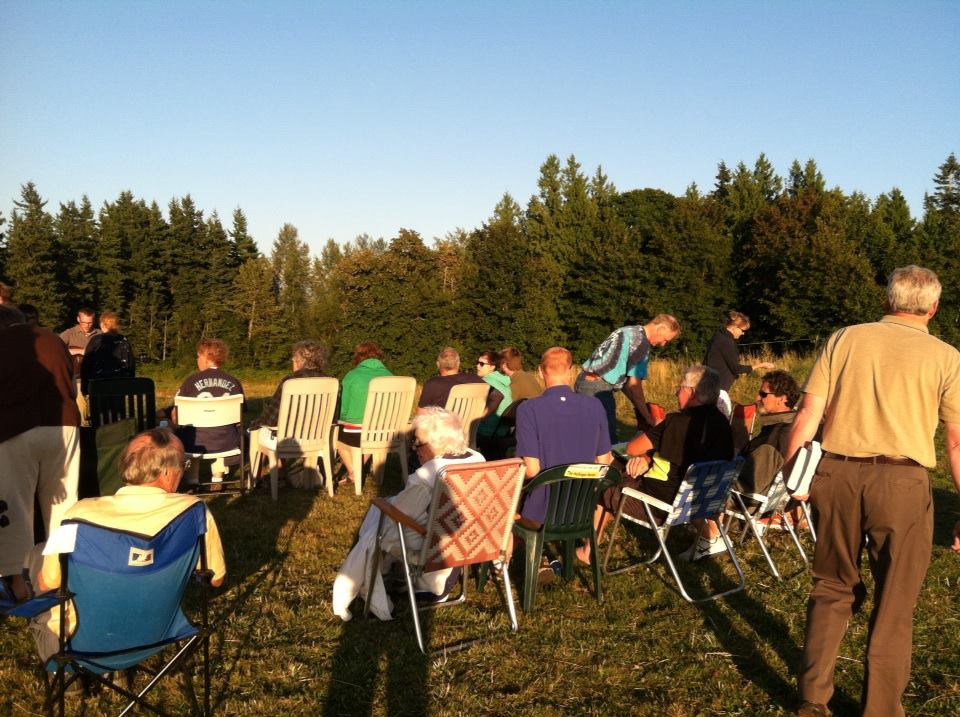
Last night we had the joy of worship on the hill on our farm for a summer evening of Wiser Lake Chapel‘s outdoor church.   Together we came from far and wide: from Japan and Myanmar to South Dakota and Colorado– sixty five people ranging from a 5 week old premie baby making her church debut to a 93 years young woman who treasures each and every chance to worship with her church family.

Our hearts cannot be empty and longing when God sits at the center of Who we are. 

Before the throne of God above;  before the throne of God within.  Our hearts are full indeed.

Human beings by their very nature are worshipers. Worship is not something we do; it defines who we are. You cannot divide human beings into those who worship and those who don’t. Everybody worships; it’s just a matter of what, or whom, we serve.
~Paul Tripp

1014170_10151757698971119_1998985476_n

Waiting to be Filled

photo by Josh Scholten

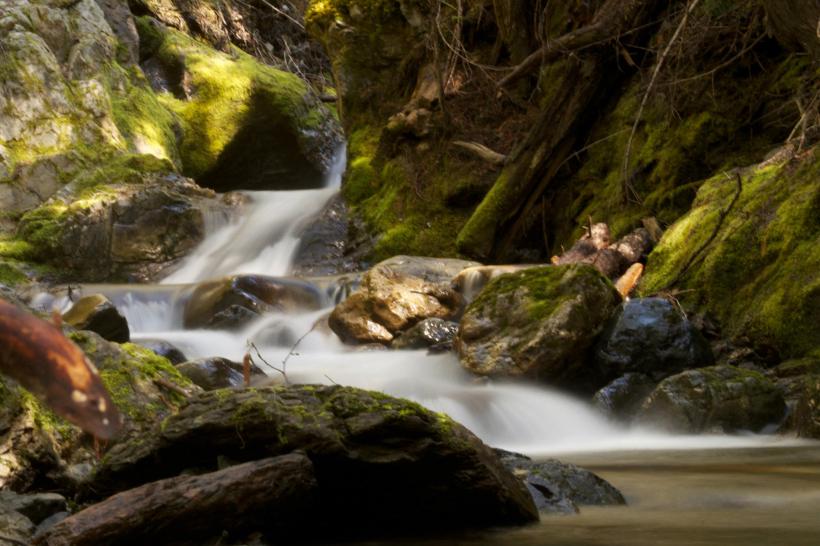
My God, I look at the creek. It is the answer to Merton’s prayer, “Give us time!”  It never stops…. You don’t run down the present, pursue it with baited hooks and nets.  You wait for it, empty-handed, and you are filled.  You’ll have fish left over.  The creek is the one great giver.  It is, by definition, Christmas, the incarnation.  This old rock planet gets the present for a present on its birthday every day. 
~Annie Dillard from Pilgrim at Tinker Creek

Good things as well as bad, you know are caught by a kind of infection. If you want to get warm you must stand near the fire: if you want to be wet you must get into the water. If you want joy, power, peace, eternal life, you must get close to, or even into, the thing that has them. They are not a sort of prize which God could, if He chose, just hand out to anyone. They are a great fountain of energy and beauty spurting up at the very centre of reality. If you are close to it, the spray will wet you: if you are not, you will remain dry. Once a man is united to God, how could he not live forever? Once a man is separated from God, what can he do but wither and die?
~C.S. Lewis- Mere Christianity

…the room was filled by a presence that in a strange way was both about me and within me like a light or warmth. I was overwhelming possessed by someone who was not myself.  And yet, I felt more myself than ever before.  I was filled with intense happiness and almost unbearable joy as I had never known before or never known since.  And overall, there was a deep sense of peace and security and certainty.
~C. S. Lewis

Heaven-flung Son

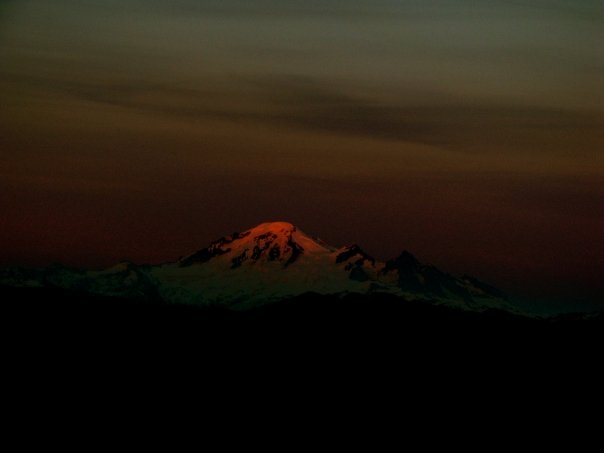
photo of Mt. Baker by Josh Scholten
Now burn, new born to the world,
Doubled-naturéd name,
The heaven-flung, heart-fleshed, maiden-furled
Miracle-in-Mary-of-flame,
Mid-numbered He in three of the thunder-throne!
Not a dooms-day dazzle in his coming nor dark
as he came;
Kind, but royally reclaiming his own;
A released shower, let flash to the shire, not
a lightning of fire hard-hurled.
~Gerard Manley Hopkins, from “The Wreck of the Deutschland.”

photo by Josh Scholten

Advent Sings: Down to Up

photo by Josh Scholten

The Lord brings death and makes alive;
    he brings down to the grave and raises up.
1 Samuel 2: 6 from the Song of Hannah

Hannah’s prayer describes the Lord in all His paradox of reversals: the strong are broken and those who stumble strengthened, the satisfied end up working for food and the hungry become filled, the barren woman bears children while the mother of many pines away, the poor and needy are lifted up to sit with princes.

He humbles and exalts–we have read the stories of how the Lord uses such reversals to instruct His people.

Yet nothing Hannah says is as radical and unprecedented as being brought down to the grave and then raised up, the Lord causing death and making alive.   This makes no sense.  Once in the grave, there is no escape.  Death cannot be reversed like the weak becoming strong, the hungry filled, the barren fertile, the poor enriched.

Hannah sings that this will indeed happen, just as the other reversals happened.  It would take centuries, but her prayer is fulfilled in the child born to Mary, who lives and dies and lives again in the greatest reversal of all.

There can be no greater mystery than a God who chooses to walk the earth as a man among the poor, the needy, the helpless, the sick, the blind, the lame, the wicked, the barren, the hungry, the weak.  There can be no greater reversal than God Himself dying–put away down into the grave– and then rising up, glorious, in the ultimate defeat of darkness and death.

Hannah already knew this as a barren woman made full through the blessing of the Lord, choosing to empty herself by giving her son back to God.
Mary knew this as a virgin overshadowed by the Holy Spirit, choosing to empty herself by bearing, raising and giving her Son back to the Father.

We know this too.   We are the weak, the hungry, the poor, the dying filled completely through the love and sacrifice of the Triune God, and so give ourselves up to Him.

From down to up.  It can be done.  And He has done it.

Honing and Tending

photo by Josh Scholten

Creation is the arena in and through which God wishes to reveal himself.
In creating, in preserving, in pursuing; in hallowing, in participating, in wooing—
the Father, the Son, and the Spirit have made all creation,
and all its creatures, great and small, their delight.

We recognize that, being made in his image, we are appointed as his stewards.
This does not give us carte blanche with God’s world.
We are not given creation to plunder,
but to hone and tend in such ways that every little part of it gives glory to God.
~Kathleen Mulhern in Dry Bones

photo by Josh Scholten

Barbarous in Beauty

Summer ends now; now, barbarous in beauty, the stooks rise
Around; up above, what wind-walks! what lovely behaviour
Of silk-sack clouds! has wilder, willful-wavier
Meal-drift moulded ever and melted across skies?

 I walk, I lift up, I lift up heart, eyes,
Down all that glory in the heavens to glean our Saviour;
And, eyes, heart, what looks, what lips yet gave you a
Rapturous love’s greeting of realer, of rounder replies?

And the azurous hung hills are his world wielding shoulder
Majestic as a stallion stalwart, very-violet-sweet! –
These things, these things were here and but the beholder
Wanting; which two when they once meet,
The heart rears wings bold and bolder
And hurls for him, O half hurls earth for him off under his feet.
~Gerard Manley Hopkins “Hurrahing in Harvest”

Reading Hopkins invokes God’s intentional accessibility “stallion stalwart, very-violet-sweet” in our daily lives, if we simply open our eyes to see and ears to hear.  The details Hopkins captures in marvelous word pictures, painting with sound and syllable, pull us in.  The “heart rears wings” as we are lifted up to see the Lord manifest in Creation.  We can’t help but be harvested to live obediently as we “glean our Savior” through raised heart and eyes to the glory in the heavens.

As Kathleen Mulhern in her blog “Dry Bones” says in her analysis of “a Christ sighting”:
“There is no point in seeing without responding; there is no way to respond without seeing. Christian life and practice require both faith (the sight of the heart) and works (the lurch of the heart toward him in obedience).”

The gleaning of our Savior is particularly manifest in the sacrament of communion, the earthly meal Jesus invites us to partake of His harvest.  In the bread and wine,  “a barbarous beauty” representing his body and blood,  He lifts us up to taste the glories of heaven.

Our heart “hurls for him, O half hurls earth for him” in response.

What else,  at summer’s end,  can we do?

We walk in faith, raised up, glorious.

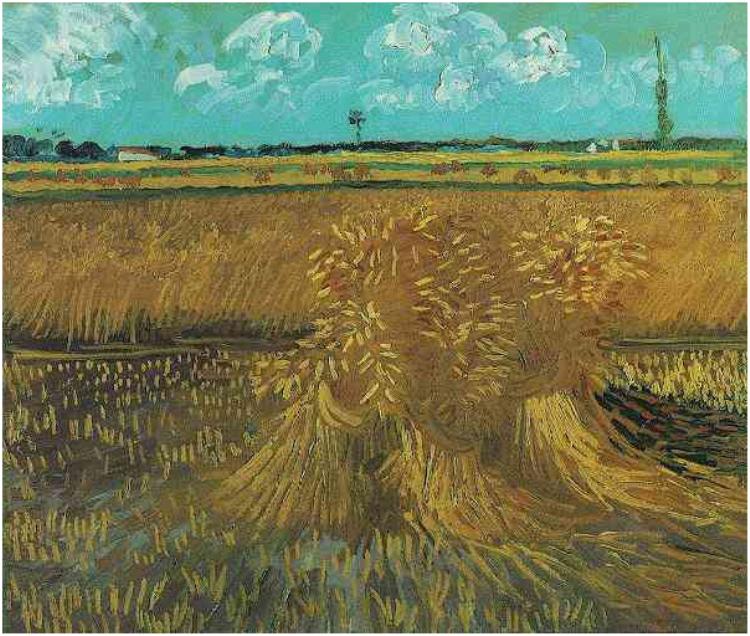
Sheaves of Wheat in a Field –Vincent Van Gogh

Making and Unmaking

photo by Josh Scholten

“Everything is made to perish; the wonder of anything at all is that it has not already done so. No, he thought. The wonder of anything is that it was made in the first place. What persists beyond this cataclysm of making and unmaking?”
~Paul Harding

What persists indeed?  There are times when all appears to be perishing, especially in the dying time of year when the world is drying up, blowing away like the dust storms in the parched midwest which soil the air like so much smoke.  The obituary pages predominate in the paper, accompanying an overload of bad news, mass shootings and suicide bombings.  All appears to be perishing with no relief or hope.

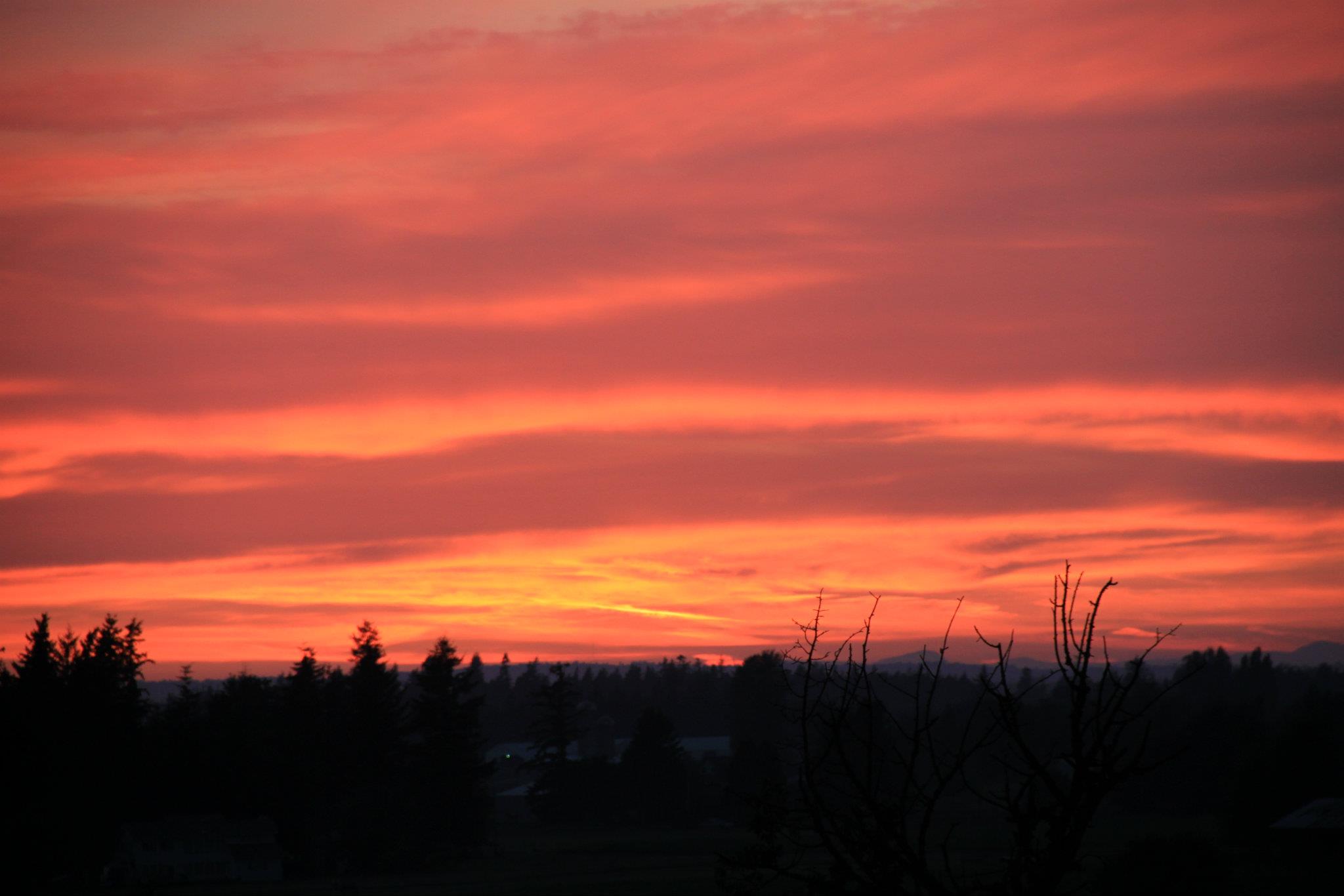
But it is waning light and shortening days coloring my view like haze in the sky painting a sunset blood red.  Darkness is temporary and inevitably helpless; it can never overcome the light of all things made.

Life persists in the midst of perishing because of the cataclysm of a loving and bleeding God dying as sacrifice.  Nothing, nothing can ever be the same.

God goes where God has never gone before.”
~ Kathleen Mulhern in Dry Bones

photo by Nate Gibson

Through him all things were made; without him nothing was made that has been made. In him was life, and that life was the light of all mankind. The light shines in the darkness, and the darkness has not overcome it.
~John 1: 3-5